
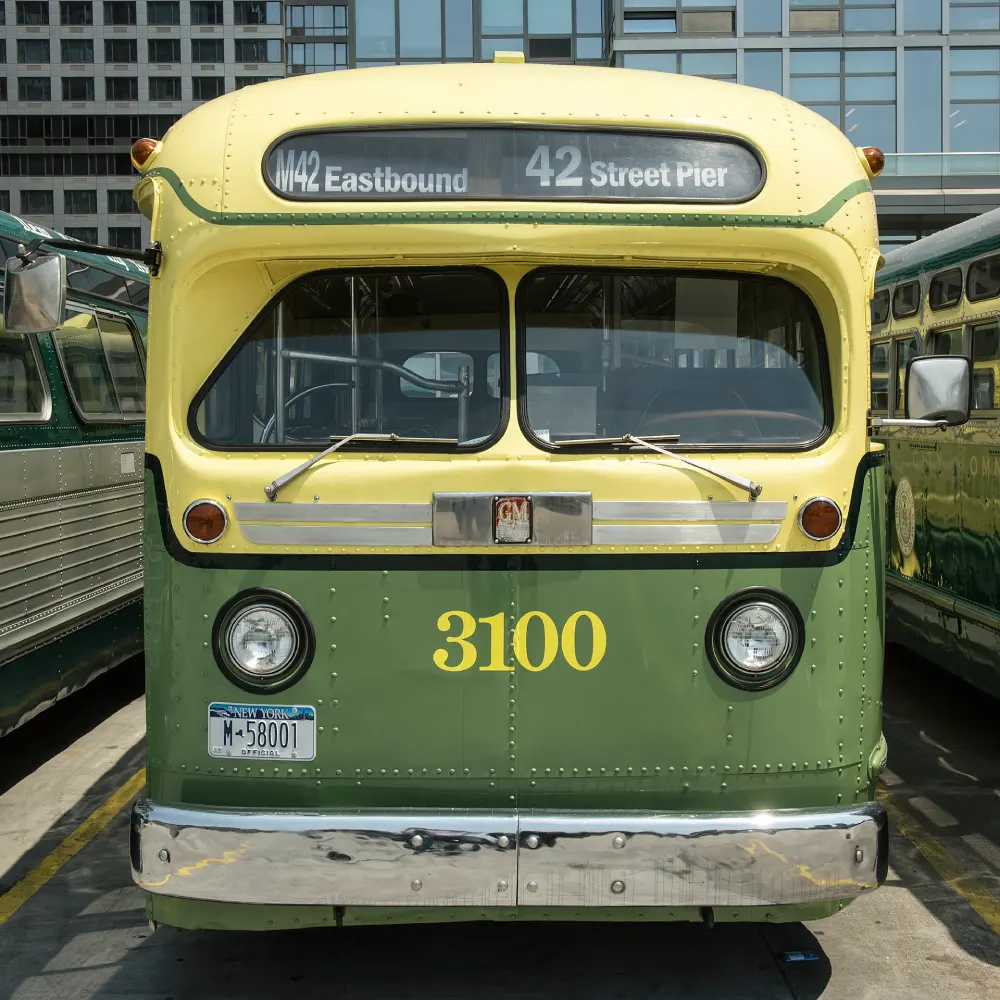
Bus #3100 (1956) was the first air-conditioned bus in the United States used for public transportation. The bus was designed and built as an experiment, and this single example was purchased by the Fifth Avenue Coach Company about a year after its manufacture. It has other features first introduced in the 1950s: a push‑type rear exit door, wrap-around seating in the rear portion, soft seating, and fluorescent lighting. After two decades of passenger service, this vehicle was assigned to the Transit Police; it was retired from all service in the mid-1970s.
Additional Vintage Train Cars
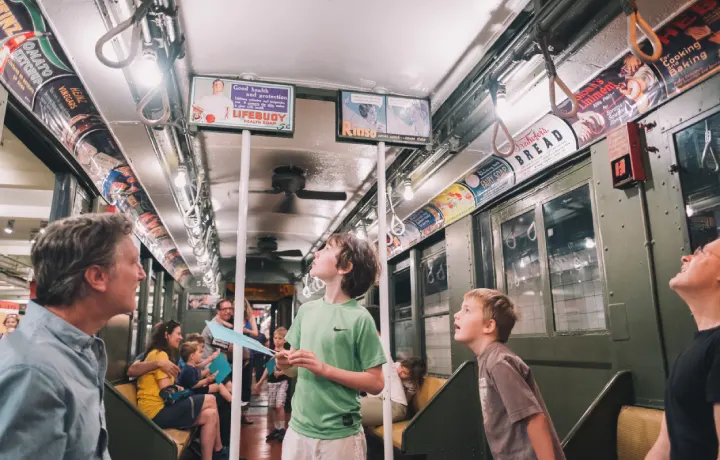
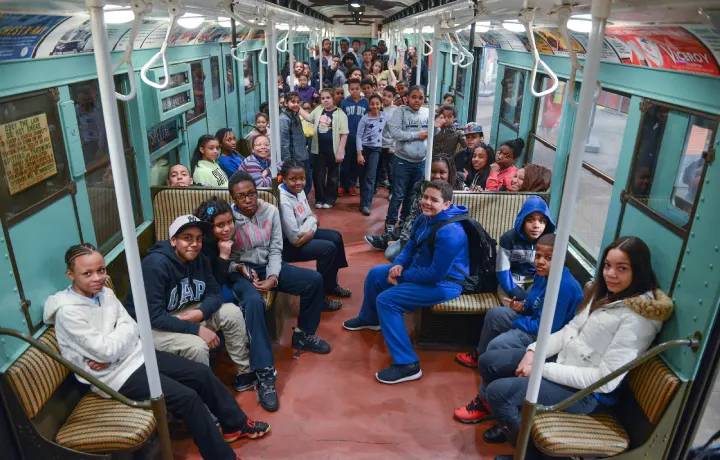
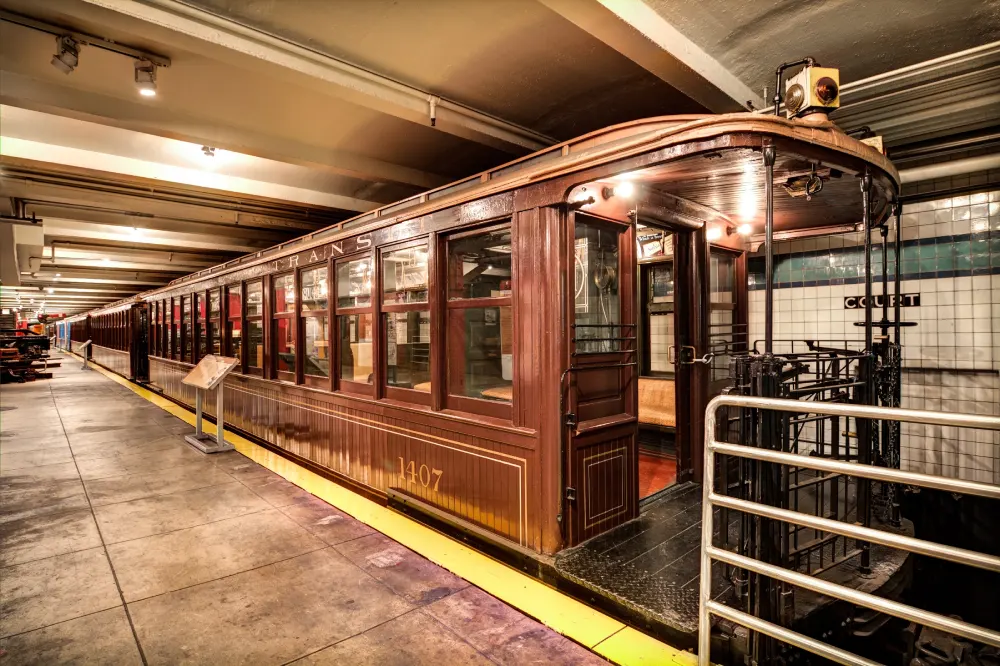
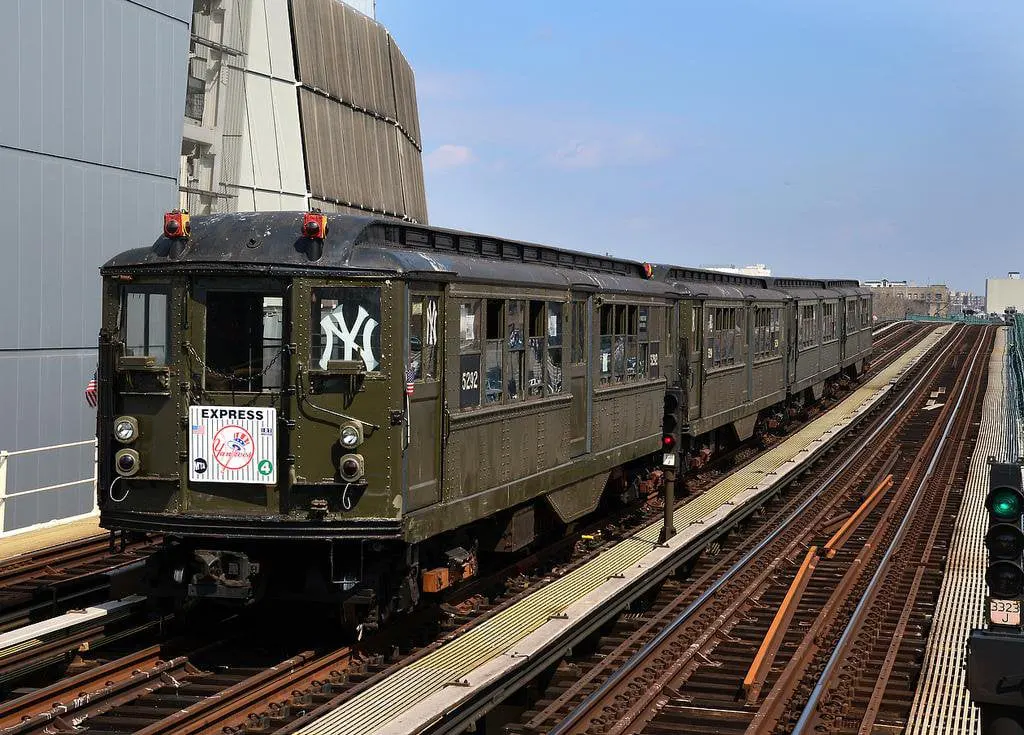
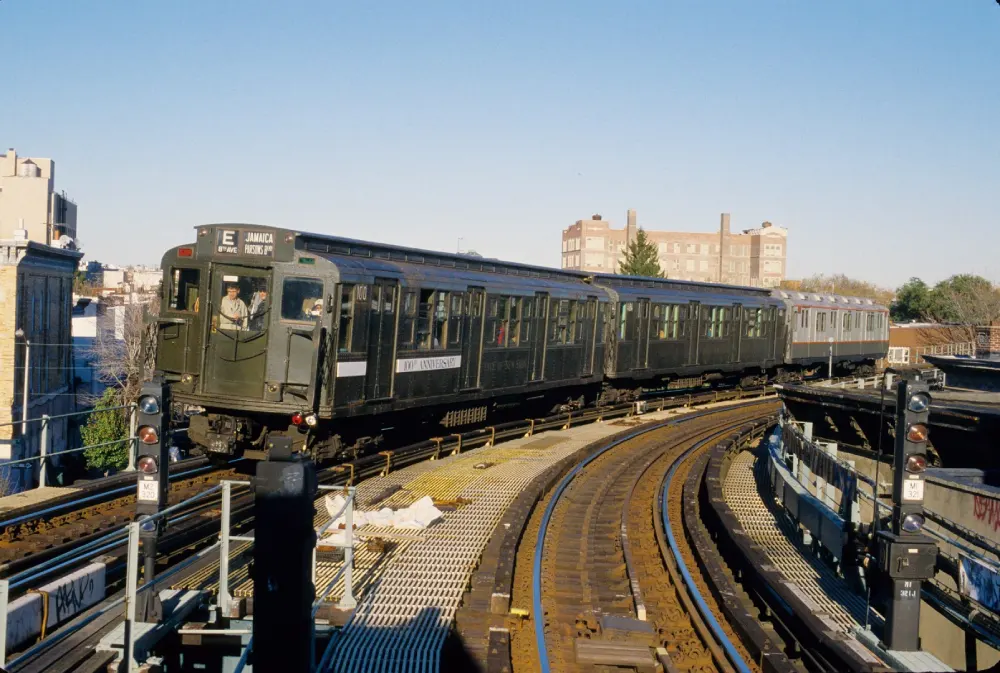
The Transit Museum’s collection extends well beyond the core fleets above. Around 20 different vintage train cars are on view in the Museum at any given time, and they rotate throughout the year. The images below offer a glimpse at some of the additional car types in the fleet.
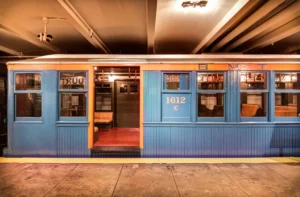
Q Car #1612C (1908, rebuilt 1938)
Car Manufacturer: Jewett Car Company (Newark, Ohio), 1908
Service: 1908-1969
Routes: Brooklyn elevated lines, 1908-1923; Astoria and Flushing lines, 1923-1949; Third Avenue Elevated, Manhattan, 1950-1955; Myrtle Avenue Elevated, Brooklyn, 1957-1969
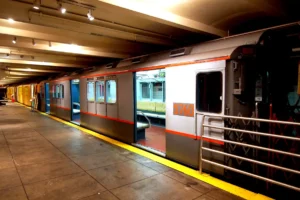
IRT R12 Car #5760 (1948)
Manufacturer: American Car and Foundry Company (Berwick, Pennsylvania), 1948
Service: 1948-1985
Routes: IRT Flushing line (7), 1948-1964; other IRT lines (Numbers 1/9, 2, 3, 4, 5, 6) and Third Avenue Elevated, Bronx, 1964-1985
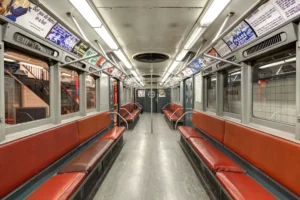
IRT R15 Car #6239 (1950)
Manufacturer: American Car and Foundry Company (Berwick, Pennsylvania), 1950
Service: 1950-1985
Routes: Flushing line (7), 1950-1964; IRT lines (Numbers 1/9, 2, 3, 4, 5, 6), 1964-1985
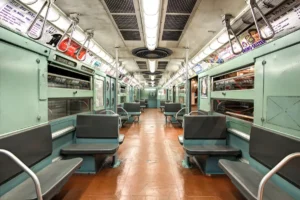
R11 Prototype / R34 Car #8013 (1949)
Manufacturer: Budd Company (Philadelphia, Pennsylvania), 1949
Service: 1949-1976
Routes: BMT 14th Street Canarsie line (L), the Jamaica, West End line (B), and Franklin Avenue Shuttle (S), 1949-1964, 1965-1976
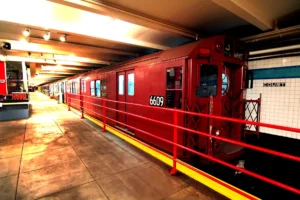
IRT R17 Car #6609 (1955)
Manufacturer: St. Louis Car Company (St. Louis, Missouri), 1955 (additional fleet vehicles, 1956)
Service: 1955-1986
Routes: IRT Lexington Avenue/Pelham line (6), 1955-1986; Times Square Shuttle (S) 1955-1960; IRT lines (1/9, 2, 3, 4, 5, 6) 1960-1986; Flushing line (7), 1962-1964 and 1984
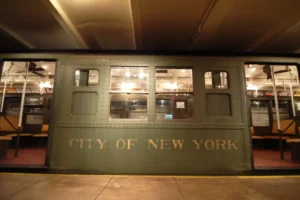
IND R1 ‘City-Car’ #100 (1930)
Manufacturer: American Car and Foundry Company (Berwick, Pennsylvania), 1930
Service: 1931-1970
Routes: BMT Sea Beach line (N), 1931; IND Eighth Avenue lines (A,C,E), Sixth Avenue lines (B,D,F), and Crosstown line (G), 1932-1970
Vintage Buses
The Transit Museum’s collection isn’t limited to train cars! We also preserve a fleet of vintage buses that showcase decades of surface transportation history. Each year, a selection of these vintage vehicles come out for our annual Bus Festival, where visitors can board and explore them up close.
#3100
#236
#2969
#3865
#100
#621
#3006
#1502
#5227
#1201
#8928
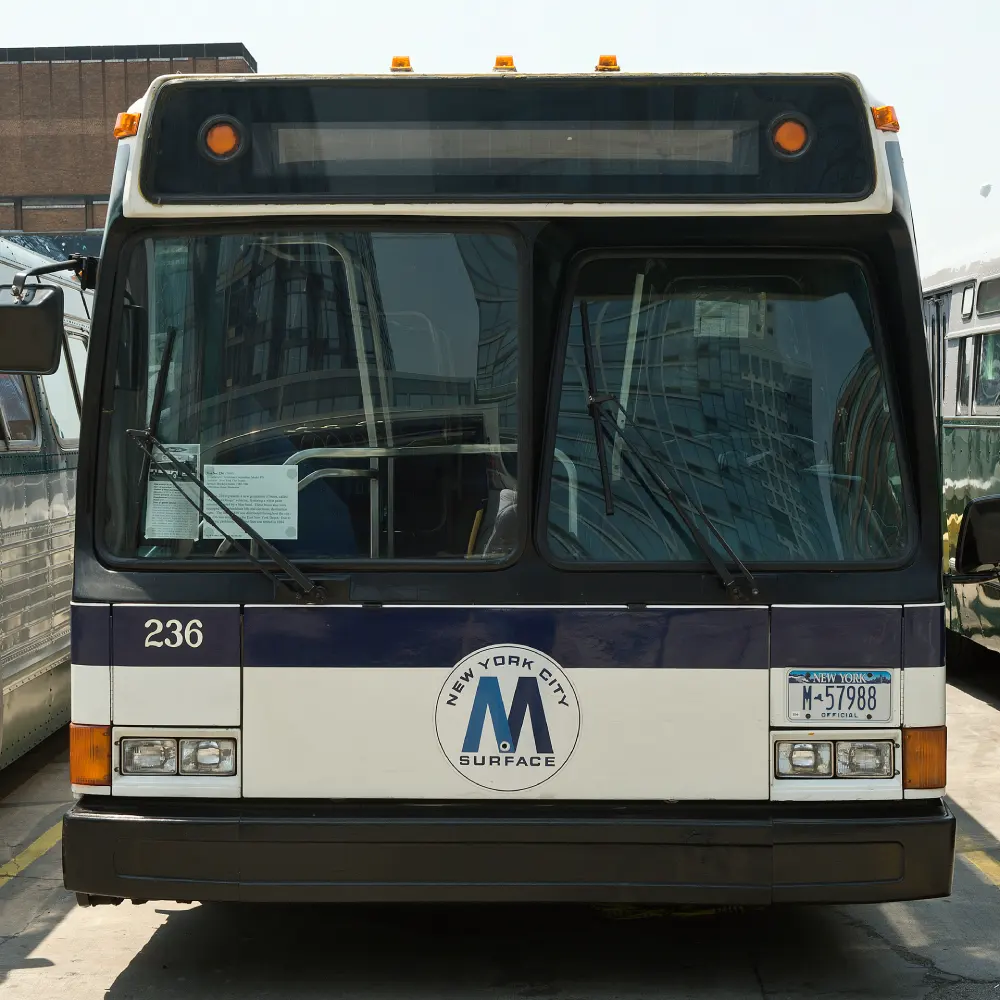
Bus #236 (1980) was one of a new generation of buses called “Advanced Design” vehicles, equipped with wheelchair lifts and electronic destination signs. In 1980, this fleet of 850 was in service throughout the city; #236 was assigned to the East New York Depot. Despite its technological advancements serious structural problems were soon discovered. In a dramatic move that became citywide news, the entire fleet was retired overnight in February 1984.
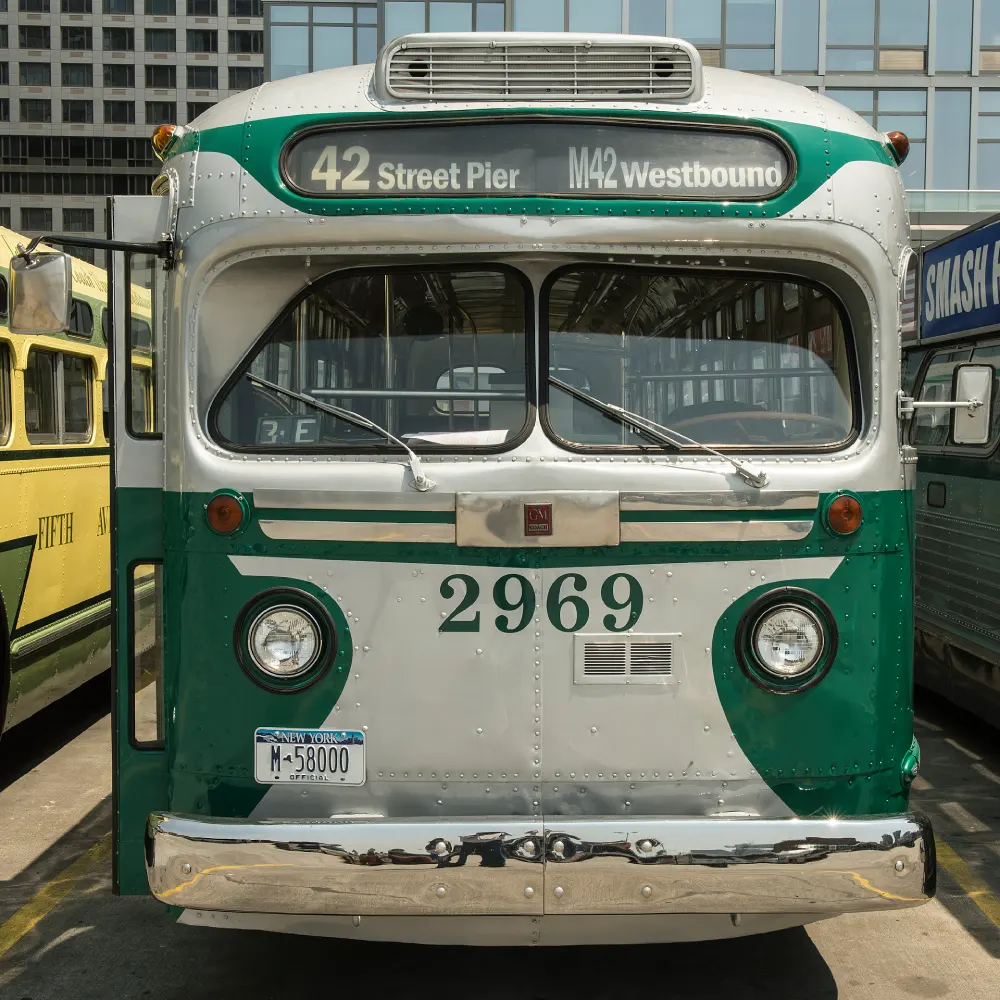
Bus #2969 (1948), one of the first 40-foot transit buses, was designed specifically for New York City. It features a double-width front door to expedite passenger loading and unloading. Known as the “Jackie Gleason Bus,” it was originally Bus #4789, but was renumbered to match the bus that the comedian was photographed in as Ralph Kramden in the classic television series “The Honeymooners.”
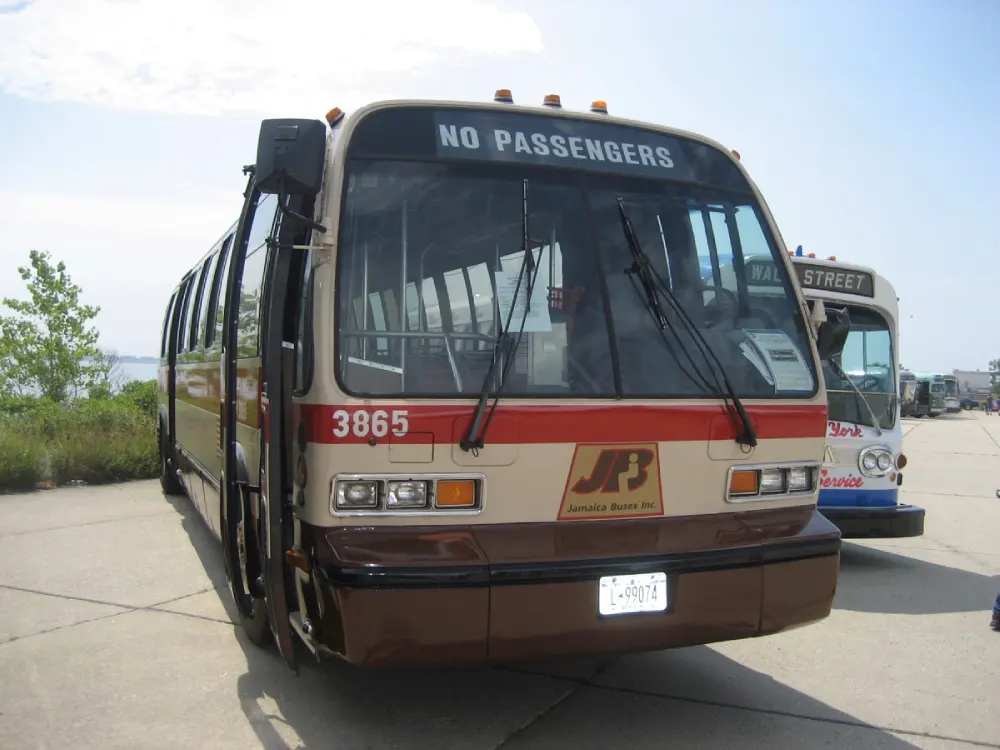
Bus #3865 (1993) was originally delivered to Queens Surface Corporation for service on its routes out of what is now MTA Bus Company’s College Point Depot. In May 2000, Bus #3865 and 11 other TMC RTS buses were transferred to Jamaica Buses Inc., to replace the last of the 1980 Grumman Model 870s that Jamaica Buses was still running. Jamaica Buses was established in 1933, as a subsidiary of the company operating electric streetcars in Queens since the late 1890s. After more than 70 years of service, Jamaica Buses was taken over by MTA Bus Company on June 30, 2006. Its depot was renamed Baisley Park Depot.
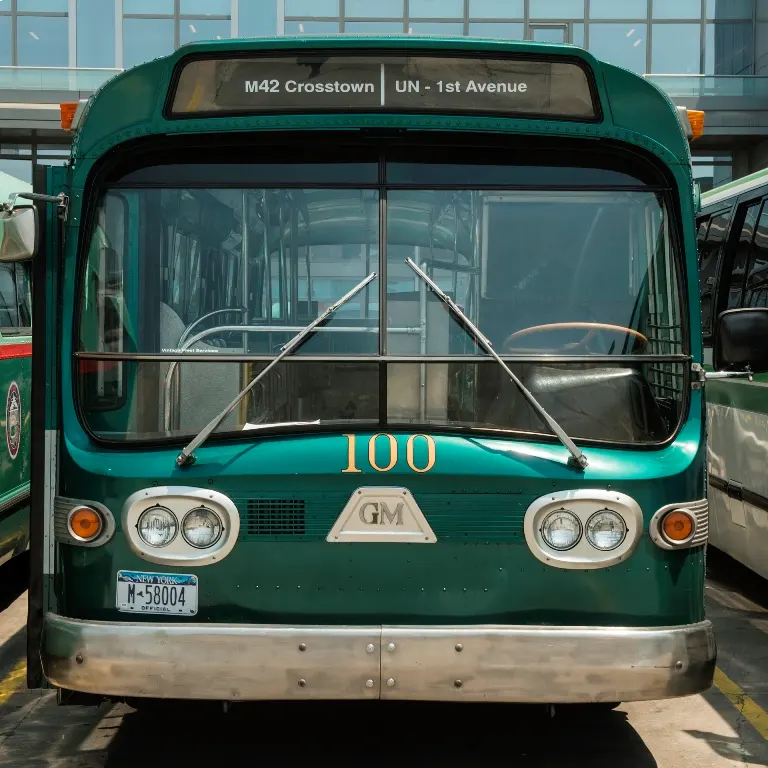
Bus #100 (1959) was among the first group of 190 buses that introduced the “New Look” or “Fishbowl” style to New York City. Developed by GMC, the “New Look” design — featuring the large bubble-shaped windshield, single-piece destination sign, and parallelogram windows — prevailed for twenty years, until the boxier “Advanced Design” bus style was introduced in 1980.
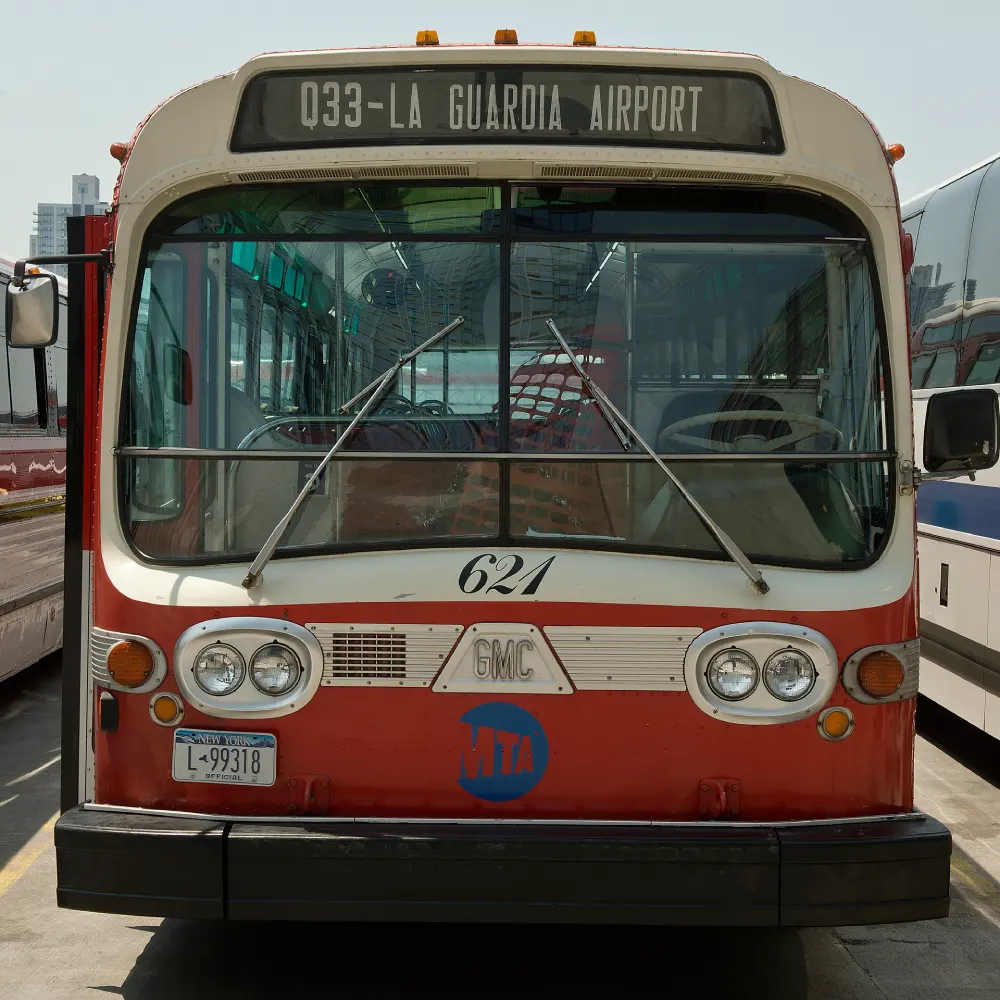
Bus #621 (1979) was one of 10 new “Fishbowl” buses purchased from the Diesel Division of General Motors of Canada, Ltd., in 1979. Used in both express and local service, these buses were retired in the 1990s. Bus #621 was restored in the bright red and silver color scheme with numbers and lettering in the company’s then new font style. Triboro Coach was taken over by MTA Bus Company on February 20, 2006.
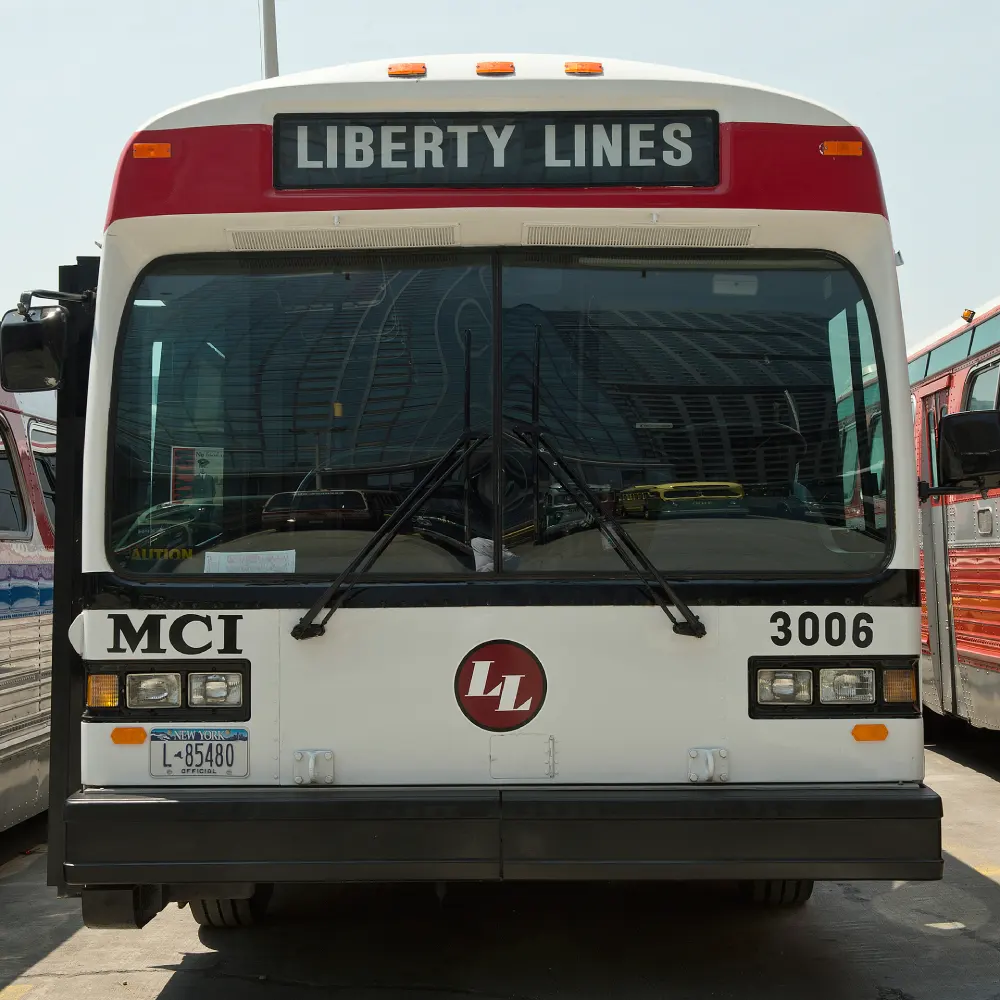
Bus #3006 (1988) is one of the “Classic” design model buses made for Liberty Lines Express. The “Classic” was introduced by General Motors of Canada in 1982 to replace the “New Look” bus design. Bus #3006 was retired in early 2006 with more than 500,000 miles.
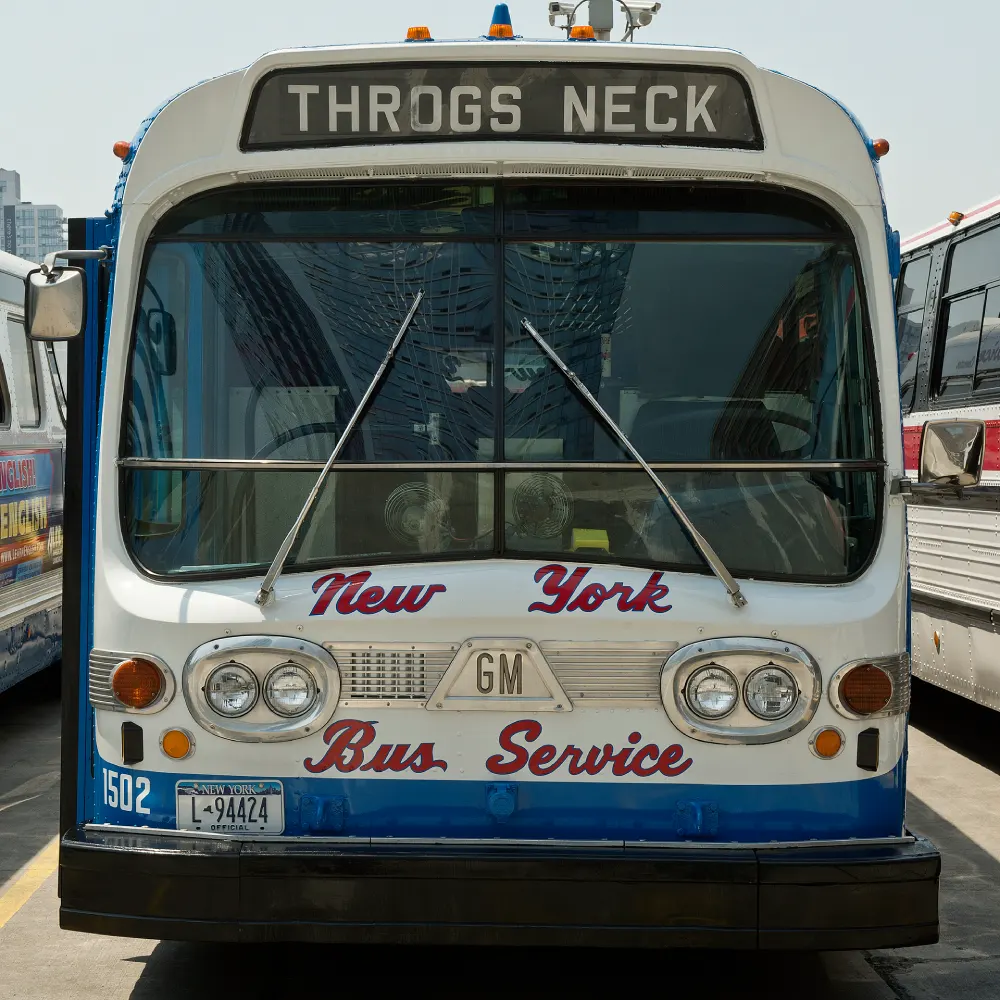
Bus #1502 (1982) was one of 25 “New Look” buses made for New York Bus Service in 1981. These were designed and equipped with “suburban” bus features – forward-facing seats on platforms, parcel racks, reading lights, and a single door, though without baggage compartments or reclining seats. On July 1, 2005, New York Bus Service was taken over by the MTA Bus Company, a new agency created to consolidate the operations of seven private bus lines under franchises from the City of New York.
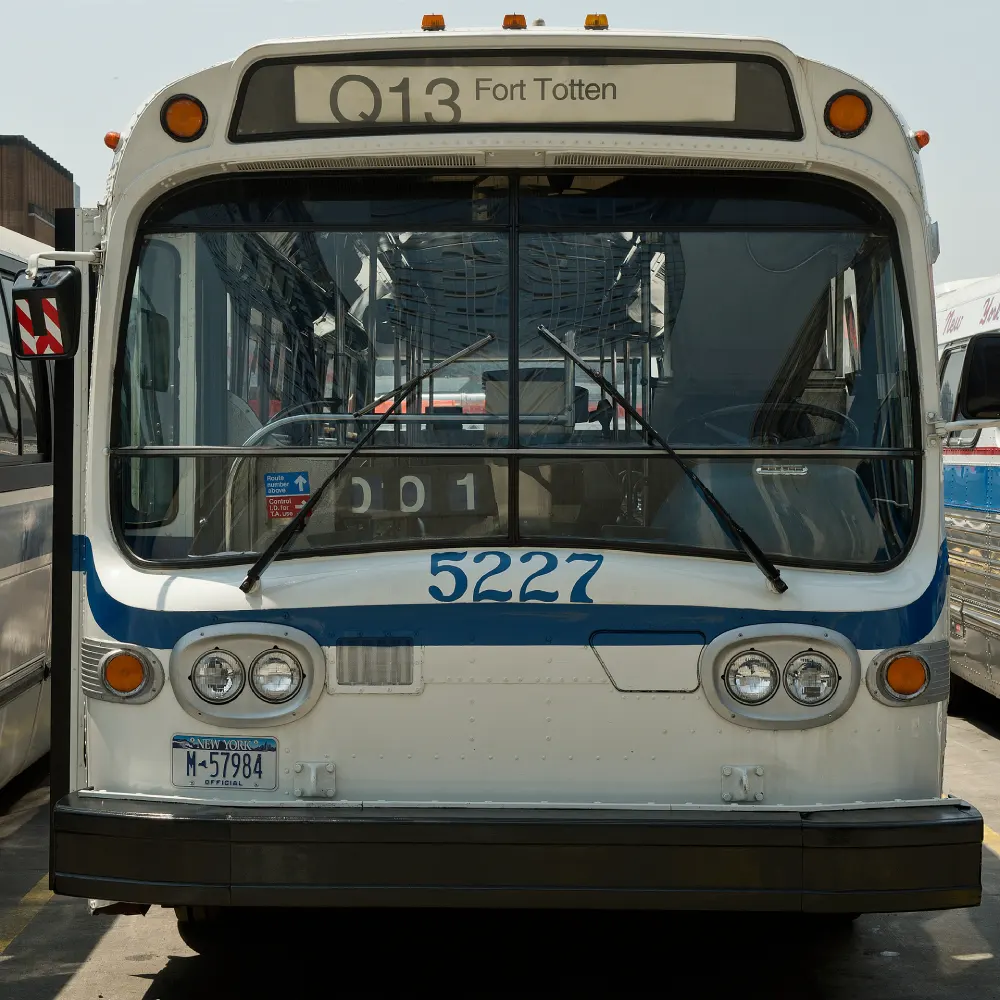
Bus #5227 (1971, rebuilt 1985). In 1984-1985, 350 GM “New Look” buses from the NYC Transit fleet were sent to the Blitz Corporation of Chicago for complete overhaul and rebuilding. When they were returned to New York, renumbered in the “5000-series,” they were known as “Blitz Buses.” The buses featured hard, blue lengthwise seating. Bus #5227 was the last bus not equipped with a wheel-chair lift to operate for NYC Transit.
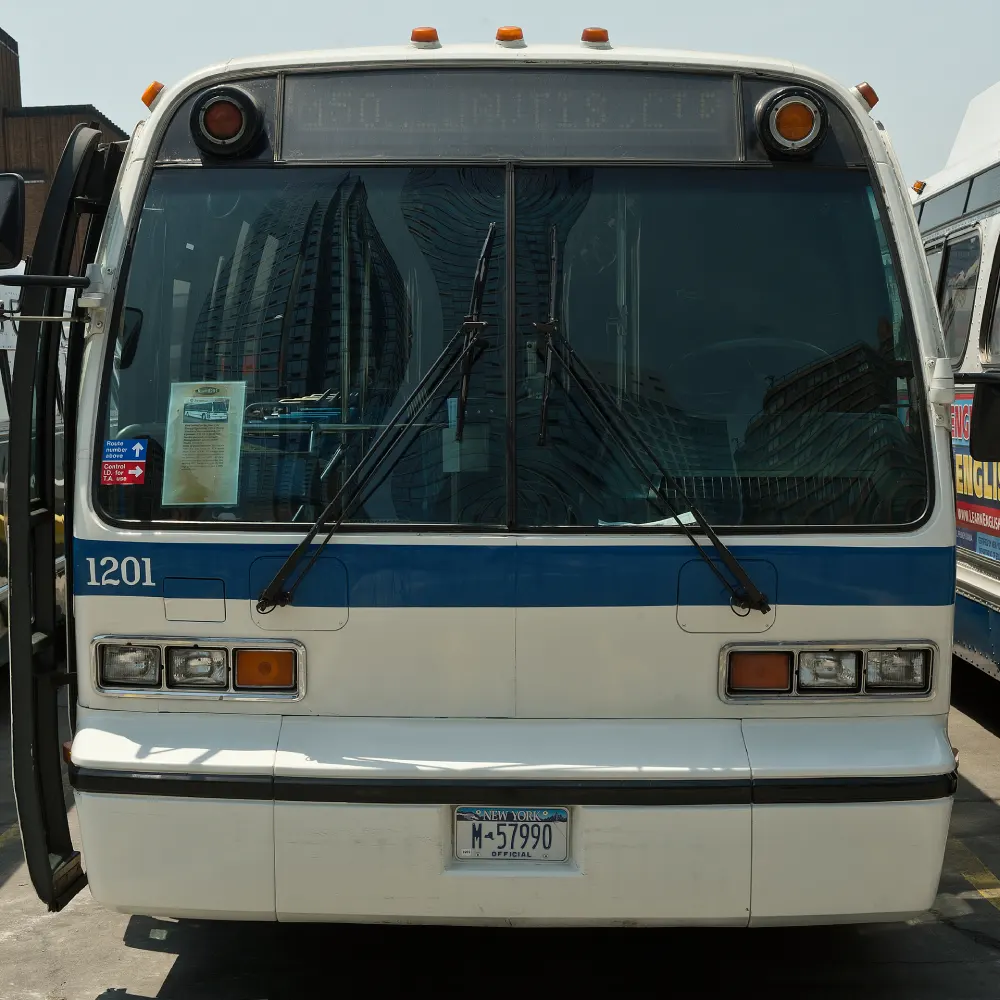
Bus #1201 (1981) was one of the first order of 837 RTS (Rapid Transit Series) model buses, purchased in 1981. A total of 4,877 RTS buses, built by three different manufacturers, were eventually ordered for NYC Transit and MaBSTOA service between 1981 and 1999. All these buses were equipped with wheelchair lifts, enabling NYC Transit to become the first large public transit agency to have a 100% accessible fleet.
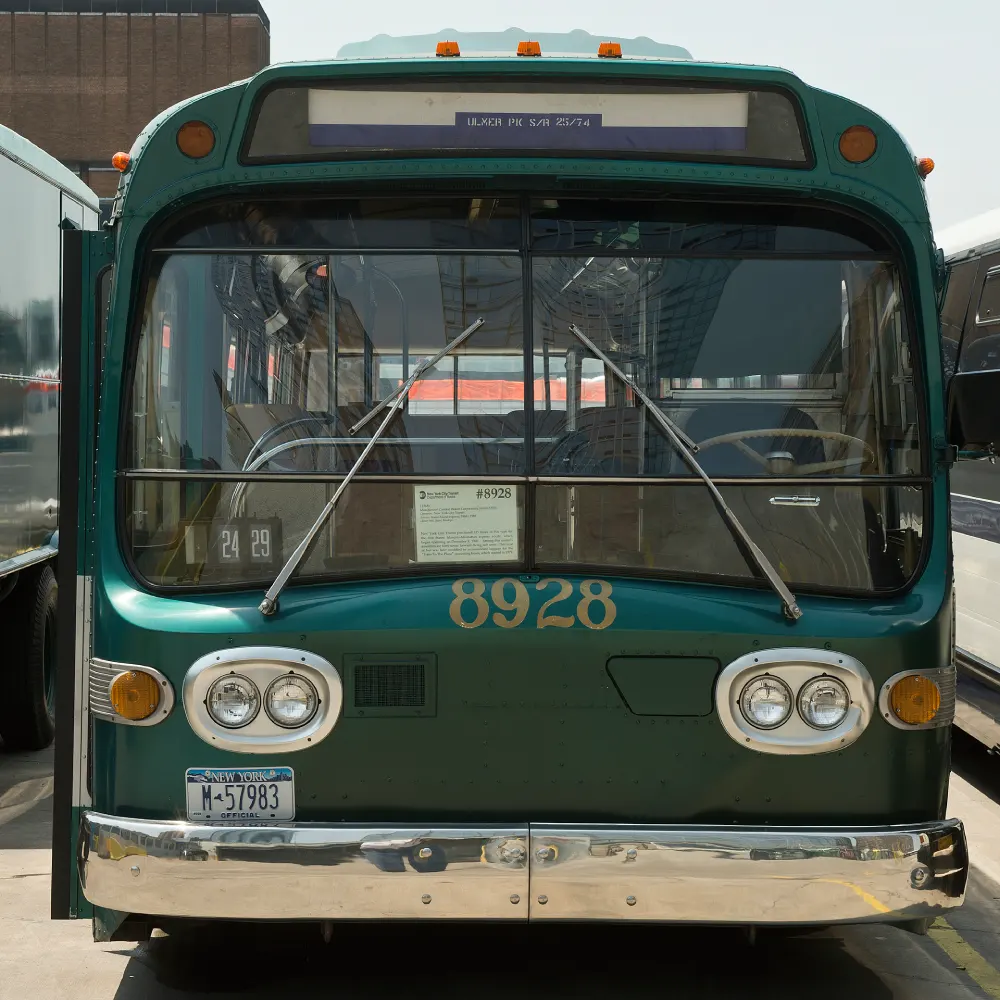
Bus #8928 (1968). New York City Transit purchased 133 buses of this type to begin replacing the 1956-vintage Mack C-49 fleet. Thirteen of the new buses, all equipped with 47 high-back, front facing, upholstered seats, were built for the new Staten Island-to-Manhattan express service, which debuted in December 1968. Later, this model modified with luggage racks, was used for the connecting JFK Express bus service.
HELP PRESERVE
OUR FLEET
Be a part of preserving transit history, caring for collections, and creating experiences that inspire every generation.