Our Journey: The New York Transit Museum at 50

New York City Transit Exhibit Entrance in 1976
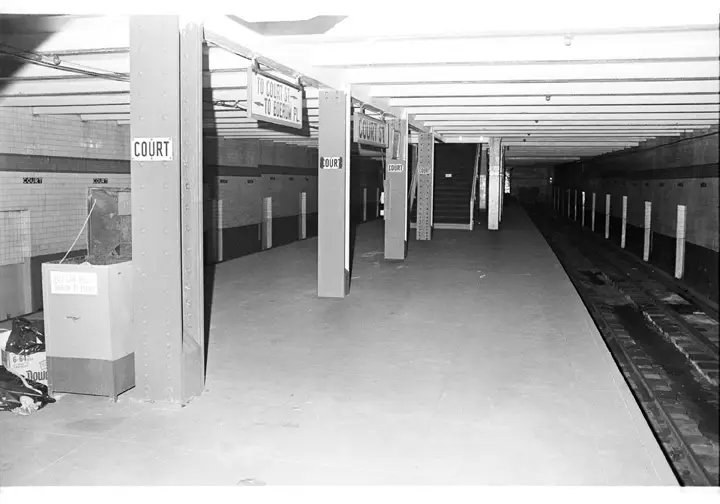
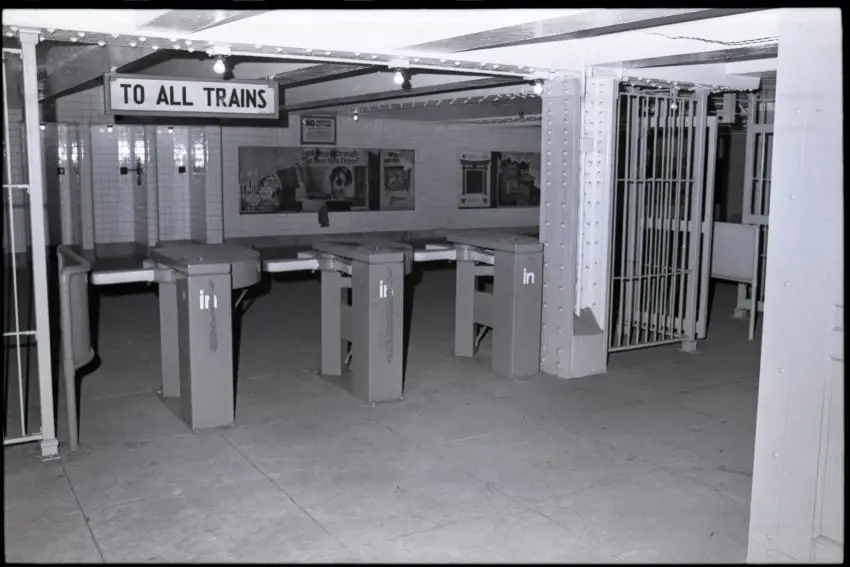
Court Street Station Platform and Fare Control Area May 12, 1976 NYCTA Photograph Unit Collection New York Transit Museum 2005.48.899 2005.48.902

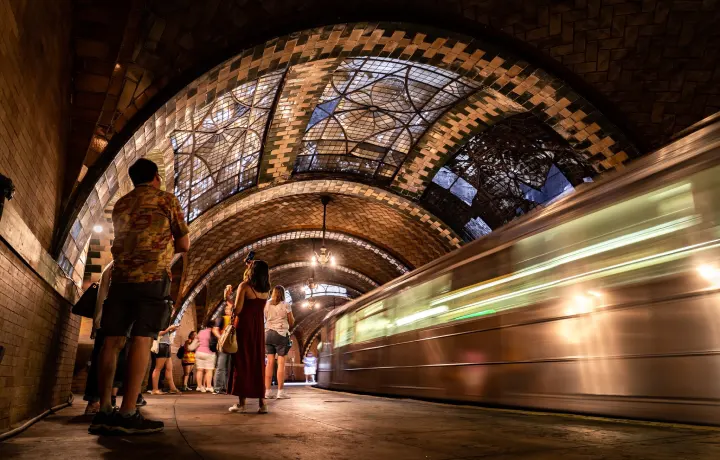
Beneath the busy streets of Downtown Brooklyn, a 1936 subway station tells a much bigger story. 

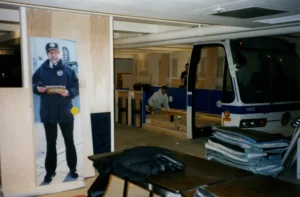
Court Street Station once carried riders on the IND Fulton Line. After closing in 1946, it sat quiet underground for three decades. In 1976, during America’s Bicentennial, it reopened as a temporary exhibition celebrating New York City’s transit system. That exhibit was meant to last two months. It never closed. 

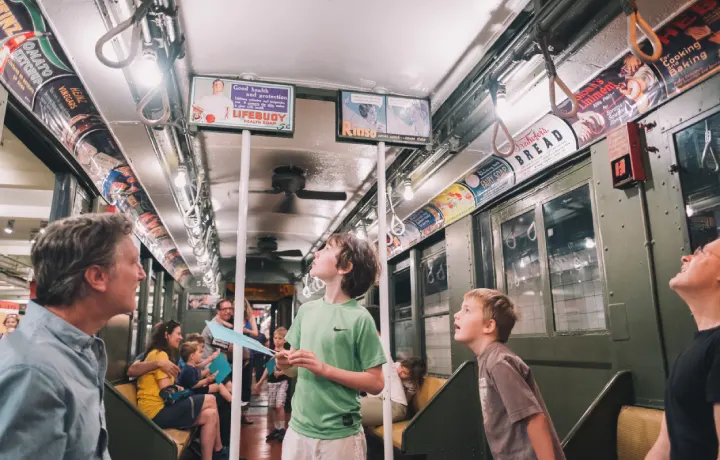
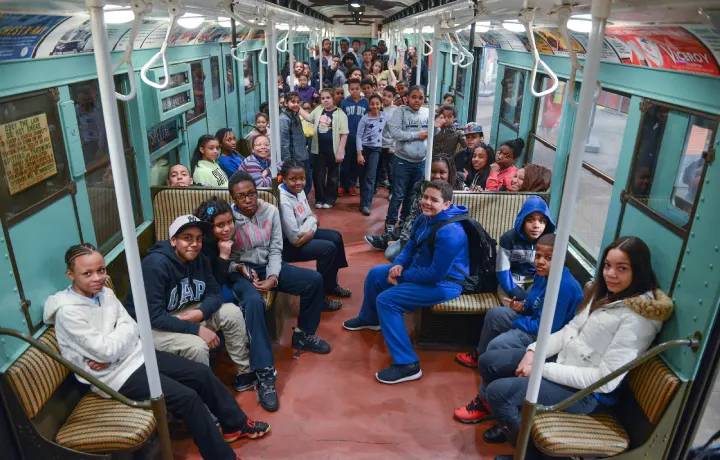
For 50 years, the New York Transit Museum has preserved and shared the stories of the system that moves millions every day. Through our vintage fleet, historic photographs, artifacts, and the voices of workers and riders, the Museum connects the past to the present and looks ahead to the future of how New York moves. 

This digital exhibition traces the journey of our home, our collection, and our community from construction in the 1930s to the living, breathing museum it is today. 

Court Street Station Platform and Fare Control Area, May 12, 1976
NYCTA Photograph Unit Collection
New York Transit Museum
2005.48.902
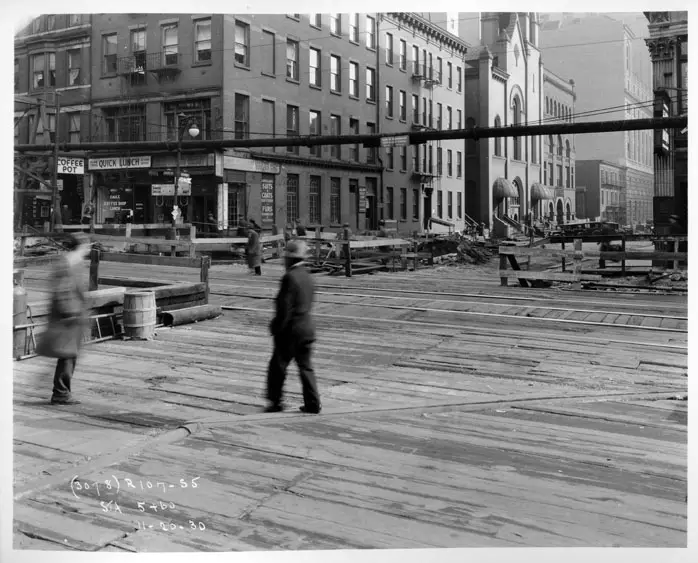
View of decking during construction of the IND Crosstown Line, November 20, 1930

Before the Museum: 1930-1976

Before it was the New York Transit Museum, Court Street Station was carved out of Brooklyn’s streets during the construction of the IND Fulton Line (today’s A/C trains.) 

Photographs from our Subway Construction Photograph Collection capture work underway in 1930. 

View of Decking During Construction of the IND Crosstown Line, November 20, 1930
Subway Construction Photograph Collection
New York Transit Museum

Excavation for the New Court House

Building a Subway, Building a Neighborhood (1930) 

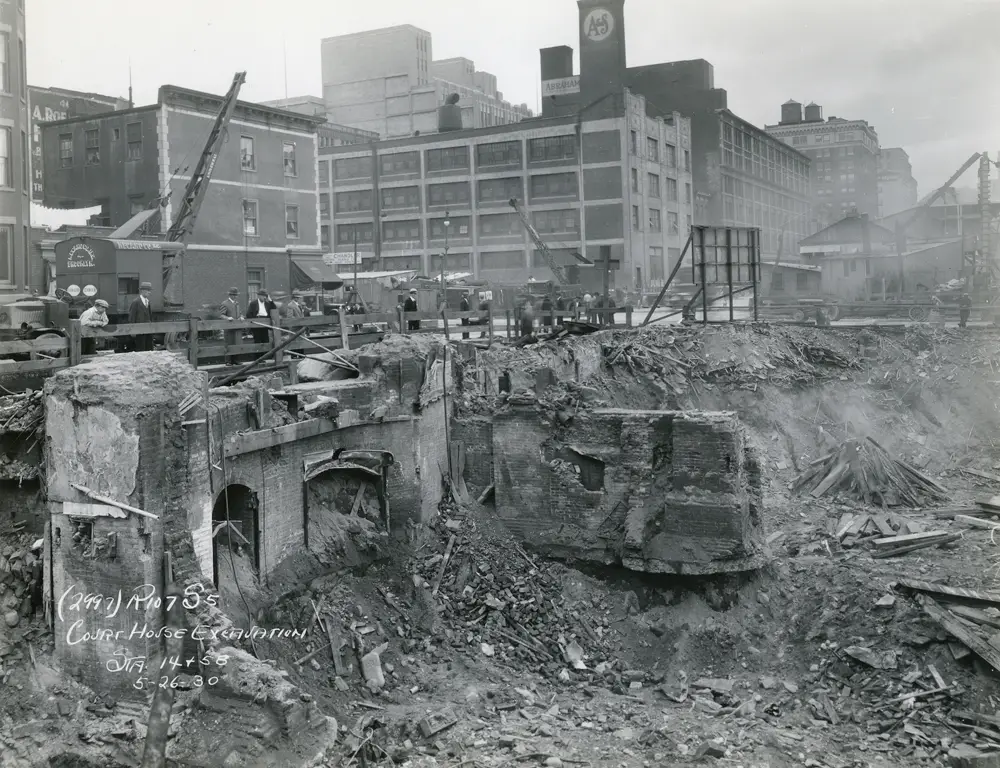
This northeastward view of Schermerhorn and Smith Streets captures a massive excavation during construction of both the IND Fulton Line and the new courthouse. The future site of Court Street Station, now home to the New York Transit Museum, lies within this construction zone. A partial view of the building that formerly housed Macy’s on Livingston Street appears in the background. 

Excavation for the New Court House, May 26, 1930 
Subway Construction Photograph Collection 
New York Transit Museum 
R107S5_2997 

View of Openings in Decking from Roadway

Court Street remained an active commercial corridor even as subway construction continued beneath it. Temporary wooden decking covered the excavation, with openings revealing the work below. Just out of frame to the right is the future location of the Transit Museum. 

View of Openings in Decking from Roadway, November 20, 1930 
Subway Construction Photograph Collection
New York Transit Museum
R107S5_3079 

Sign for the Closing of the Court Street Station R107S5_z001

Court Street Station, 1936–1946 

Court Street Station opened on April 9, 1936, as part of the IND Fulton Line. It was served by the HH Shuttle, which ran between Court Street and Hoyt–Schermerhorn, only three blocks apart. 

It remained active for just ten years, closing in 1946 due to low ridership. For the next three decades, the station sat quiet underground, used only occasionally for trainings and film shoots before reopening in 1976 as the New York City Transit Exhibition. 

Sign for the Closing of the Court Street Station, 1946
Subway Construction Photograph Collection 

New York Transit Museum 
R107S5_z001

Court Street Station Platform and Fare Control Area

While the Museum does not have any images of the station while it was an active part of the subway system, this photograph show the platform and fare control area in May 1976, just before the original Transit Exhibition was installed. 

Court Street Station Platform and Fare Control Area, May 12, 1976
NYCTA Photograph Unit Collection 

New York Transit Museum  
2005.48.899

The New York City Transit Exhibition: 1976 

Group in front of Transit Exhibition entrance on opening day

A Bicentennial Exhibition That Became Permanent

In early 1976, a group of transit employees proposed an idea. With New York City facing fiscal crisis and the Bicentennial approaching, they argued that the story of mass transportation in New York was inseparable from the story of the city itself. They requested permission to tell that story.

Opening Day, July 4, 1976
New York Transit Museum 

Man in front of turnstiles in NYC Transit Exhibition

On July 4, 1976, the long-closed Court Street Station reopened as the New York City Transit Exhibition. The exhibition was designed to highlight the development of public transportation in the city and reflect on more than seventy years of subway history. Originally intended as a temporary installation, it proved so popular that it was continually extended.

NYC Transit Exhibition, July 9, 1976 
NYCTA Photograph Unit Collection 
New York Transit Museum 
2005.48.918 
 

New York City Public Transit Exhibit Ticket ca. 1976-1989

When the Transit Exhibition opened, admission cost one subway token, or fifty cents, with half fare for children. Today, the Museum continues its tradition of accessibility, maintaining one of the lowest admission fees among New York City cultural institutions. Admission is still paid at the station’s original token booth, and the Museum offers a free Gallery at Grand Central Terminal along with free community events throughout the year. 

New York City Public Transit Exhibit Ticket
ca. 1976-1989
NYTM Institutional Records
New York Transit Museum

Bicentennial Car #1776

One of the highlights of the original exhibition was car #1776, decorated in patriotic Bicentennial regalia and “For America’s 200th Birthday” signage.  

The Transit Museum’s platform is the length of a city block and has room for about 20 different vintage train cars. Today, the cars on view span from the oldest car in the collection (the 1903-4 Brooklyn Union Gate Cars) to an R44, a 1970s car model that is still occasionally seen in service today as a contingency fleet on the Staten Island Railway.  

Bicentennial Car #1776, ca. 1976-1980 
Ralph Curcio Slide Collection  
New York Transit Museum 
2016.12.1.40 

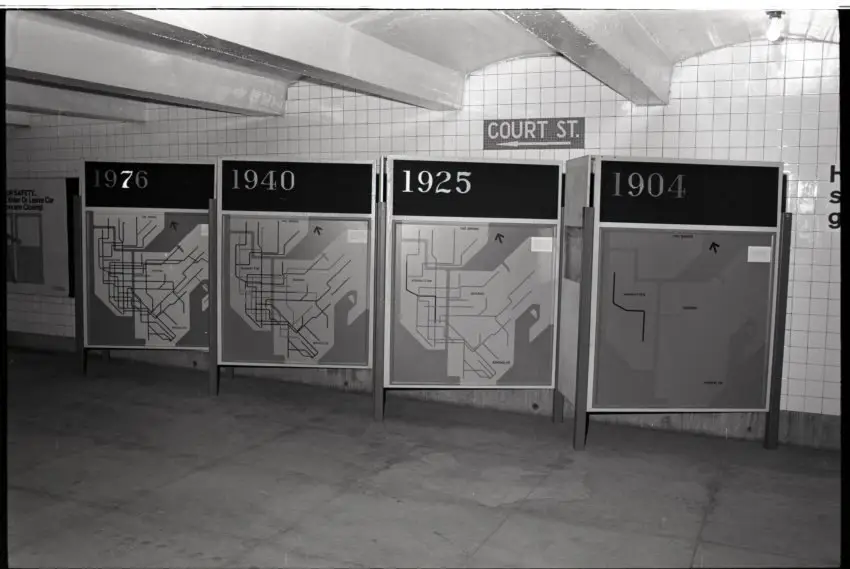
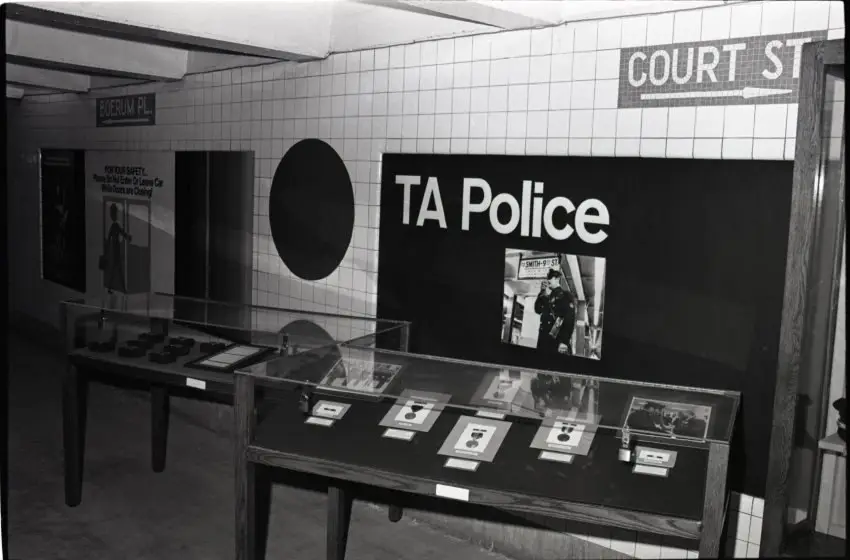
Beyond the platform of vintage subway cars, the original exhibition filled the station’s mezzanine with displays that explored the system’s history and design. A timeline traced subway expansion and map changes from 1904 to 1976, and cases of Transit Police artifacts, historic mosaics, and vintage turnstiles highlighted the operations, artistry, and everyday experience of riding the system.  

Map display in 1976

NYC Transit Exhibition Installation, July 9, 1976
Photo by Arnold Krockman 

NYCTA Photograph Unit Collection 
New York Transit Museum 
2005.48.925

Transit Police Artifacts at the NYC Transit Exhibition

Transit Police Artifacts at the NYC Transit Exhibition, July 8, 1976 
NYCTA Photograph Unit Collection 
New York Transit Museum 
2005.48.911

Subway Mosaic Display at the NYC Transit Exhibition

Subway Mosaic Display at the NYC Transit Exhibition, July 8, 1976
NYCTA Photograph Unit Collection
New York Transit Museum
2005.48.912

Turnstile Display at NYC Transit Exhibition

Turnstile Display at NYC Transit Exhibition, July 8, 1976
NYCTA Photograph Unit Collection
New York Transit Museum
2005.48.914

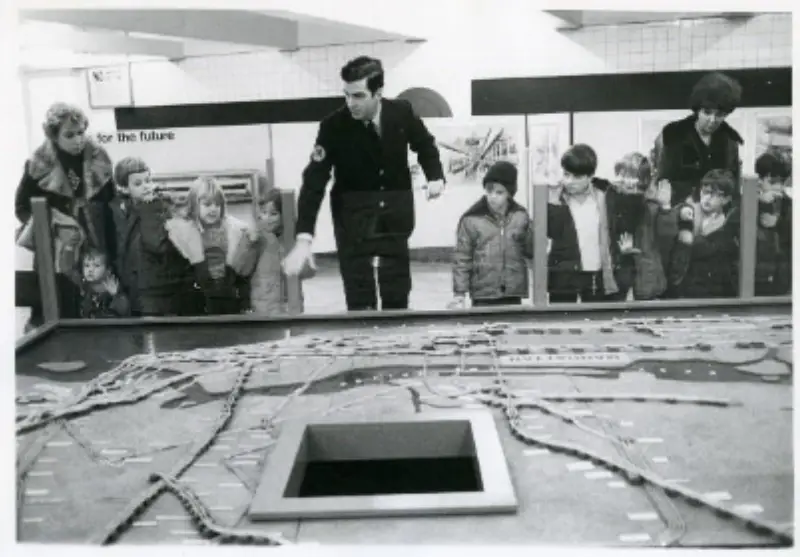
Clinton Schmitterer describes NYC model

This model was the centerpiece of the museum’s mezzanine. It was a scale model of New York City that showed how subway lines traversed the boroughs.  

What happened to this model? We’re not sure! It was removed from the mezzanine at some point and vanished. 

Clinton Schmitterer describes NYC model, 1976
New York Transit Museum Collection
2025.29 

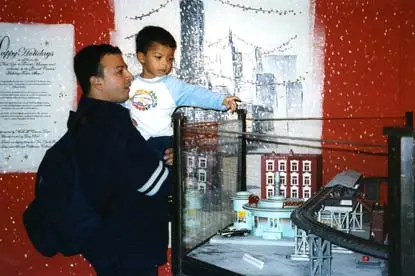
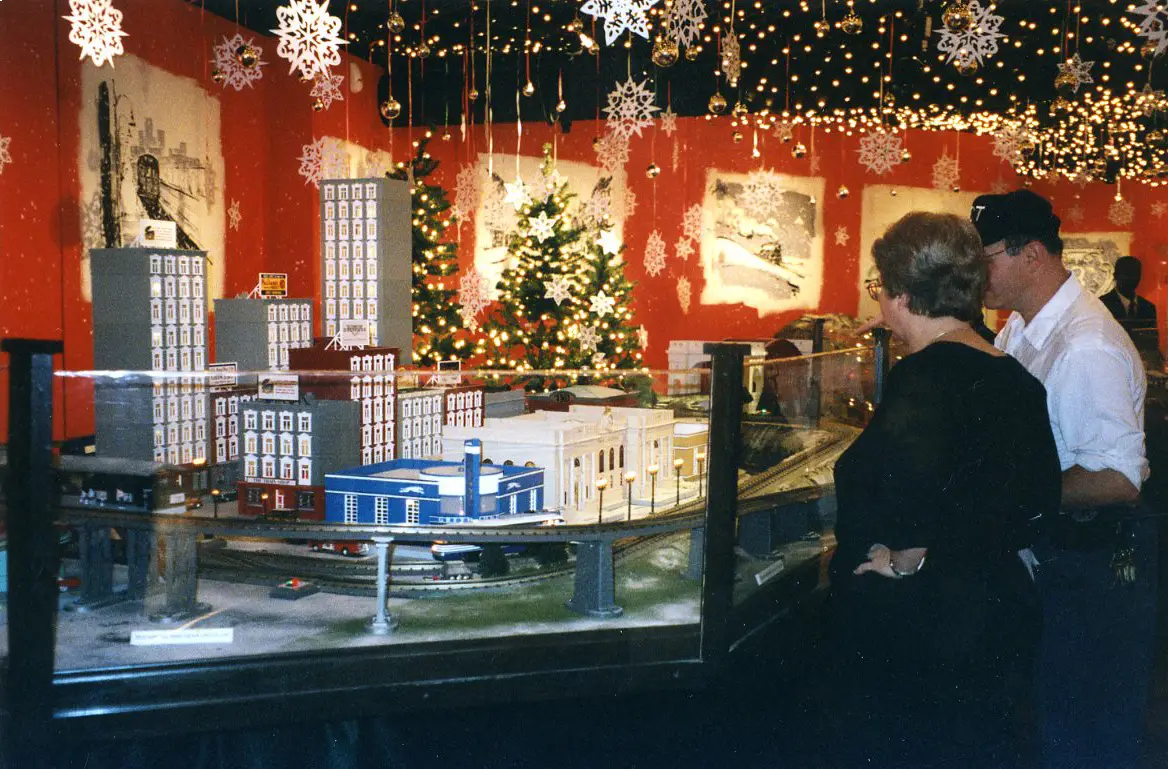
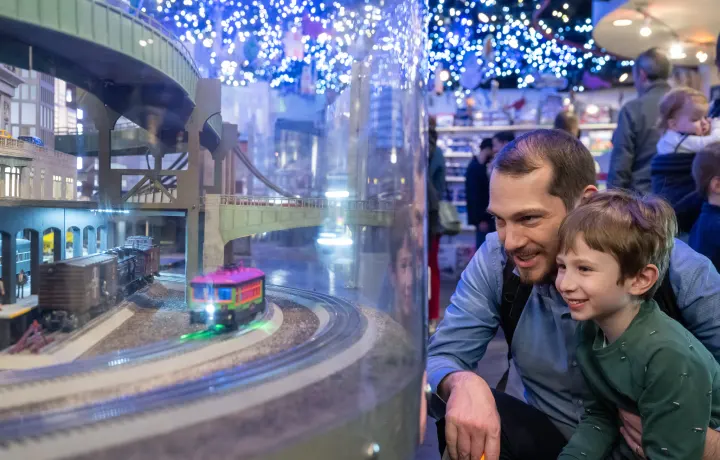
Boy and father looking at model trains in 1976 (Left); Family looking at model trains in 2025 (Right)

Models were featured as part of the original exhibition, offering detailed miniature views of New York’s rolling stock. Today, the Museum continues that tradition with more than fifty model trolley cars in the permanent On the Streets exhibit and rotating model train displays during the annual Holiday Train Show at Grand Central.  

Left: Examining Model Trolleys, 1976
NYTM Institutional Photographs
New York Transit Museum

Right: 2025 Holiday Train Show
Photo by Filip Wolak
New York Transit Museum 

Taking a Piece of Transit Home

Shopping has also been part of the Transit Museum experience since the beginning. When the Transit Exhibition opened in 1976, visitors could stop by the “Buff Stuff” counter to purchase souvenirs that celebrated their love of subways and buses.

Today, the New York Transit Museum Store operates retail locations in Downtown Brooklyn, at Grand Central Terminal, and at 2 Broadway in Lower Manhattan, offering transit-inspired apparel, jewelry, home decor, toys, books, and more.

Buff Stuff Souvenir Counter

Buff Stuff Souvenir Counter, 1976 
NYTM Institutional Photographs 
New York Transit Museum 

NYC Transit Exhibition T-Shirt 1987

NYC Transit Exhibition T-Shirt, 1987
NYTM Institutional Photographs
New York Transit Museum 

Transit Museum Retail Counter May 9, 1980

Transit Museum Retail Counter, May 9, 1980
NYTM Institutional Photographs
New York Transit Museum

New York Public Transit Exhibit car card, 1976

Reaching Riders Underground 

Because the Museum is part of the transit system it interprets, it has long promoted its exhibitions directly to subway riders. Advertising posters placed in stations and subway cars introduced millions of commuters to the Museum’s underground home. 

One of the earliest examples dates to 1976, when the newly opened Transit Exhibition invited New Yorkers to “Catch All the Trains You Missed!” The slogan played on the idea that visitors could step aboard vintage subway cars and experience decades of transit history in a single visit. 

New York Public Transit Exhibit car card, 1976
Artwork by Kenneth Francis Dewey
New York Transit Museum Collection
3032 

From Exhibition to Institution: 1977-1980s

By the early 1980s, what began as a Bicentennial exhibition had firmly established itself as a cultural institution. On January 29, 1982, the Transit Exhibition welcomed its 500,000th visitor, confirming the public’s lasting interest in transit history. In 1986, the Archives were formally established, a dedicated archivist was hired, and in 1989, the Archives relocated to 10 Columbus Circle, expanding the Museum’s capacity to care for its growing collections. That same year, the organization was officially renamed the New York Transit Museum. 

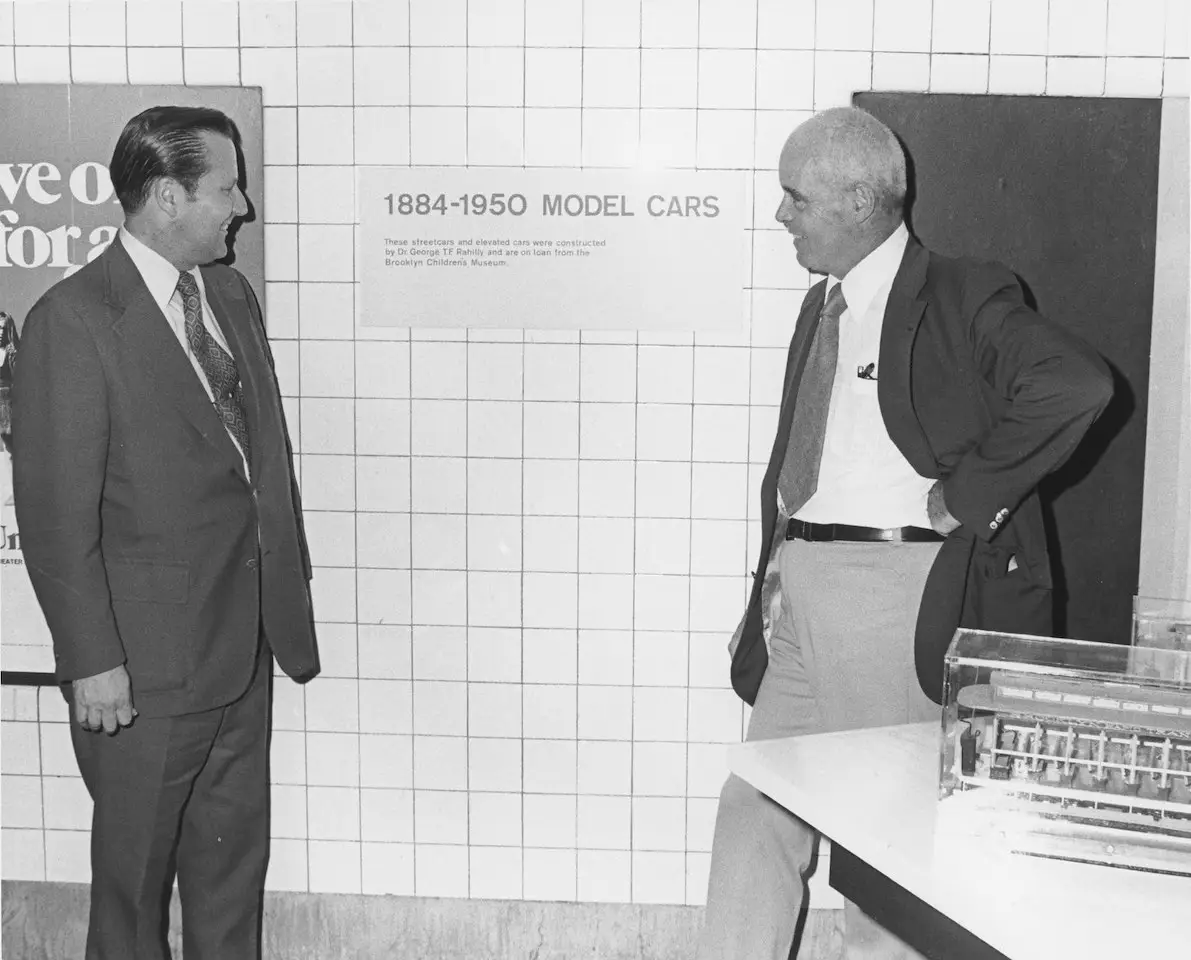
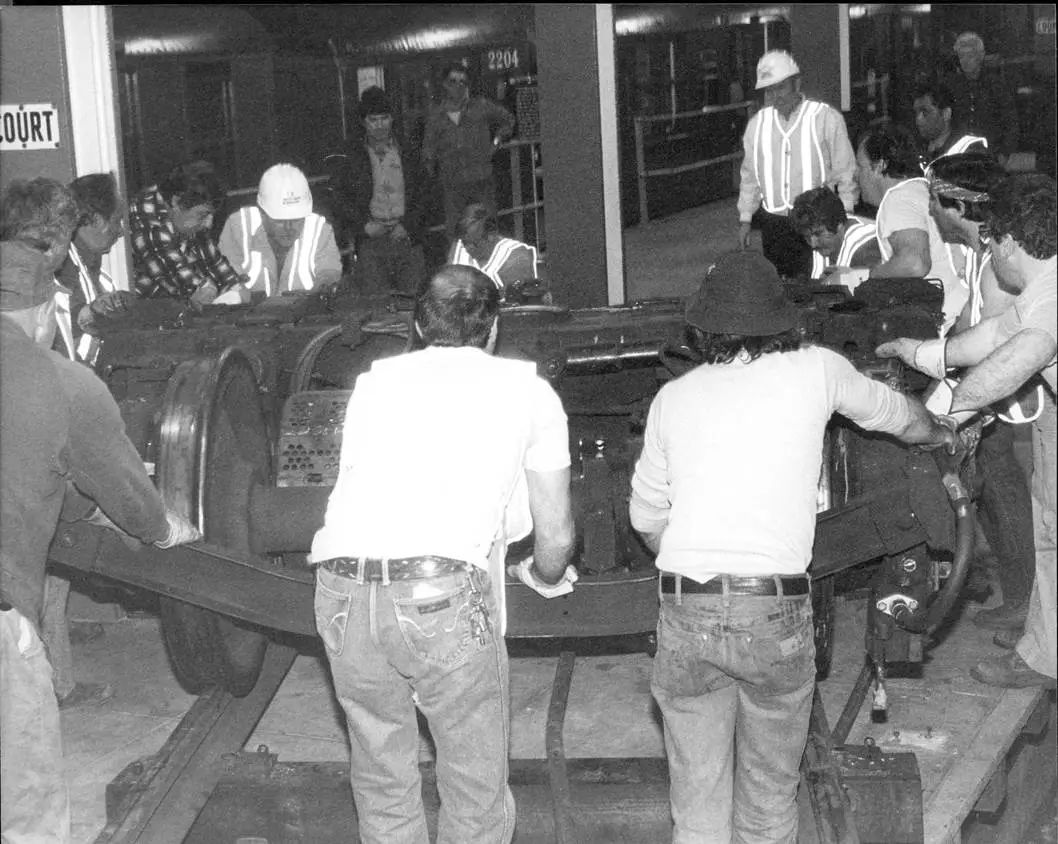
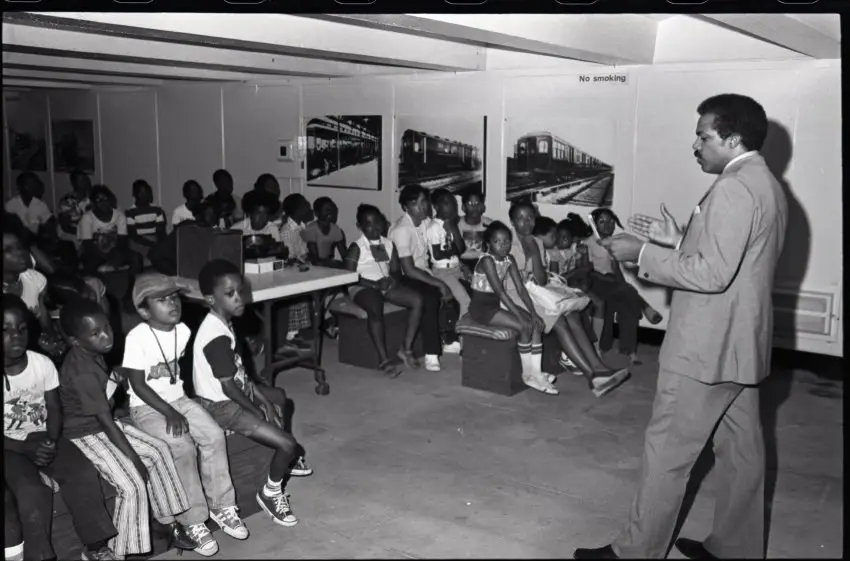
Early supporters and transit advocates helped shape the Museum’s future. Figures such as Dr. George Rahilly and Don Harold appear in photographs from the exhibition’s early years alongside volunteers who did everything from leading tours for school children and adults to helping move large artifacts into the station like our 7,000lb motor truck! 

Dr. George Rahilly and Don Harold at the Transit Exhibition

Dr. George Rahilly and Don Harold at the Transit Exhibition, June 23, 1977
NYCTA Photograph Unit Collection
New York Transit Museum
2005.48.1

Men Moving the Motor Truck

Moving the Motor Truck, 1976
NYTM Institutional Photographs
New York Transit Museum

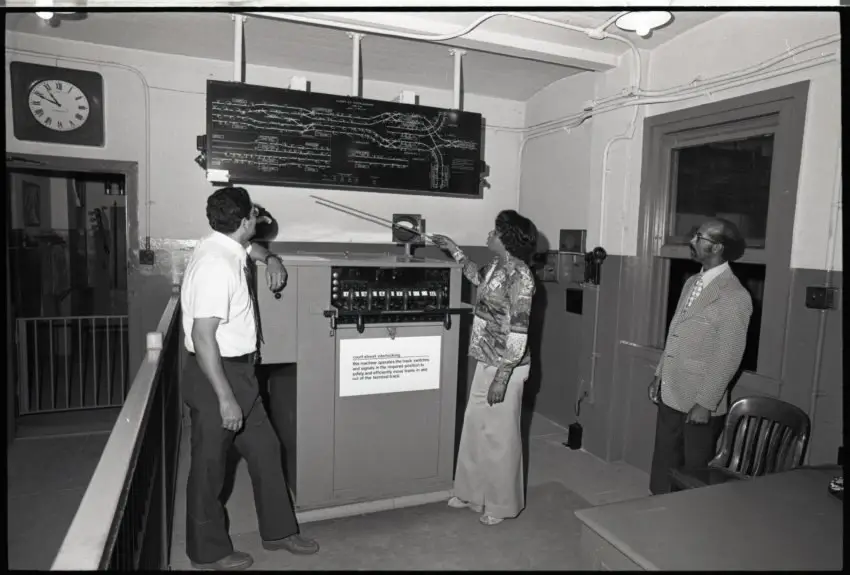
Volunteer Explains How Interlocking Works

Volunteer Explains How Interlocking Works, July 9, 1976
NYCTA Photograph Unit Collection
New York Transit Museum
2005.48.921

Volunteer Speaking to Group of Children

Volunteer Speaking to Group of Children, July 9, 1976
NYCTA Photograph Unit Collection
New York Transit Museum
2005.48.917

Press release, 1977

On February 13, 1977, it was announced that the exhibit would remain open indefinitely. In just over seven months since opening on July 4, 1976, it had welcomed more than 60,000 visitors, 20% of them school-aged children.

Press release, 1977
New York Transit Museum Collection
2025.29 


Left: Diorama; Right: Volunteer teaching

In the mid-1980s, visitors could explore detailed dioramas and watch volunteers demonstrate the Museum’s working signal tower, bringing the mechanics of the subway system to life.  

Left: Diorama at NYC Transit Exhibition, April 1987 
New York Transit Museum 

Right: Volunteer Explaining the Signal Tower, 1987
New York Transit Museum 

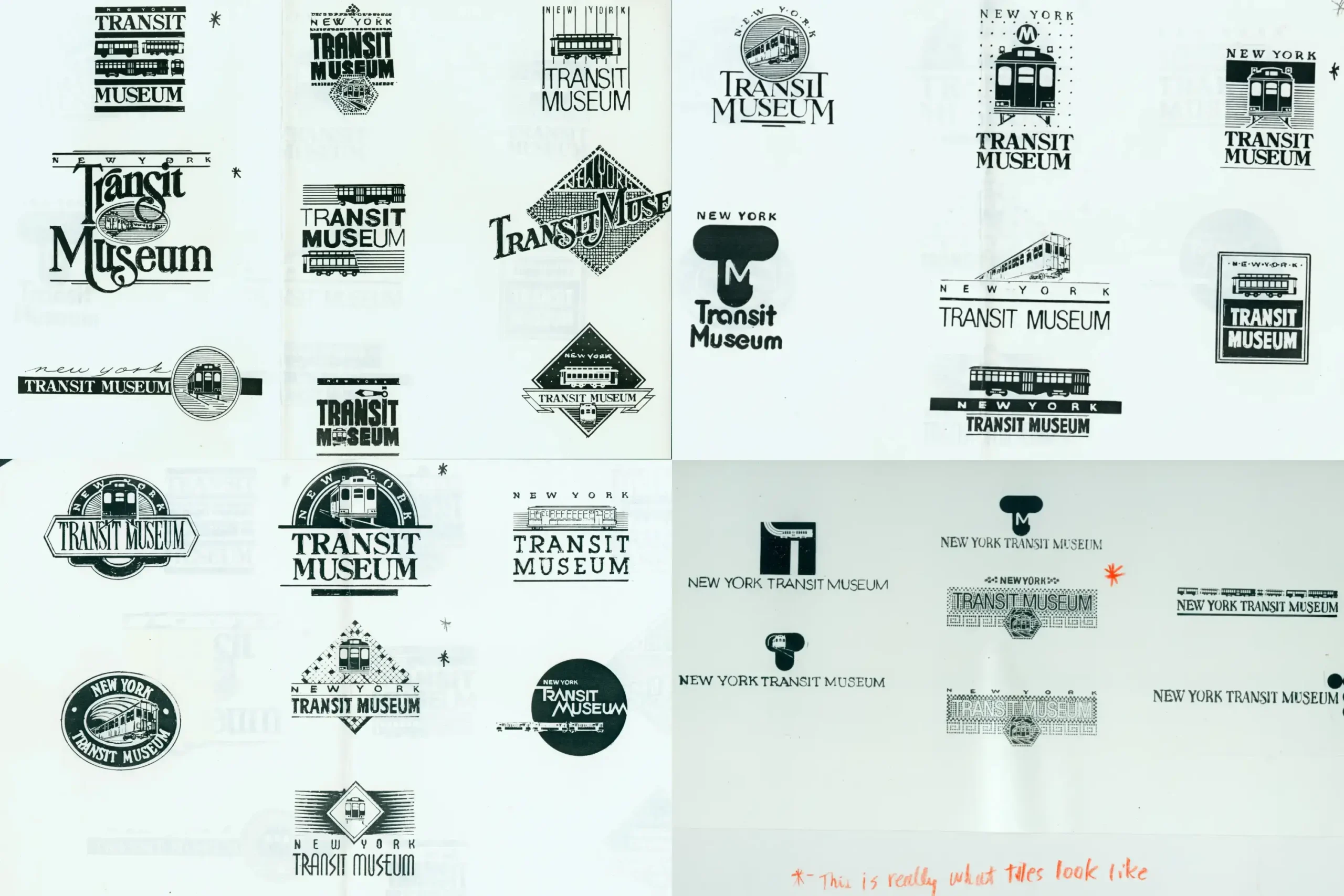
Our New Logo Brochure, 1989 New York Transit Museum

Our New Logo Brochure and Alternative Logo Designs, 1989 
New York Transit Museum Collection

In 1989, the Museum adopted its first official logo following its name change from the New York City Transit Exhibition to the New York Transit Museum. Several options were considered. The chosen design featured bold lettering spelling out Transit Museum alongside graphic illustrations of transit vehicles including subway trains, buses, trolleys, and streetcars. The name change and imagery suggested a broader vision of transportation history that extended beyond the five boroughs and beyond the subway system alone, but that expanded mission wouldn’t be formally recognized for several years.

Alternative logo designs

Crisis & Rebuilding 

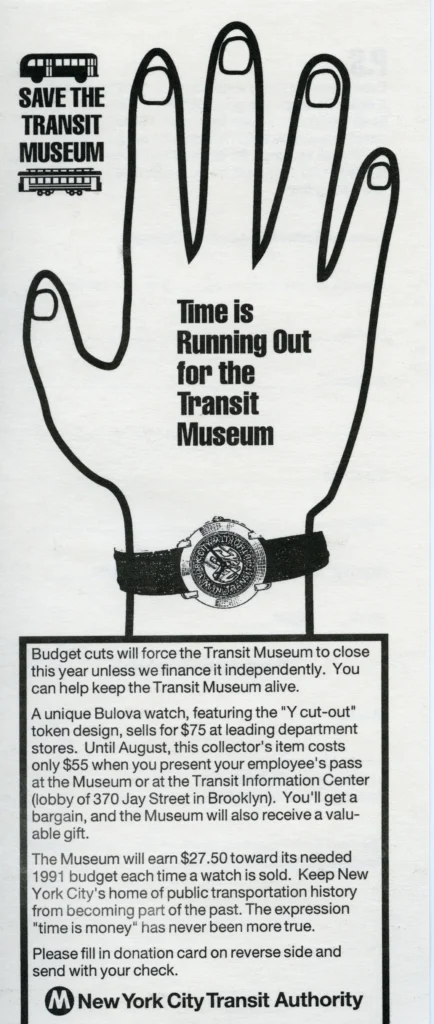
“Save the Transit Museum,” ca. 1990 Brochures

Save the Transit Museum! 

In December 1990, amid mounting budget pressures, the Metropolitan Transportation Authority Board voted to close the New York Transit Museum, placing the institution in serious jeopardy. The next year, the Board approved a reduced budget and staff in the face of possible closure, prompting the launch of the “Save the Transit Museum” campaign. Through public advocacy and private support, the community rallied for the Museum’s survival. 

School group in the mid-90s

Left: “Save the Transit Museum,” ca. 1990
Brochures and PR Materials
NYTM Institutional Records
New York Transit Museum

Right: Educator Leading a School Group Tour, 
ca. mid-1990s
New York Transit Museum Collection

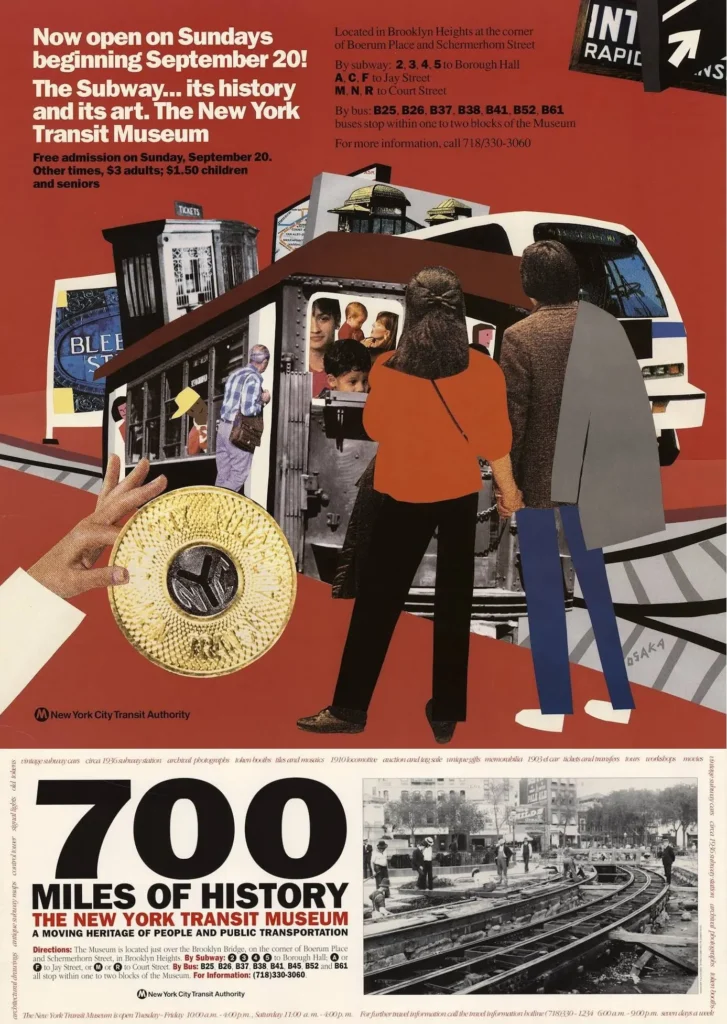
Two New York Transit Museum Subway Ads

Throughout the 1990s, advertisements in the subway continued to promote the Museum as a destination for riders exploring the city. Posters highlighted expanded hours, including the addition of Sunday openings, and invited commuters to discover “700 Miles of History,” a reference to the vast network of subway lines that the Museum preserves and interprets. 

Top: New York Transit Museum car card,
ca. 1990s

Artwork by Richard Osaka
New York Transit Museum Collection
3294

Bottom: New York Transit Museum car card,
ca. 1990s

New York Transit Museum Collection
3378

Triborough Bridge and Tunnel Authority fare coin

A Museum for the Whole MTA

In 1996-7, the New York Transit Museum formally became a division of the Metropolitan Transportation Authority, securing its place within the very agency whose history it preserves. This transition was an important evolution in the Museum’s identity and mission. No longer focused solely on New York City Transit, the Museum expanded its collecting scope to reflect the full regional network under the MTA’s umbrella, including subways, buses, commuter railroads, bridges, and tunnels.  

Triborough Bridge and Tunnel Authority Token, ca. 1982
Object and Artifact Collection
New York Transit Museum 
XX.2009.195

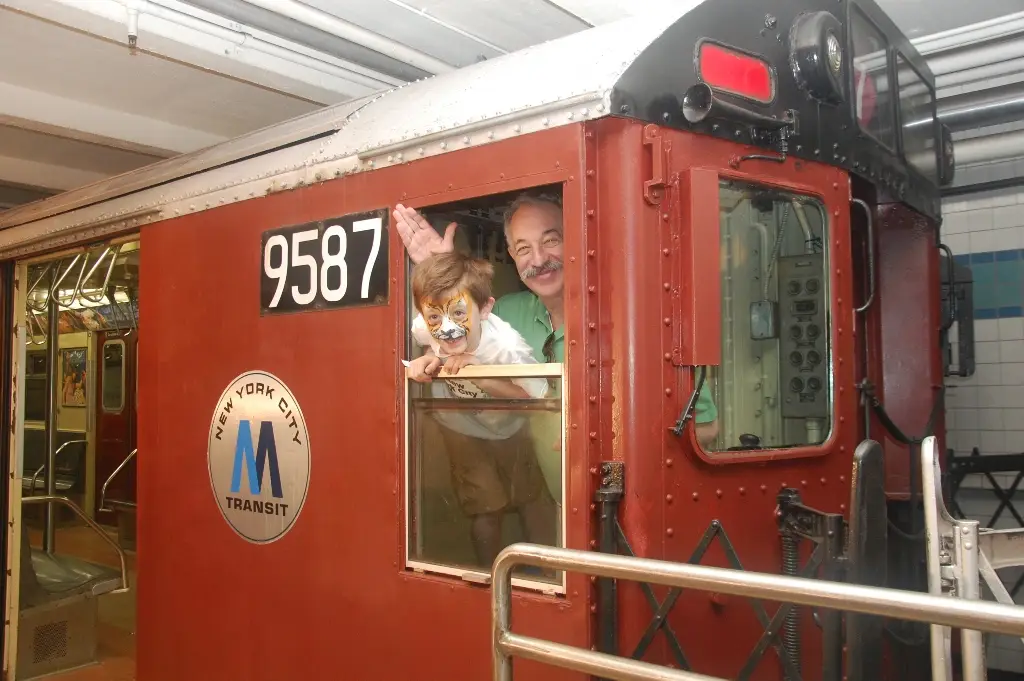
Adult and child in the conductor's cab of Redbird at Party on Wheels

Party on Wheels  

The Transit Museum’s family fundraiser began in 2014 with a sold-out celebration celebrating the 110th anniversary of the NYC Subway. Since then, the event has become an annual tradition, inviting families for a morning of hands-on activities, face painters, vintage subway rides from the Museum’s platform to Hoyt-Schermerhorn and back, and a classic New York breakfast of coffee and bagels capped off with birthday cake.  

On Sunday, May 17, Party on Wheels returns to celebrate the Museum’s 50th birthday, bringing together all the elements that have made the event a favorite for more than a decade and kicking off a year of anniversary programming. 

Expanding Our Reach 

With a stable governance structure and renewed community support, the Museum entered a period of expansion in the mid-1990s and early-2000s. New partnerships, public programs, and spaces extended the Museum’s reach beyond its historic Brooklyn home. 

Two images of Grand Central Gallery in 1993

A Presence at Grand Central Terminal

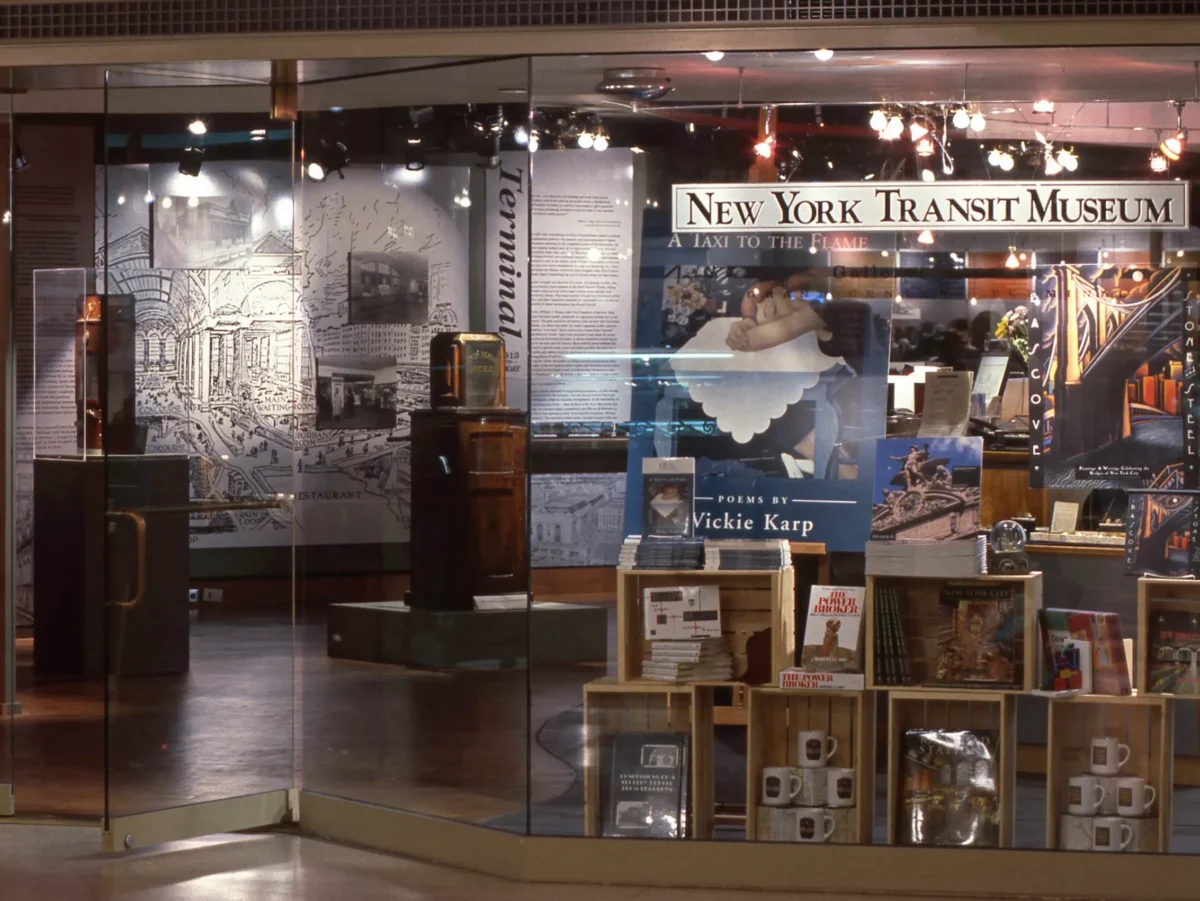
Throughout the 1990s and 2000s, the Transit Museum expanded its footprint beyond Brooklyn and into one of the city’s most iconic transportation hubs: Grand Central Terminal.  

The Museum opened its first location inside the Terminal in 1993 in a space on the Main Concourse. The satellite store was the beginning of a long-standing relationship with the historic landmark. 

Grand Central Gallery & Store, 1993
New York Transit Museum

On March 23, 1999, the Museum opened its current Gallery Annex & Store in the newly renovated Terminal. Unlike the earlier satellite shop, the Gallery was designed as a fully realized exhibition venue. The inaugural exhibition was Grand Central: From Depot to Terminal City 

In 2002, the Gallery introduced what would become a beloved annual tradition: the Holiday Train Show. 

Grand Opening of Gallery & Store at Grand Central 1999 NYTM Institutional Photographs New York Transit Museum

Grand Opening of Gallery & Store at Grand Central, 1999
NYTM Institutional Photographs
New York Transit Museum


Grand Opening of Gallery & Store at Grand Central

Grand Opening of Gallery & Store at Grand Central, 1999
NYTM Institutional Photographs
New York Transit Museum


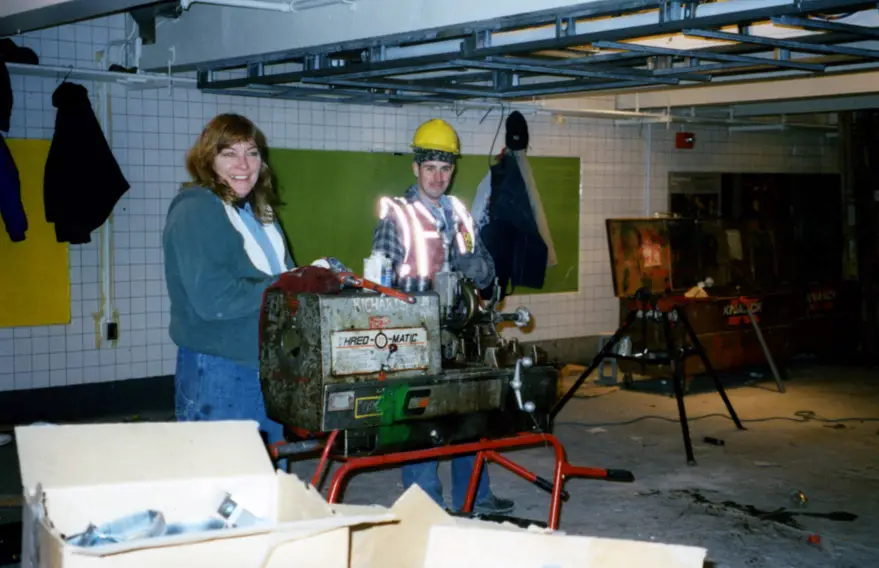
Inaugural Holiday Train Show 2002 New York Transit Museum

Inaugural Holiday Train Show, 2002 
New York Transit Museum

Inaugural Holiday Train Show

Inaugural Holiday Train Show, 2002
New York Transit Museum

Renovating Court Street Station 

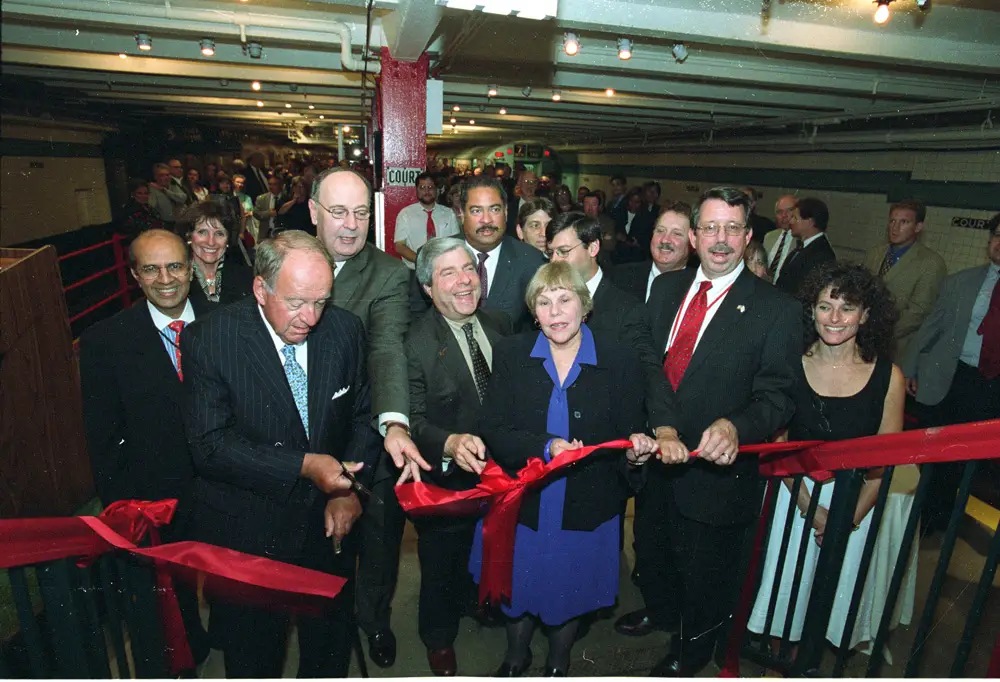
On September 16, 2003, the Transit Museum reopened its Court Street home after nearly two years of extensive renovations. The project upgraded electrical and fire protection systems, installed air-conditioning in select exhibit areas and staff spaces, and introduced brighter lighting throughout the station. 

When the Museum reopened, visitors returned to a cooler, brighter, and safer space that was better equipped to support exhibitions, programs, and growing attendance in the years ahead. These updates improved visitor comfort and accessibility while also preserving the original 1936 architectural features that make Court Street such a distinctive setting. 

Museum with caution tape during renovations

New York Transit Museum During Renovations, ca. 2001-2003
New York Transit Museum Collection

Staff during museum renovations in 2003

Staff During New York Transit Museum Renovations, ca. 2001-2003
New York Transit Museum Collection

Ribbon cutting ceremony for renovated museum

Ribbon Cutting Ceremony for Renovated Museum, 2003
New York Transit Museum Collection

Ribbon Cutting Ceremony June 8, 2011

Improving Accessibility

In June 2011, the Museum opened a new wheelchair-accessible entrance at the corner of Court and Schermerhorn Streets, improving access to its historic home. Designed pro bono by architect and Transit Museum Trustee John di Domenico, a principal at di Domenico + Partners, the contemporary entryway features improved lighting and a streamlined design that increases the Museum’s visibility at street level.

Senator Daniel Squadron, Borough President Marty Markowitz, Councilmember Stephen Levin, and Transit Museum Director Gabrielle Shubert (1991-2015) marked the occasion with a ribbon-cutting ceremony.

Ribbon Cutting Ceremony for Accessible Entrance, June 8, 2011
New York Transit Museum Collection

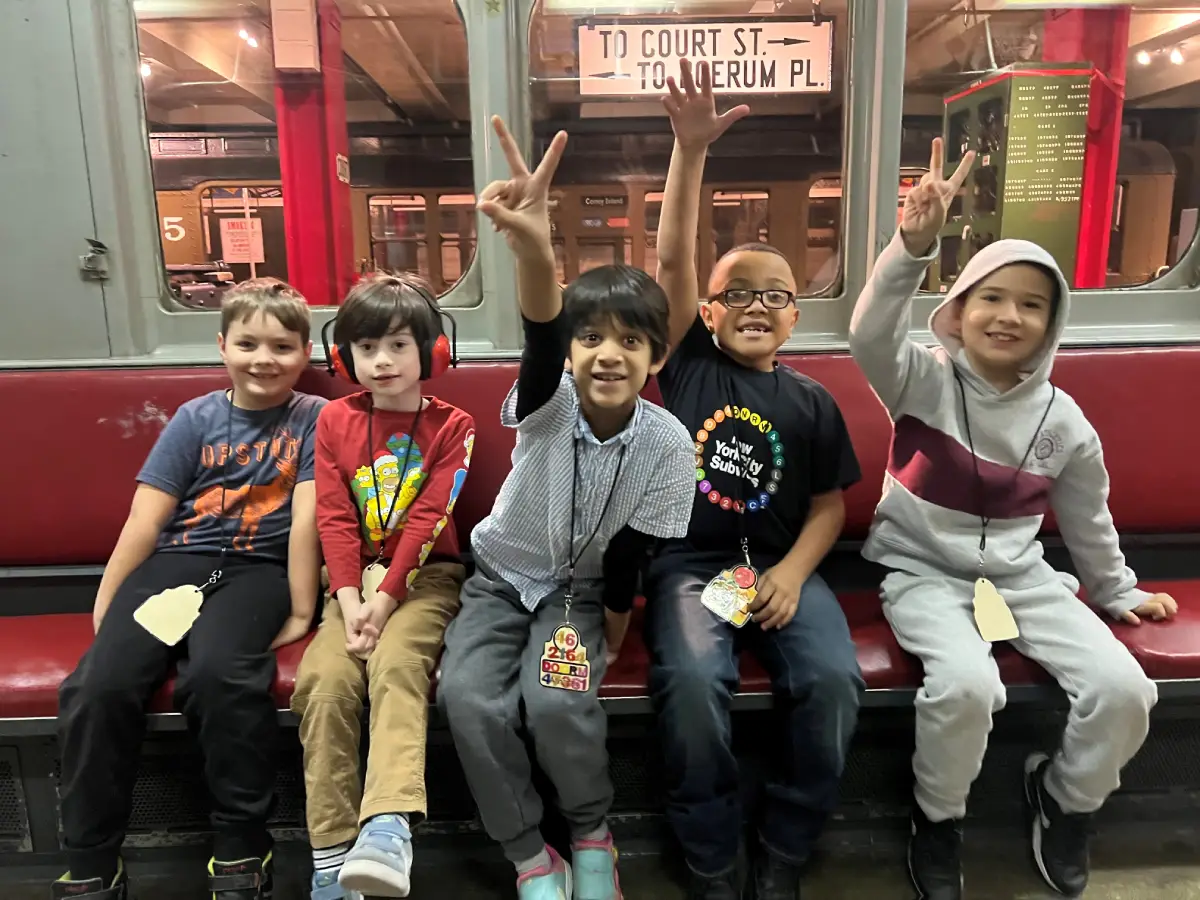
Five subway sleuths sitting on a vintage train

Subway Sleuths

In 2011, the Museum also launched Subway Sleuths, an after-school program designed for children in grades 2-5 with autism. Using a strength-based approach, participants explore the Museum’s decommissioned subway station, solve transit-themed mysteries, and connect with each other through shared interests. Working in pairs and as a group, “Sleuths” build their confidence in social interactions, guided by a team that includes a special education teacher, a speech-language pathologist, and a Museum educator.

Sleuths on a Vintage Train, 2023
New York Transit Museum

Regina Shepherd and Michelle Obama with Subway Sleuth Ian

In 2016, Subway Sleuths was recognized with the National Arts and Humanities Youth Program Award, the nation’s highest honor for creative youth development programs. The award was presented at the White House, where New York Transit Museum Acting Director Regina Shepherd and Subway Sleuth Ian Aquino attended a special ceremony hosted by First Lady Michelle Obama. Selected from more than 250 nominations nationwide, the program was honored for its innovative approach to learning and its impact on young people, highlighting the Museum’s commitment to accessible and inclusive education.

New York Transit Museum Acting Director Regina Shepherd, Subway Sleuth Ian Aquino, and First Lady Michelle Obama at White House Ceremony, 2016
Photo by Steven E. Purcell

Access for All Symposium at the Transit Museum

Access for All Symposium

The following year, the Museum hosted a forum focused on designing impactful programs for people with autism. The Access for All Symposium brought together scientists, psychiatrists, therapists, parents, educators, and advocates to share research, strategies, and real-world examples of successful programs. Discussions emphasized practical tools for engaging visitors with autism and other developmental disabilities, as well as the importance of building programs around participants’ strengths.  

Access for All Symposium, 2017
New York Transit Museum

Signs on archives shelf

Safeguarding the Collection 

In 2015, the Museum’s secondary archives and collections storage moved to 882 Third Avenue in Sunset Park, Brooklyn. The new facility expanded preservation capacity and provided dedicated space for research and collections care. The site was officially named the Gabrielle Shubert Research Center in honor of the Museum’s longtime director who retired that year. 

Historic Signs in the Archives
New York Transit Museum

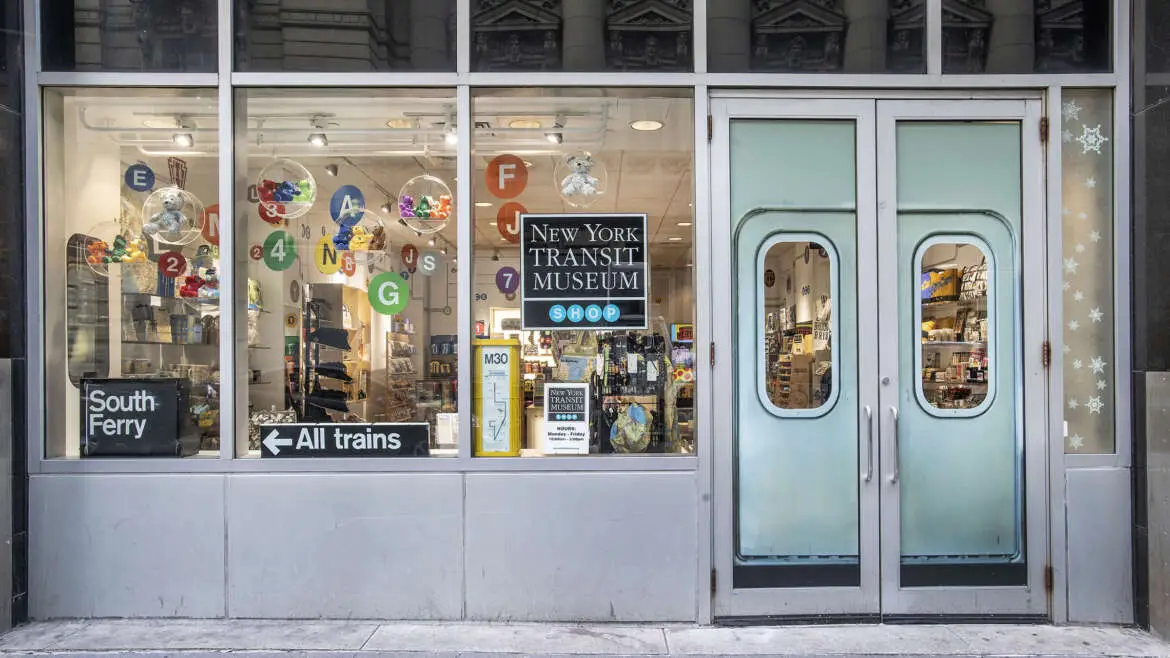
Entrance to the New York Transit Museum Shop at 2 Broadway

A New Retail Home

In 2017, the Transit Museum expanded its retail presence with the opening of a store at 2 Broadway in Lower Manhattan, adjacent to MTA Headquarters. The location serves both visitors and transit employees, offering merchandise that celebrates the system and the people who operate it every day.

Shop at 2 Broadway, 2018
Photo by Marc A. Hermann / MTA

MTA Safety Campaign, 2020

2020: A Sudden Closure and a New Way Forward 

In response to the COVID-19 pandemic, the Museum closed its doors on March 13, 2020, following the Governor’s instruction. What was expected to be a two-week closure, ultimately lasted 17 months. 

COVID-19 Safety Campaign, 2020
Courtesy of the MTA

Three children sit in front of a computer displaying a train car in the Transit Museum.

The Transit Museum Goes Online 

With visitors no longer able to enter the Museum, staff quickly reimagined how to continue sharing transit history. Within a week, digital programming began, followed by live “Digital Discussions,” virtual school programs, and at-home activities for families. Created entirely from staff homes, these offerings connected with audiences far beyond New York. With online visitors tuning in from as far away as Scotland, Hawaii, and Brazil, the Museum’s collections and stories remained accessible during a time of profound uncertainty. 

Virtual Family Program, 2020
New York Transit Museum

The New York Transit Museum hosts a preview for members on Fri., August 13, 2021 before reopening to the public on Saturday. (Marc A. Hermann / MTA)

Reopening and Recovery  

The Museum reopened in phases, beginning with the Gallery at Grand Central Terminal in June 2021 and the Museum in Brooklyn in August, exactly 17 months after closing. Visitors returned under new conditions, including timed entry, reduced capacity, limited hours, required masking and social distancing, as the Museum prioritized the safety of both guests and staff. The Museum’s Retail team developed transit-themed face masks, which quickly became a part of the visitor experience.  

Reopening Day,  August 13, 2021
Photo by Marc A. Hermann / MTA

New York Transit Museum

The New York Transit Museum hosts a preview for members on Fri., August 13, 2021 before reopening to the public on Saturday.

In the months that followed, operations gradually expanded. School groups returned in-person in October 2022, and increased visitation made it possible to extend hours and rebuild staffing. What began as a cautious reopening became a steady recovery. The digital programs developed during the pandemic remain an important part of the Museum’s work, extending our reach and creating new ways for audiences to engage with transit history right from home.

Reopening Day,  August 13, 2021
Photo by Marc A. Hermann / MTA

New York Transit Museum

Beyond the Museum Walls

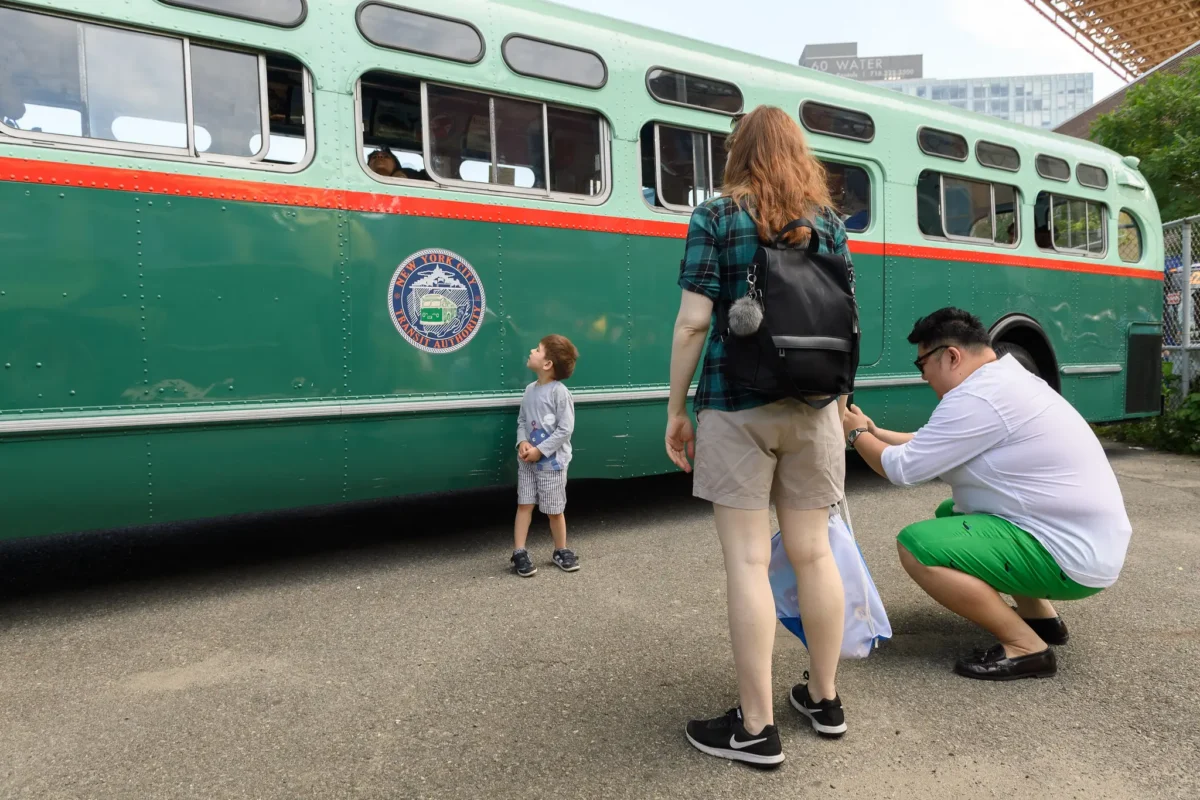
While Court Street station remains the Museum’s historic home, the New York Transit Museum has long extended its work beyond its walls. Through outdoor festivals, traveling exhibitions, and vintage train rides, transit history continues to meet New Yorkers where they are. 

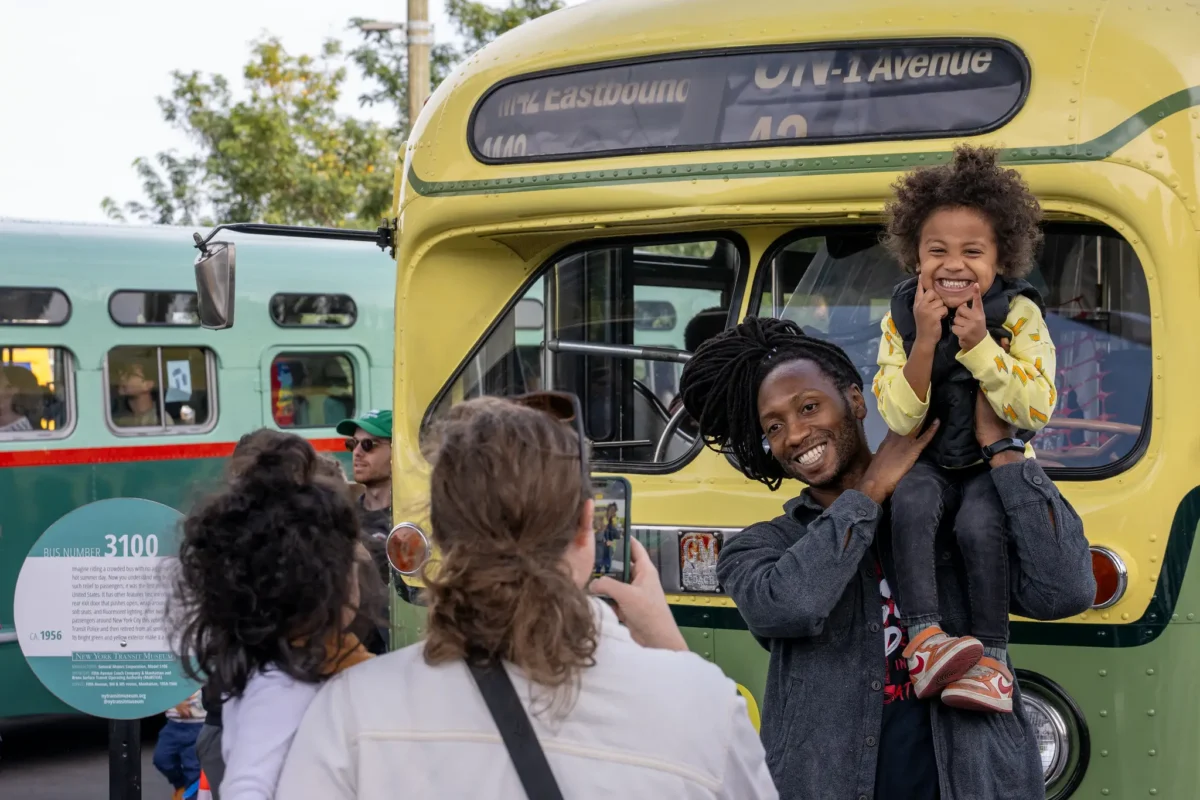
Bus Festival 

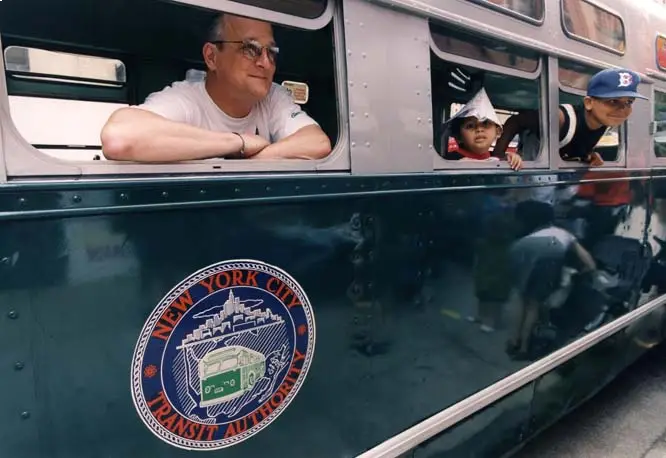
The Museum held its first Bus Festival in 1992, bringing vintage buses from its collection to the streets of Downtown Brooklyn for a day of celebration. The annual event became a neighborhood tradition, coinciding with the Atlantic Antic for decades before relocating to a new home in Brooklyn Bridge Park.  

Green and yellow bus at 2002 Bus Festival

Bus Festival, 2002
NYTM Institutional Photographs
New York Transit Museum

Boy and father in front of green and yellow bus

Bus Festival, 2025
Photo by Filip Wolak

Man and kids looking out window of vintage bus

Bus Festival, 2001
NYTM Institutional Photographs
New York Transit Museum

Boy standing in front of vintage bus

Bus Festival, 2003
Photo by Filip Wolak

Nostalgia Ride Tickets from 1979

Nostalgia Rides

Nostalgia Rides have been part of the Museum’s programming since 1976. From early weekend excursions to today’s sold-out seasonal trips and holiday shopper rides, these programs allow participants to experience transit history in motion.

Nostalgia Special Tickets, 1979
Brochures and PR Materials
NYTM Institutional Records
New York Transit Museum

Two vintage trains at the BMT Centennial Rides, BMT Triplex and R1/9 are pictured

Parade of Trains

First launched in 2015 to celebrate the 100th anniversary of the Brooklyn-Manhattan Transit Corporation (BMT), the Parade of Trains has become one of the Museum’s signature annual events. Held along the Brighton Line in Brooklyn, the event brings multiple vintage subway cars out of the Museum and onto active tracks, where they run continuously between stations for a full weekend. What began as a centennial celebration has grown into an annual tradition, offering a rare opportunity to ride, compare, and explore generations of subway car design in one day.

BMT 100 at Brighton Beach
June 27, 2015
Photo by James Giovan

R42 Retirement Ceremony

Honoring Retired Fleets

In 2020 and 2021, MTA New York City Transit retired two beloved fleets, the R42 and R32. When a car class is decommissioned, the Transit Museum marks its legacy by preserving representative cars for future generations. The Museum added R42 cars #4572 and #4573, and R32 cars #3352 and #3353, to its historic fleet.

R42 Retirement Ceremony, 2020
Photo: Jessie Mislavsky / MTA

Passengers exiting an R42 car during retirement rides

On February 12, 2020, the R42 made its final trip after more than 50 years of service. A special send-off ceremony at the Museum honored the fleet’s long history, with remarks from Sally Librera, Senior Vice President, Department of Subways; Concetta Bencivenga, Director of the New York Transit Museum (2018–2025); and William Wall, Rapid Transit Operations. The train made a final run along the A line, from Euclid Avenue to Far Rockaway and 207 St, before returning to Euclid Avenue and closing its doors for the last time.  

R42 Retirement Ride, 2020
Photo: Patrick Cashin / MTA

Train crew gathered around restored R32 train car

While in-person programs were paused during the pandemic, the Museum partnered with MTA New York City Transit to mark the retirement of the R32 fleet with a series of special farewell rides in December 2021 and January 2022. More than 10,000 riders joined these trips, celebrating the final days of the cars known as the Brightliners.

R32 Final Run, 2021
Photo: Marc A. Hermann / MTA

MTA NYC Transit President Demetrius Crichlow with Nostalgia Train Conductor

Redbirds Return to the Flushing Line

In April 2025, the Museum’s vintage Redbird cars returned to the Flushing Line for the Nostalgia Ride to the Mets
Home Opener, their first appearance on the 7 line in seven years. Nostalgia service had been paused since 2018 due to ongoing construction work and the COVID-19 pandemic, and the excitement for their return was palpable. More than 1,800 riders turned out to celebrate Opening Day and the return of the iconic Redbirds. The tradition continues with the 2026 Mets Home Opener Nostalgia Ride on Thursday, March 26.

MTA NYC Transit President Demetrius Crichlow with Nostalgia Train Conductor
April 4, 2025
Photo: MTA

Old City Hall Tour

Off Site Tours

The Museum leads off-site tours that bring transit history into the streets and stations of New York. The original City Hall Station, opened in 1904, remains one of the Museum’s most popular offerings and can only be visited through a Museum-led members only tour.

Walking tours of Downtown Brooklyn, Gowanus, Second Avenue, and other neighborhoods explore how transit infrastructure has shaped the city’s growth across all five boroughs.

Old City Hall Tour
New York Transit Museum

Grand by Design Exhibit

Off Site Exhibits

The Museum has also mounted large-scale exhibitions in public venues across the city. In 2013, as part of the centennial celebration of Grand Central Terminal, the Museum presented Grand by Design: A Centennial Celebration of Grand Central Terminal in Vanderbilt Hall. The multi-media installation examined the Terminal’s architecture, engineering, and cultural impact, becoming the Museum’s largest exhibition to date. A digital version of the exhibition remains available at gcthistory.com.

Grand by Design Exhibit, 2013
Photo by Patrick Cashin / MTA
New York Transit Museum

Five Cents To Dreamland: A Trip to Coney Island at Coney island Museum

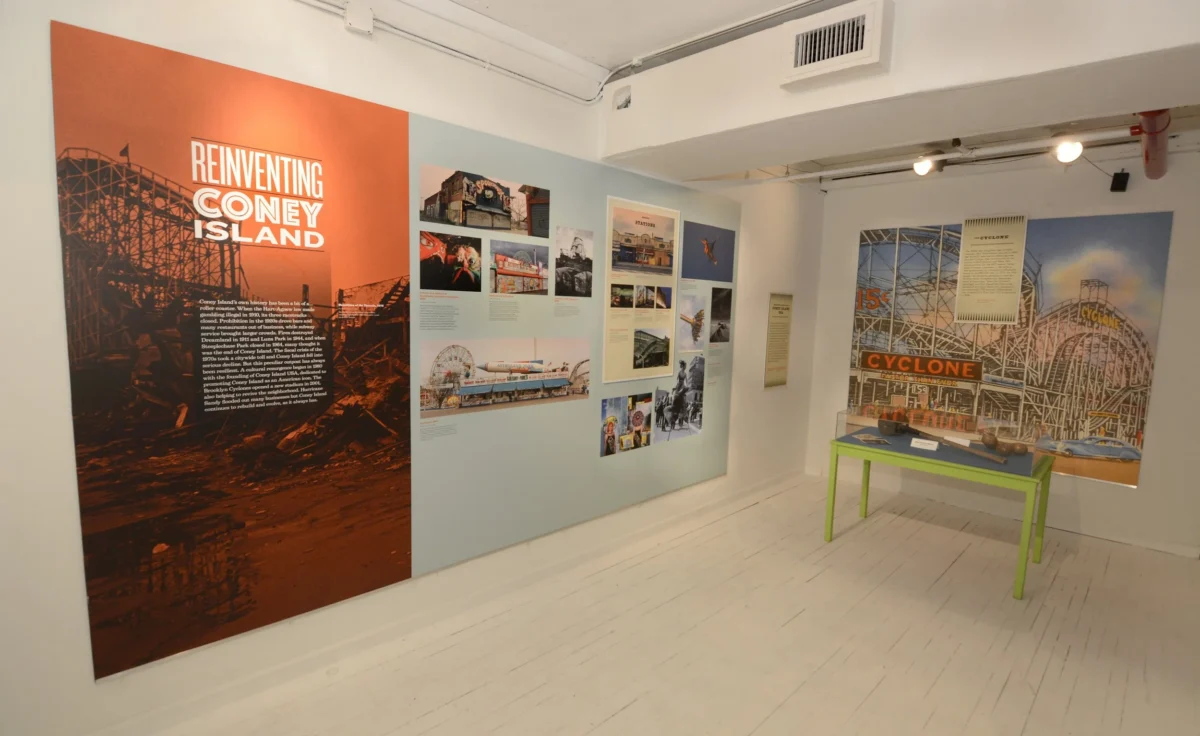
Through partnerships with cultural organizations, the Museum continues to reach new audiences. Five Cents To Dreamland: A Trip to Coney Island, on view at the Coney Island Museum since 2017, explores the role of transit in connecting New Yorkers to the beaches, amusements, and cultural life of Coney Island.

Five Cents To Dreamland: A Trip to Coney Island, 2017
Photo by Norman Blake
Courtesy of the Coney Island Museum

50 Secrets of Transit Logo with social icons

From Subway Platform to Online Platforms

The Transit Museum joined social media in January 2010 with Twitter and Facebook, followed by Instagram in 2013 and later expansion to LinkedIn, YouTube, and Bluesky. Today, the Museum shares transit history with an audience of over 225,000 followers around the world through initiatives like its “50 Secrets of Transit” video series, which brings lesser-known stories from the system to life.

New York Transit Museum App Homepage

Originally just two pages on the MTA’s website, the Museum launched its first standalone site at nytransitmuseum.org in 2016, creating a central hub for information, ticketing, and digital exhibits.

In June 2026, the Museum will expand its digital presence further with the launch of the Official New York Transit Museum App, featuring a citywide scavenger hunt, transit trivia games, and more.

SUPPORT
THE MUSEUM

Fuel our mission to preserve transit history, create inspiring exhibits, and offer programs for learners of all ages.