Vintage Fleet

Meet the R110B

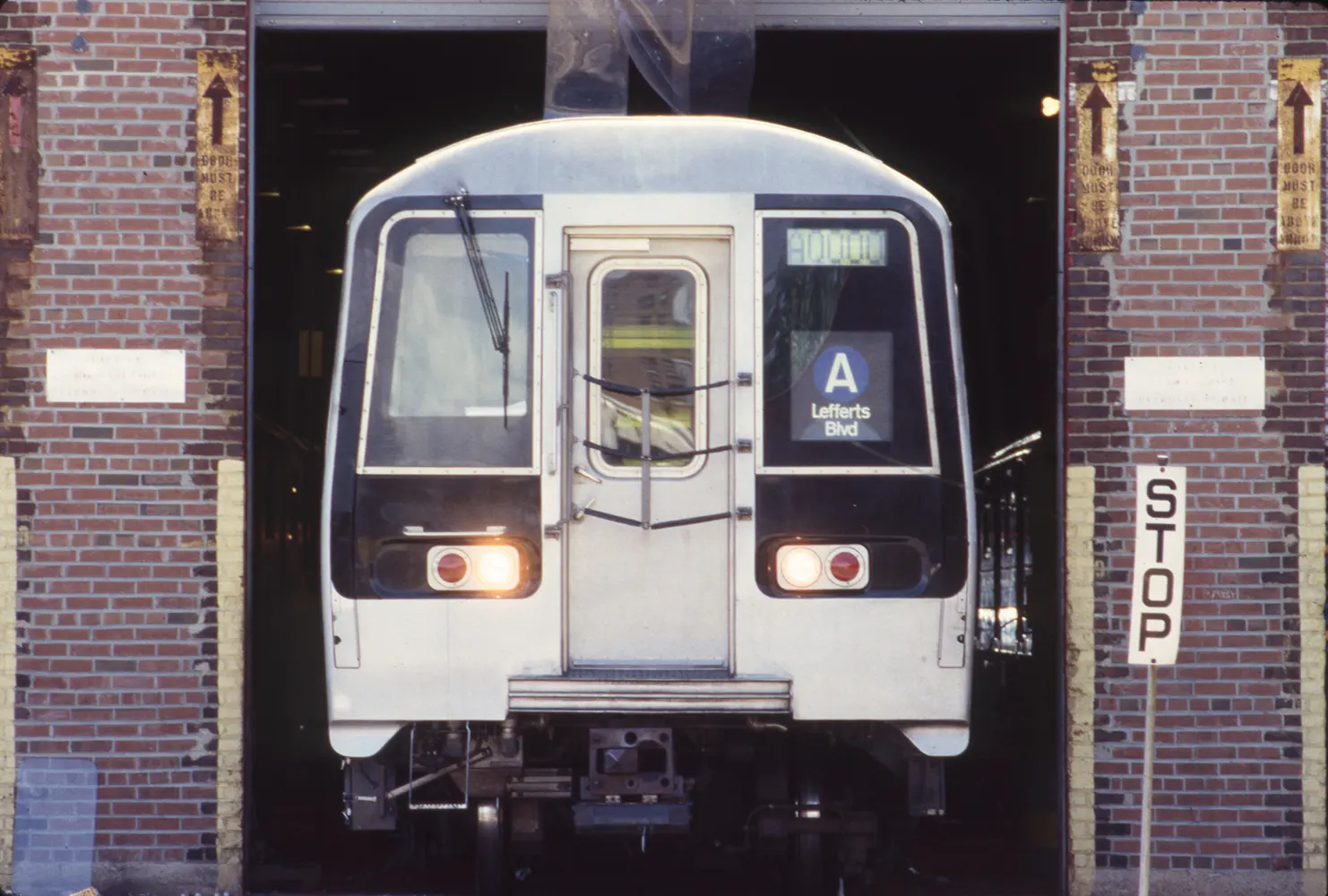
R110B Train in a garage

The R110B looks very different from all other subway cars in our collection…because it is!

It is one of two prototype cars in service from 1993 to 2001 that gave a “real world” test to many technological advances; many of which would eventually be integrated into the next generation of subway cars, called New Technology Trains (“NTT”). NTT trains include the R142, the R179, and the R211. The R110 cars are an important bridge between the subway cars of the 1970s and 1980s to the subway cars of today.

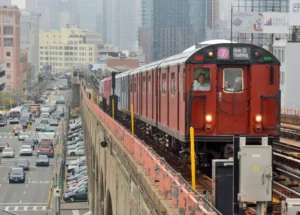
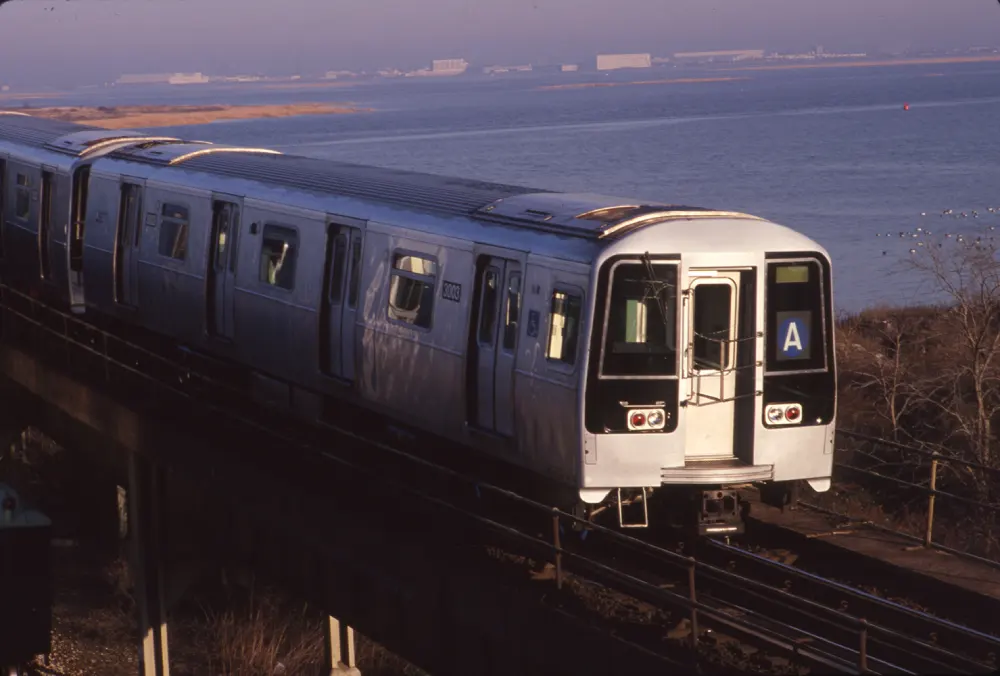
R110B with A route indicator travels over elevated tracks

Where have I seen an R110B?

he R110Bs entered service June 15, 1993, on the A train (IND Eighth Avenue Express). In 1996, the cars were moved to serve the C train. In 2001, the R110B cars were permanently removed from service due to a lack of spare parts, and reliability issues. In spite of this relatively short lifespan, the R110B’s fulfilled their originally intended purpose, which was to test new technologies that would inform the development of the next generation of subway cars.

R110B testing, c. 1990s
NYCTA Photographic Unit Collection
New York Transit Museum
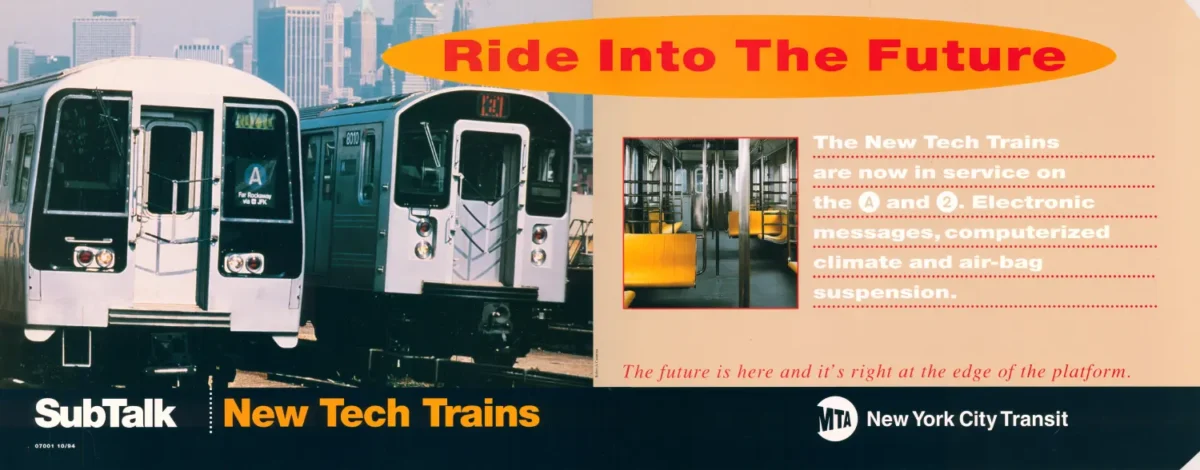
Poster announcing R110Bs entering service

Why were the R110s special?

Both the R110A and R110B trains were sent into revenue service after rigorous safety testing in order to get real feedback from the riding public. As expected, New Yorkers had a lot of opinions about the prototype cars.

Ride into the future, 1994
New York Transit Museum Collection

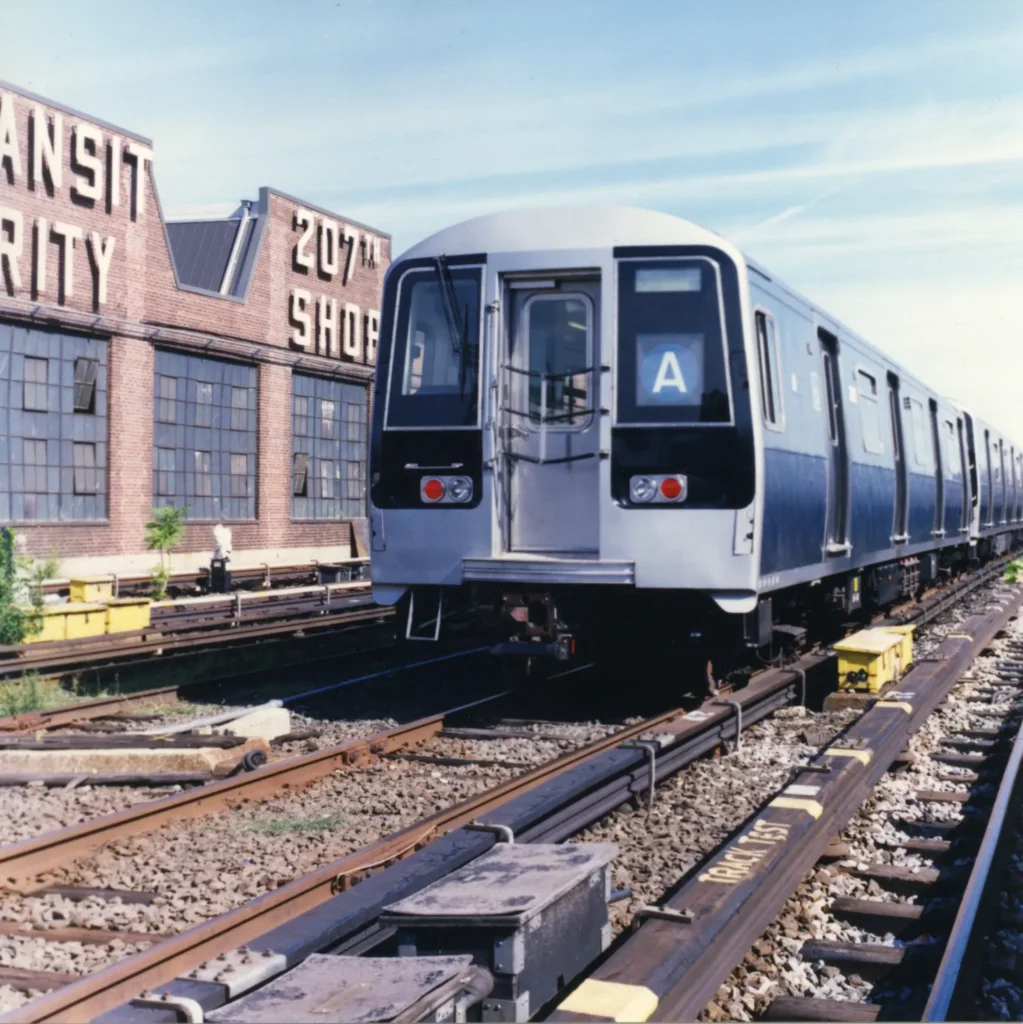
R110B at 207 St Yard

In the 1970s the New York City Transit Authority (NYCTA) ordered several large fleets of subway cars such as the R44 and R46 without testing the new design and technological elements. Once these new cars entered service, several expensive retrofits were required to make the cars as operationally reliable as they could be.

The next fleet was set to be the most technologically advanced to date thereby earning them the name the New Technology Trains, or NTTs. To avoid costly post-delivery overhauls, it was decided that test cars would be built and run in the system to prove new mechanical systems, materials, suppliers, and design elements before incorporating them into a large car order.

R110B at 207 St Yard
New York Transit Museum Collection

“Tomorrow’s Train Today

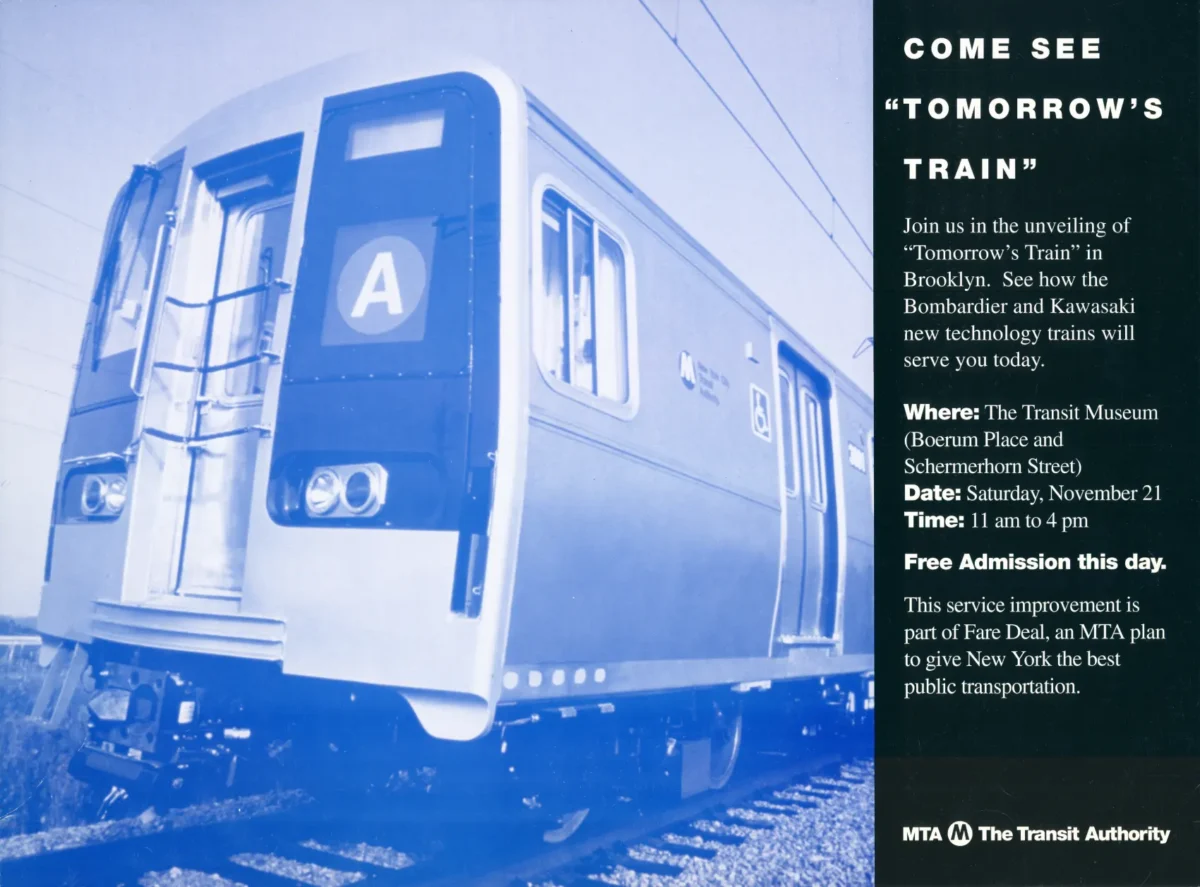
Shortly after being delivered in late 1992, the R110A and B visited the New York Transit Museum for one day, so visitors could experience them for themselves.

Come see “Tomorrow’s Train”, 1992
New York Transit Museum Collection

R110 FEATURES

“In terms of technology, the test trains were to the trains built in the 1980’s what a calculator is to an abacus.” — Richard Perez-Pena, The New York Times, August 25, 1996

Because the R110s were prototypes, the cars were intentionally not identical with different configurations using different elements to see which worked the best, such as seat color, handholds, floor materials, electronic signs, and windscreen design. The polycarbonate Lexan – a trademark first introduced in the 1960s – was used in several ways, including at each end of the car to allow passengers to see into the next one. Polycarbonates can withstand extreme temperatures and are resistant to breaking, which made them a good choice for New York.

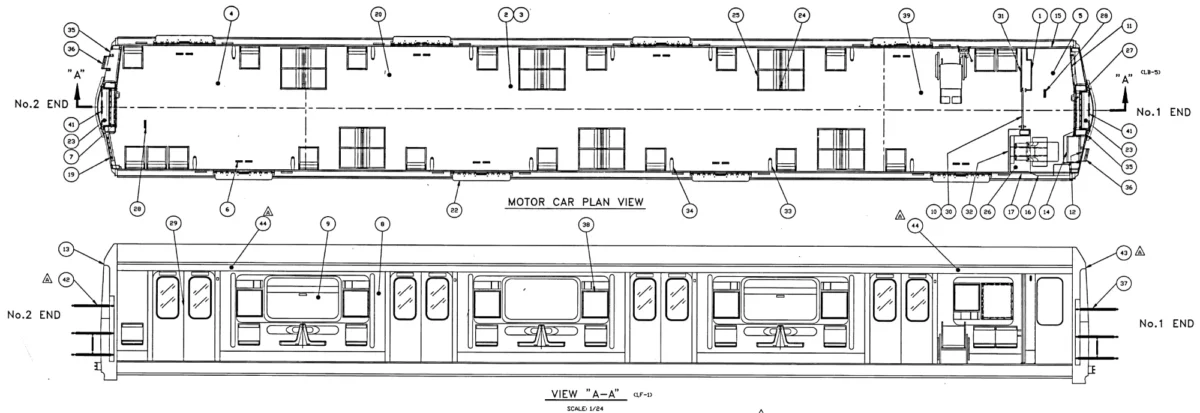
A bird’s eye view of the R110B car, showing the seating arrangements and placement of doors.

The R110 cars featured microprocessor-controlled doors which were impossible to force open once closed but would spring open if blocked. They were over a foot wider than previous car designs and located at staggered intervals instead of directly across from each other for ease of passenger boarding.

Interior finish drawing, 1991
A bird’s eye view of the R110B car, showing the seating arrangements and placement of doors.
New York Transit Museum Collection

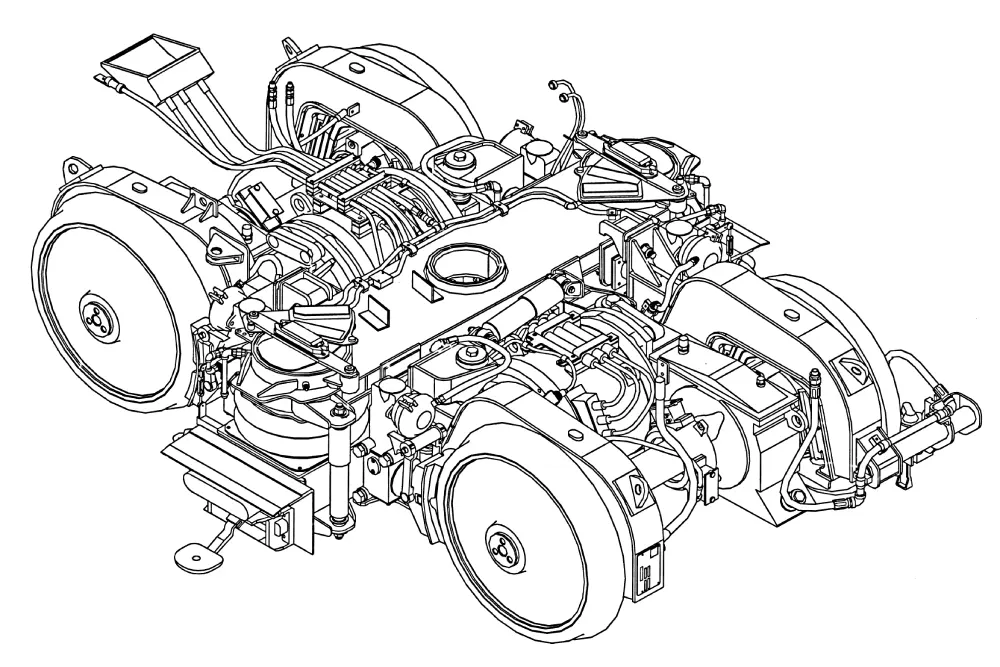
Drawing of an R110B's motor truck

The R110 prototypes included some innovations based in the design and function of the trucks – or wheel assemblies – of the train cars. One was airbag suspension (compressors are used to inflate air bladders which are used instead of springs. A computer continuously monitors the train, adjusting the inflation of the bags and keeping the train level.)

Others included regenerative braking, made possible by “Gate Turn-Off” thyristors, which converted DC power from the third rail to AC to power the traction motors. The same technology allowed the motors to return power to the third rail during the braking sequence.

Motor truck drawing, 1991
New York Transit Museum Collection

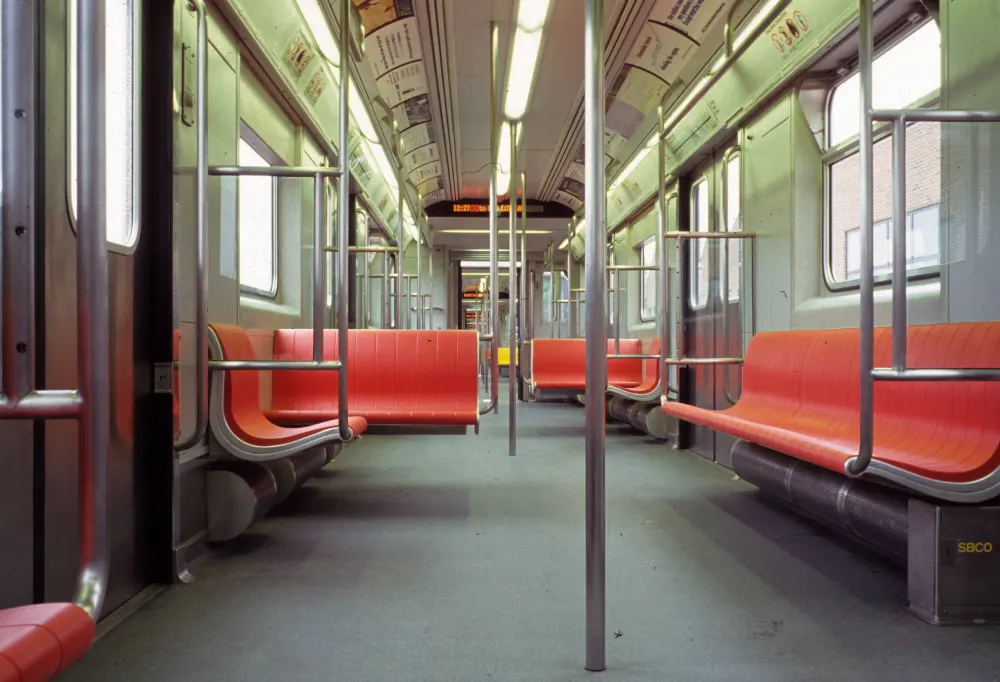
Interior of R110A with red seats

The R110A prototypes had seats in three colors and several different configurations. Because the R110s were prototypes, no two cars were exactly alike cosmetically to offer real world tests of different materials.

R110A red seating, 1993
New York Transit Museum Collection

Blue seats in an R110B car

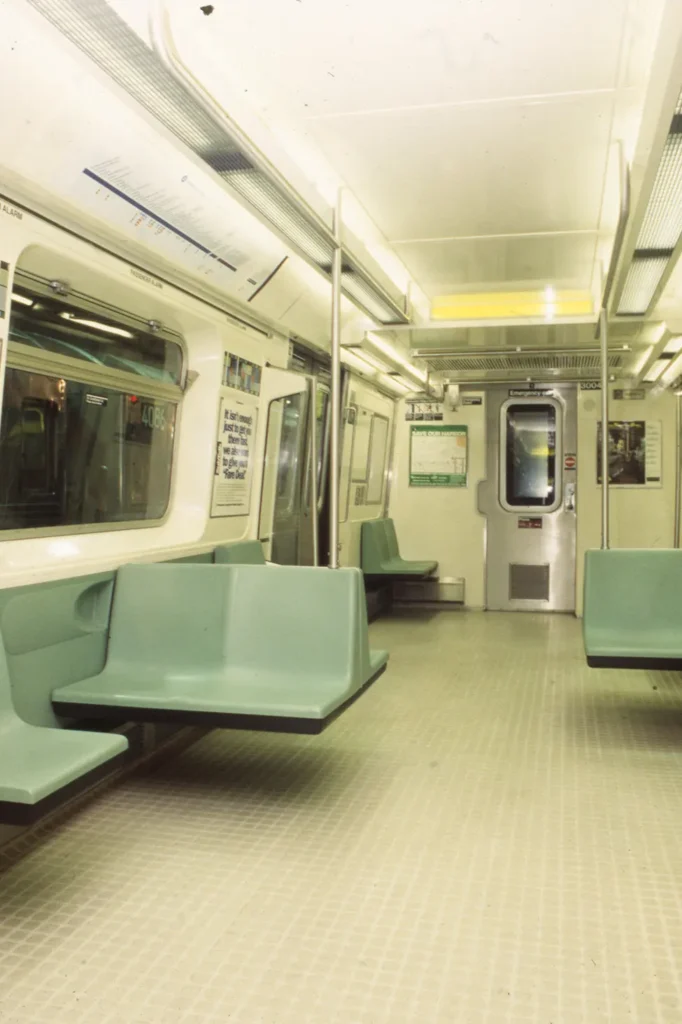
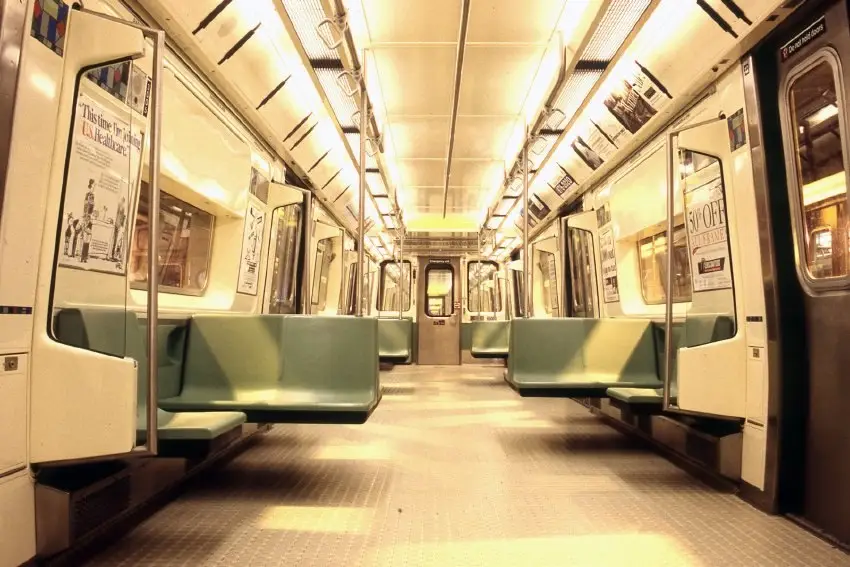
Seating was the focus of most of the riding public’s attention, and feedback from the R110’s testing was carefully considered for car design going forward. Wider doors meant less seating — a loss of about 20 seats per car, but an increase in room for standees — which was met with resounding disapproval from riders. The green seats and patterned floor were two of the finishes present in some R110B cars.

R110B seating, 1993
Photograph by Felix Candelaria
NYCTA Photographic Unit Collection
New York Transit Museum
A strip map in an R110B

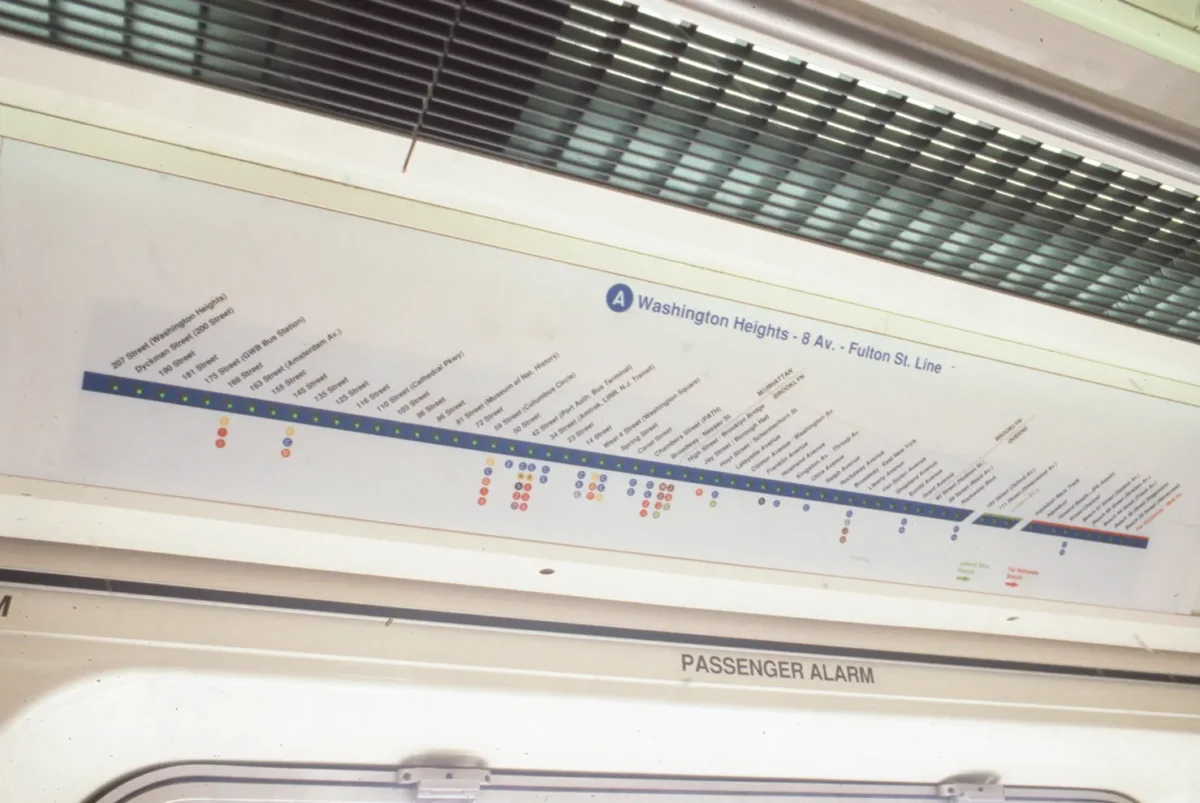
Other features of the cars were better received, including the recorded announcements and the illuminated strip maps.

R110B strip map, 1993
Photograph by Michael Coughlan
NYCTA Photographic Unit Collection
New York Transit Museum
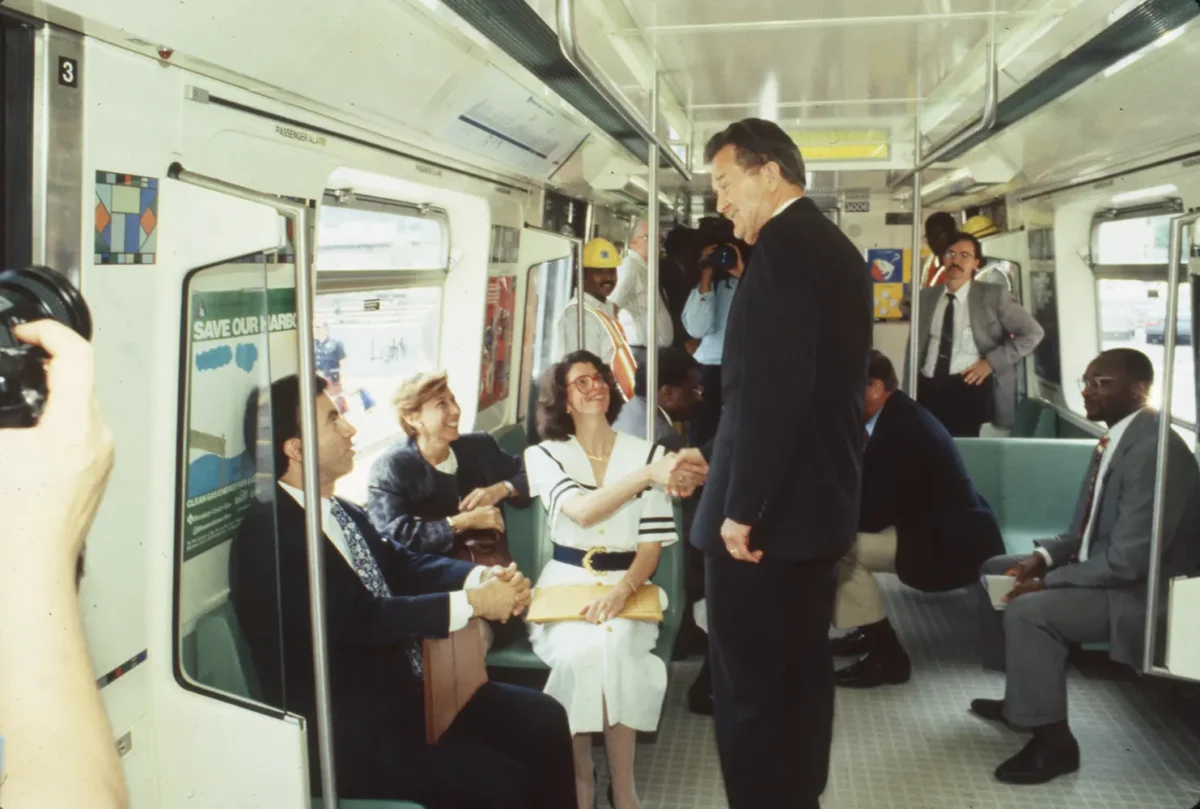
Man shaking hands with passengers on an R110B

Kawasaki built ten R110A cars and Bombardier Transportation built nine R110B cars as prototypes intended to be put through the rigors of the New York City subway system. Test runs were conducted where passengers could speak directly to agency and vendor personnel on board with comments and concerns about the design.

R110B testing, c. 1990s
NYCTA Photographic Unit Collection
New York Transit Museum
What happened to the R110s?

After their service life, many of the R110 cars were repurposed; several became training vehicles for City emergency services, and some R110As were converted to pump cars.

Interior of R110B car number 3005

Interior of R110B #3005
New York Transit Museum Collection

R110B specifications

  • In service: 1993–2001
  • Manufacturer: Bombardier Transportation
  • Constructed: 1992
  • Entered service: June 15, 1993
  • Removed from service: 2001
  • Number of cars built: 9
  • Formation: Three-car sets
  • Fleet numbers: 3001–3009
  • Capacity: 54 seated, 183 standing (A cars); 50 seated, 175 standing (B cars)
  • Car body: Stainless steel
  • Car length: 67 feet
  • Car width: 10 feet
  • Car height: 12.08 feet
  • Door configuration: 8 sets of 50 inch side doors per car
  • Maximum speed: 55 mph
  • Weight: 71,000 lbs (trailer car); 86,000 lbs (motor car)
  • Traction system: GTO-VVVF (General Electric)
  • Traction motors: GE GEB 7-B 202 hp (151 kW) 3-phase AC 4-pole asynchronous motors
  • Electrical system: 600v DC Third rail
  • Current collector: Contact shoe
  • Interiors designed by Jean L’Abbe of Montreal with Melissa Feldman of the Metropolitan Transit Authority’s Arts for Transit program.
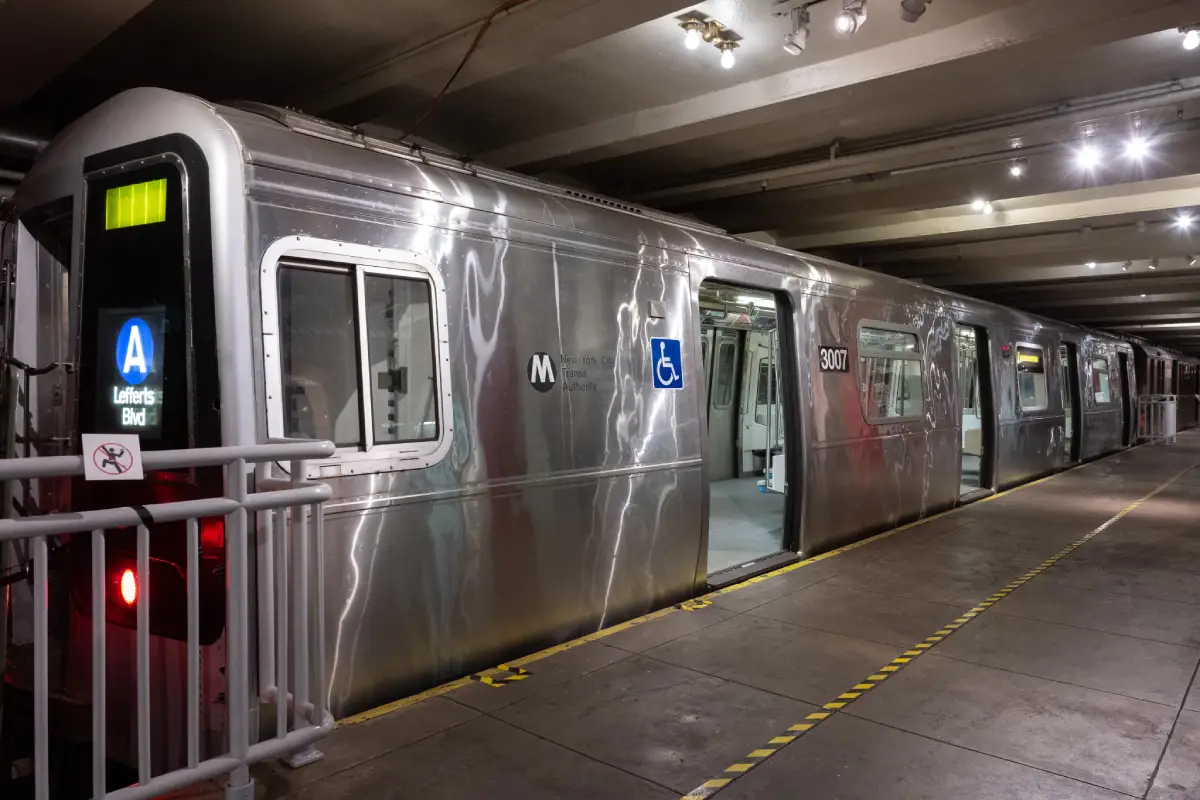
Exterior of R110B on view at the museum

SEE VINTAGE TRAINS UP CLOSE.

Explore how transit changed the way New Yorkers lived, worked, and played, and discover how these vehicles shaped the city itself. Whether you’re a lifelong enthusiast or a first-time rider, there’s a story waiting inside.

SUPPORT
OUR VISION

Fuel our mission to preserve transit history, create inspiring exhibits, and offer programs for learners of all ages.

PLAN
YOUR VISIT

Experience New York’s transit story firsthand—explore historic trains, unique exhibitions, and special events at the Museum.