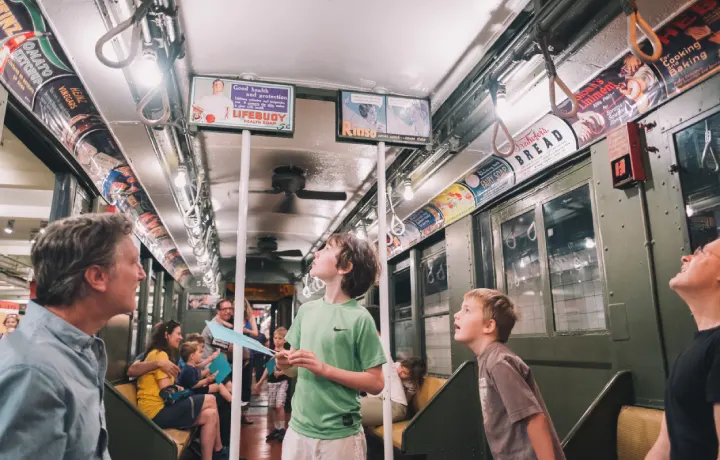
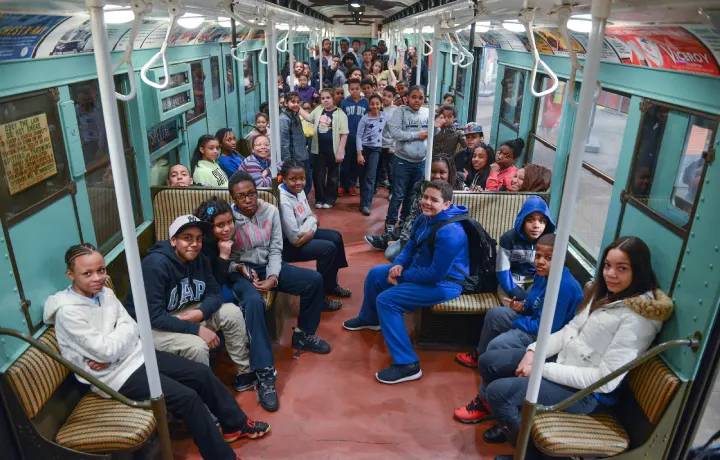
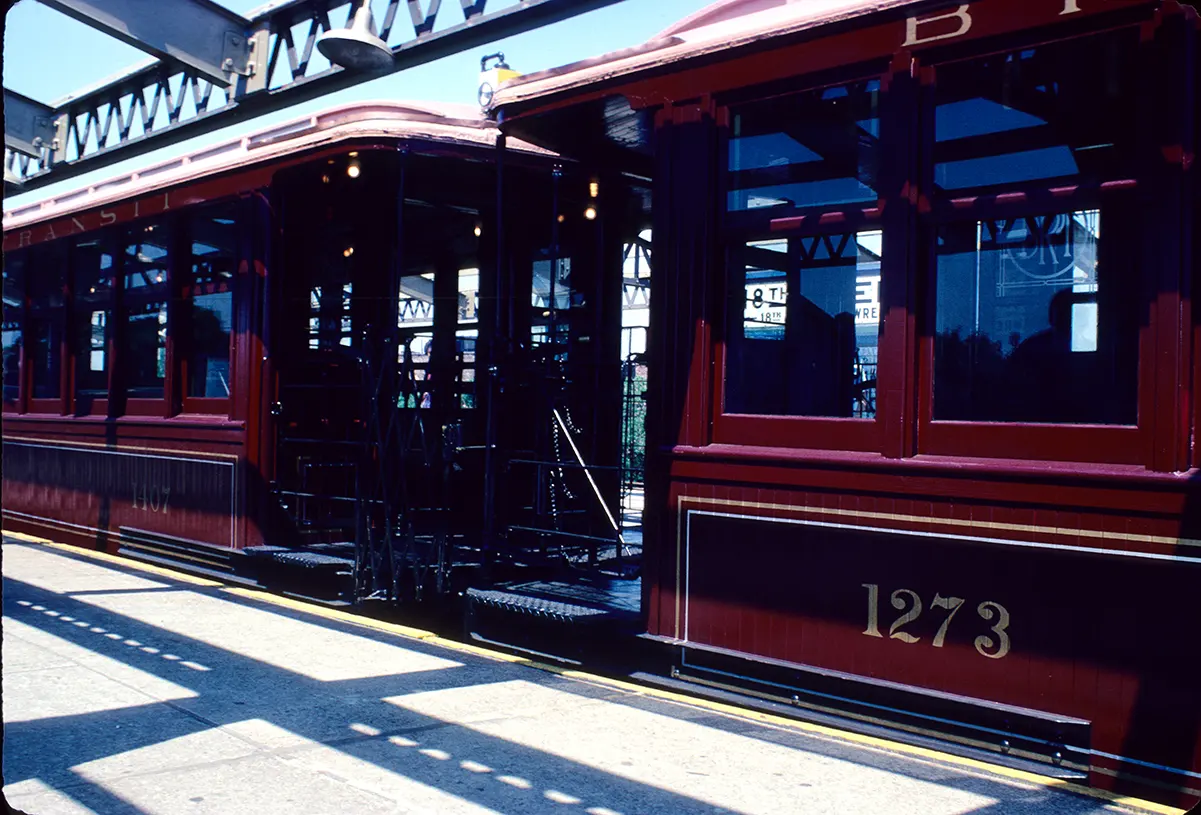
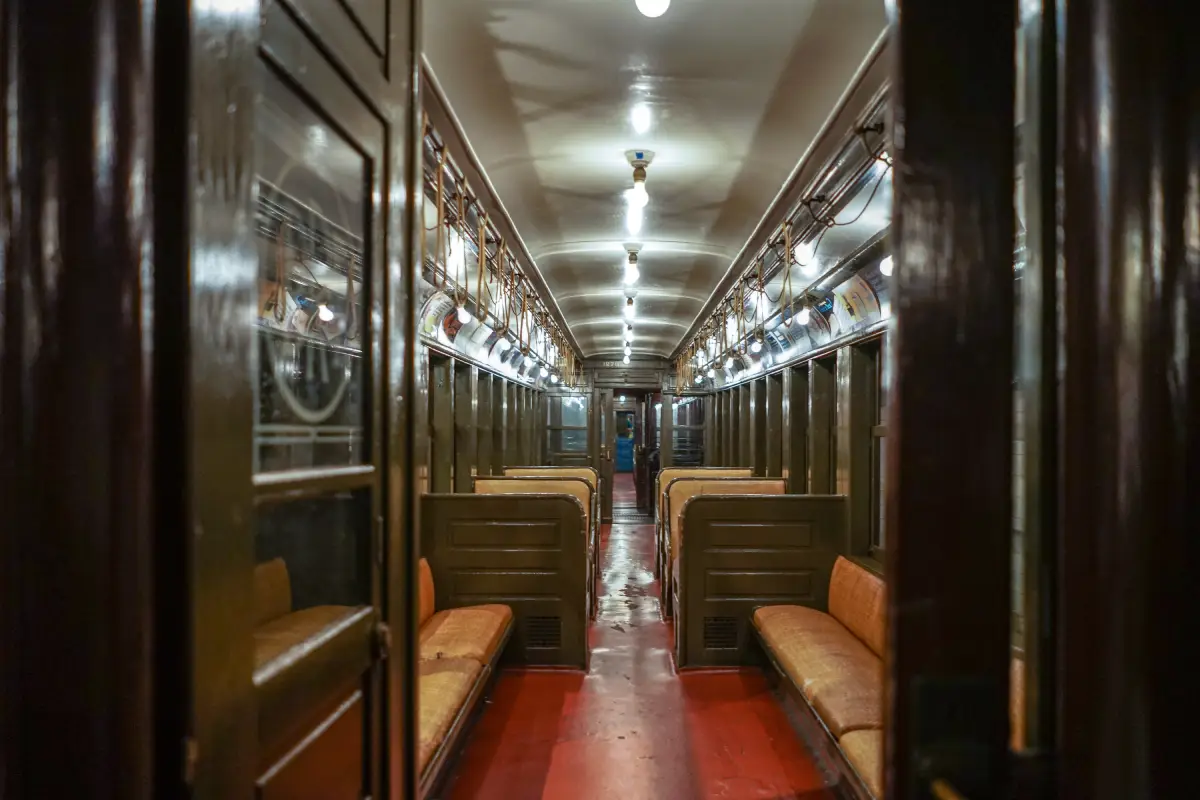
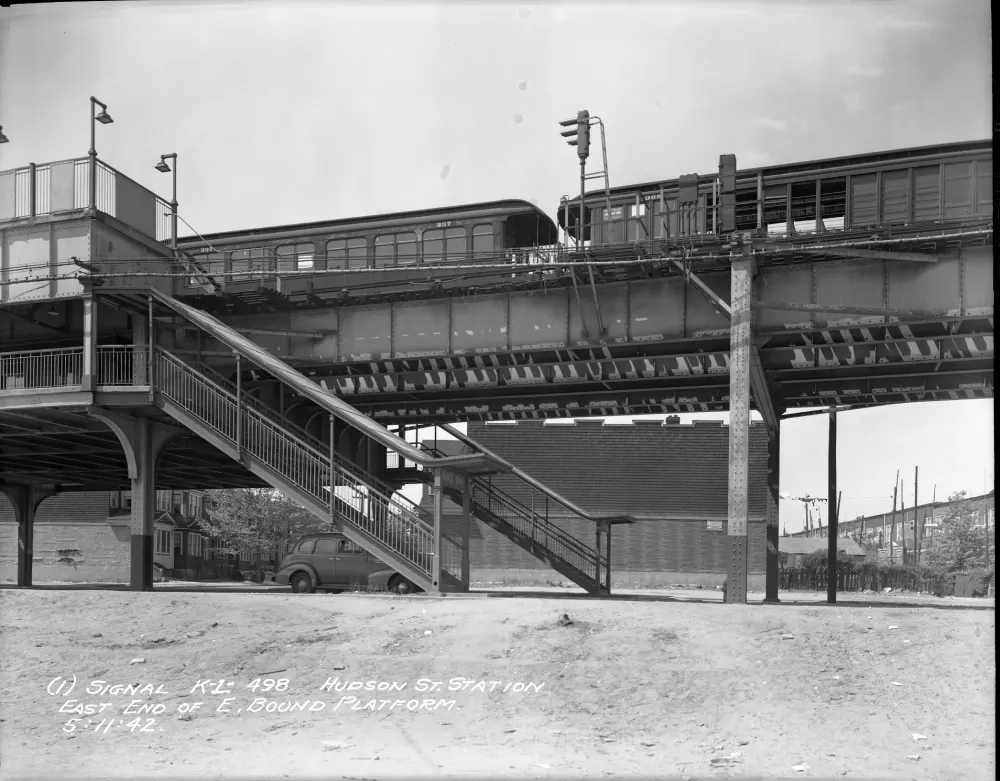
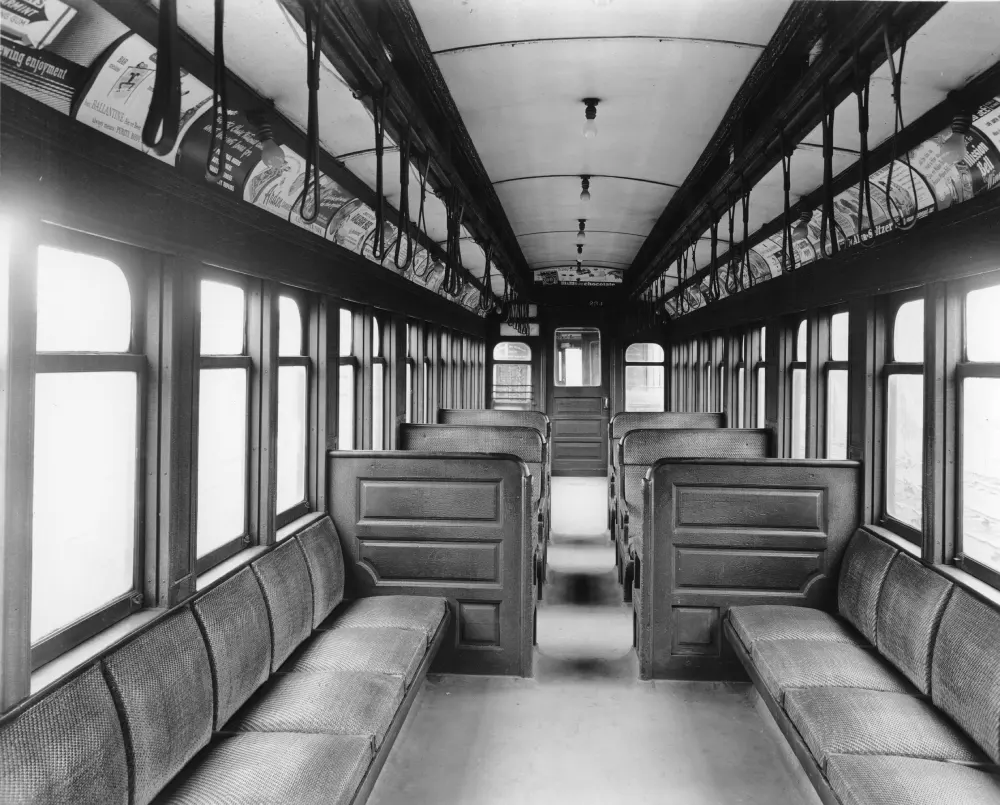
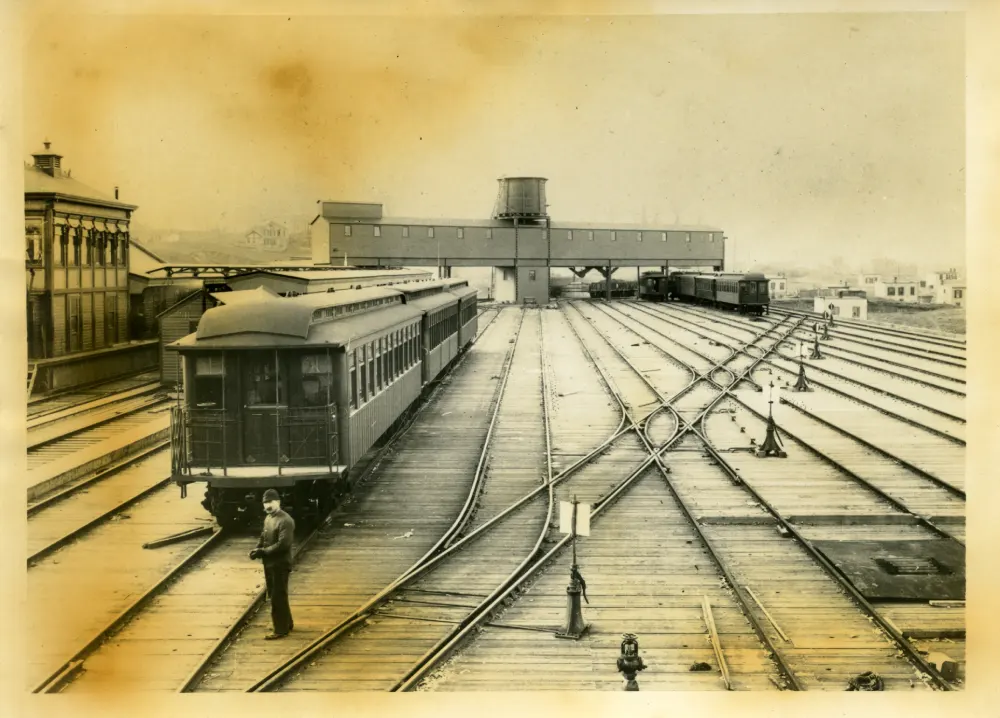
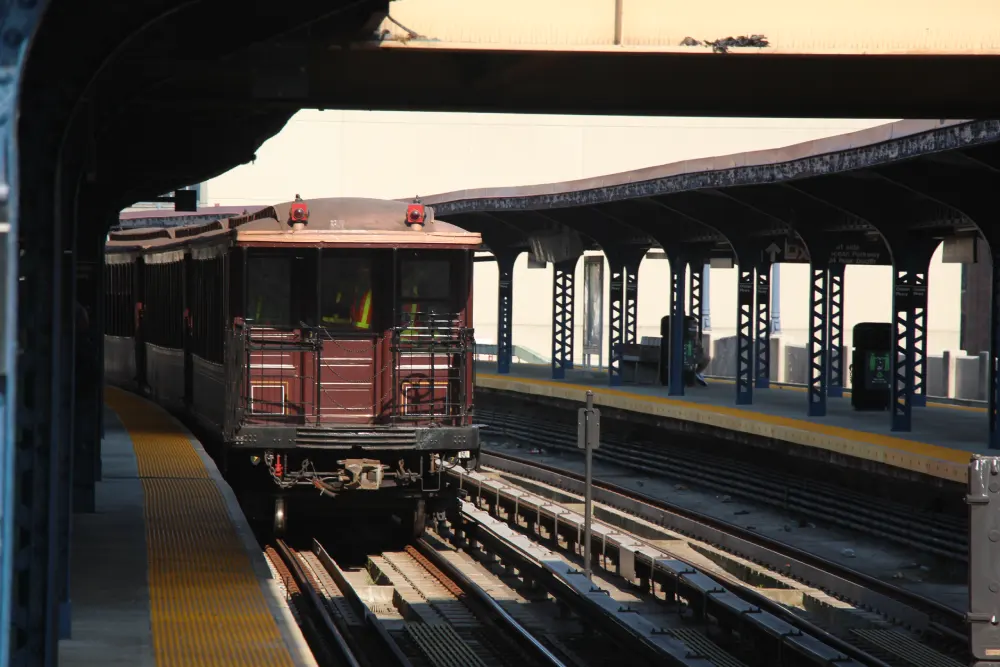
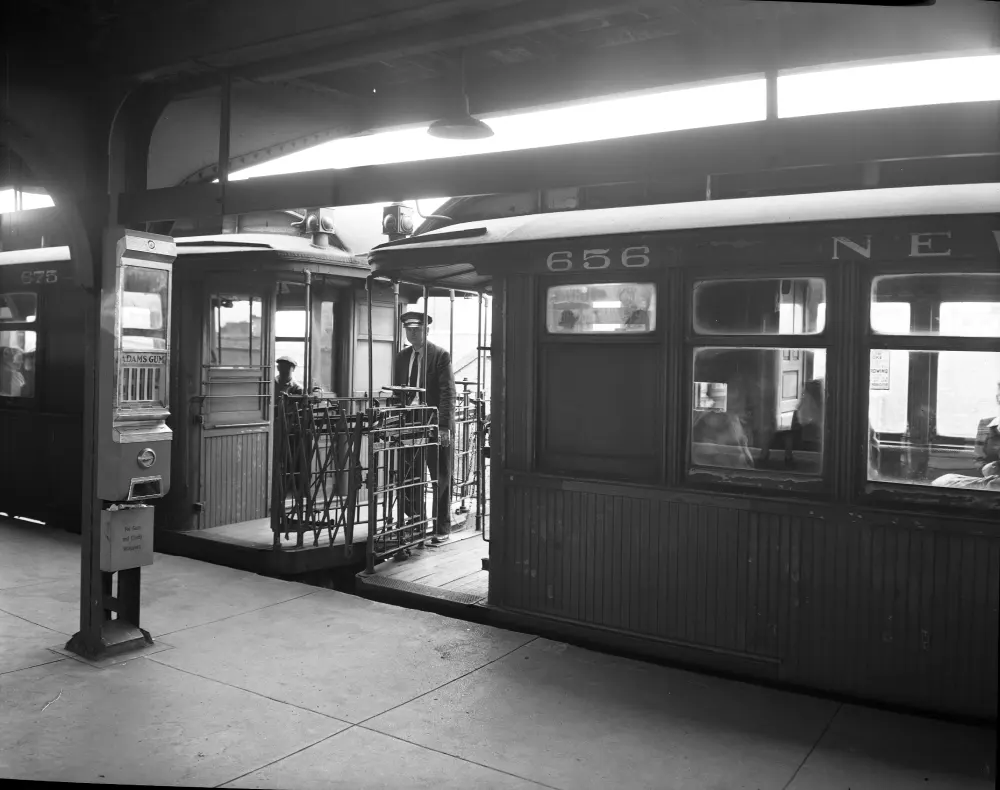
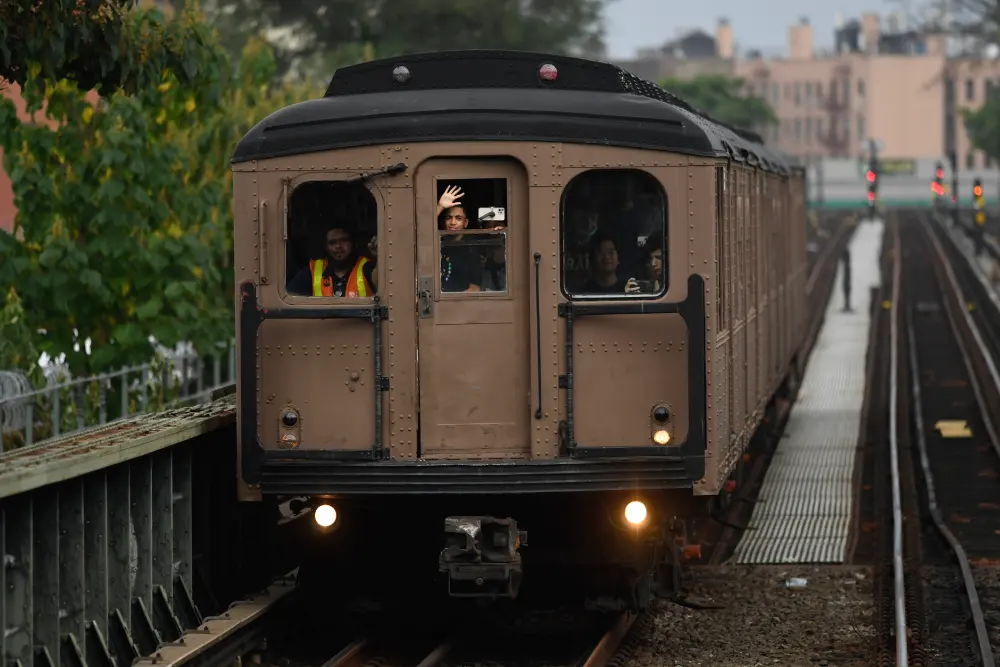
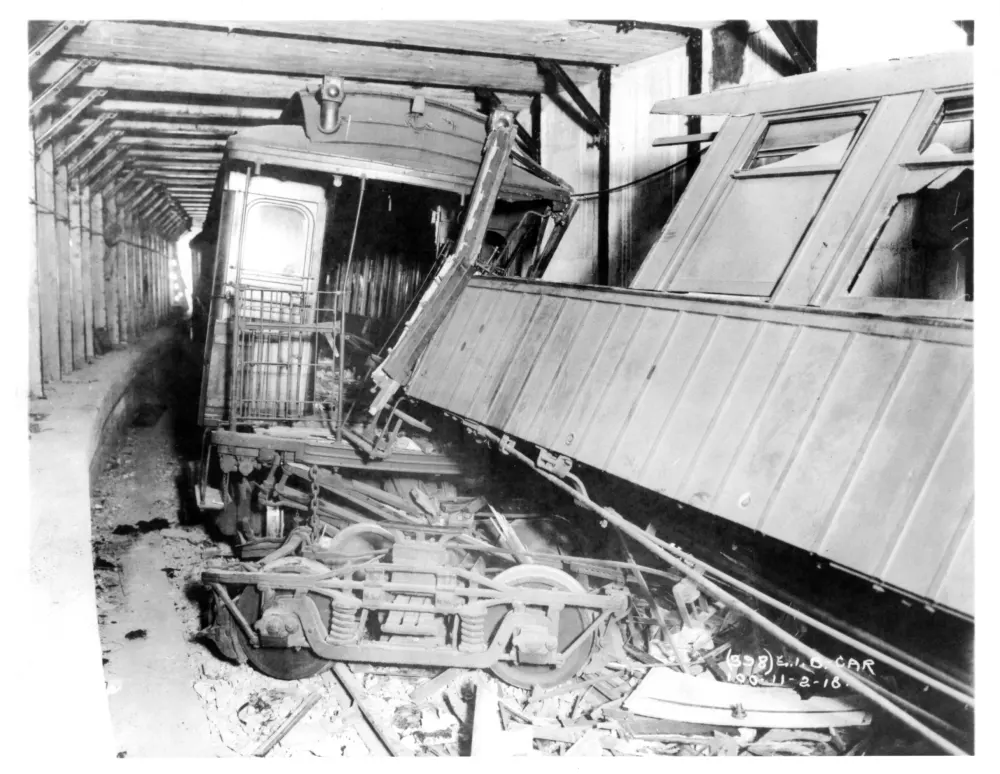
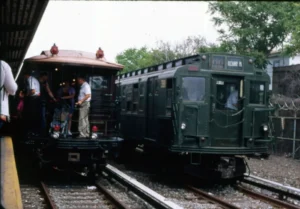
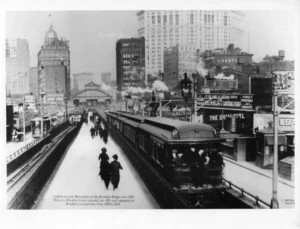
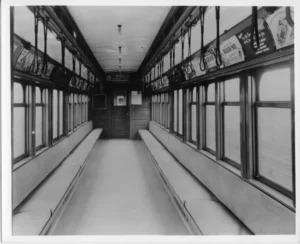
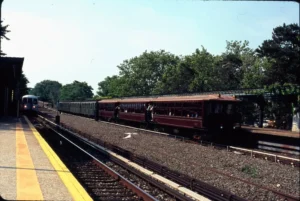
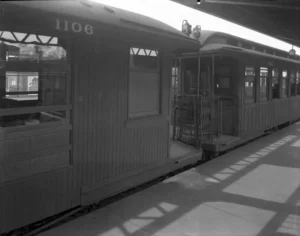
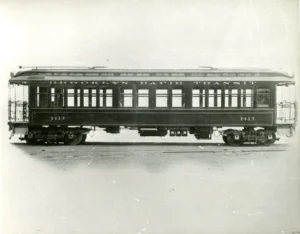
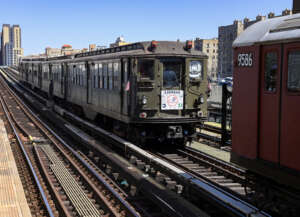
While new steel cars began filtering into the BRT fleet, the elevated lines were still served by composite cars. However, the evolving system, as riders experience today, began to develop routes that were both above and below ground. On the evening of November 1, 1918, a five-car train comprised of cars similar to the Museum’s BUs was involved in the deadliest train crash in the New York City subway’s history: the Malbone Street Wreck. Over 100 people were killed and 250 people were injured. Although composite cars were not widely used at this point, there was a renewed push to eliminate them from service altogether. While complete elimination did not happen, other safety measures, such as trip arms, speedometers, and better signals were implemented to avoid another catastrophe of this magnitude.
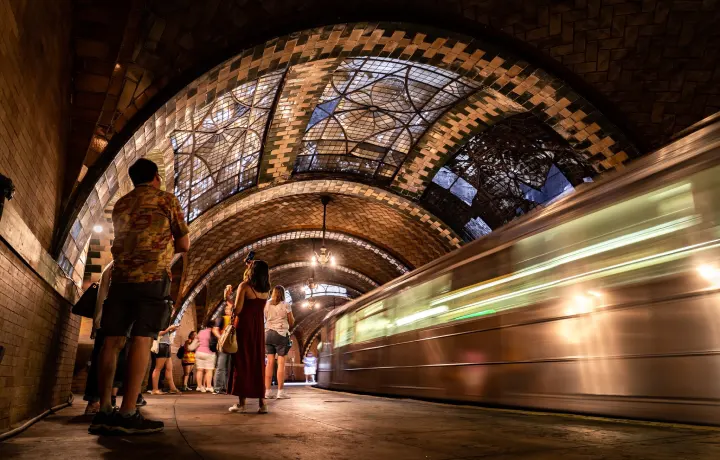
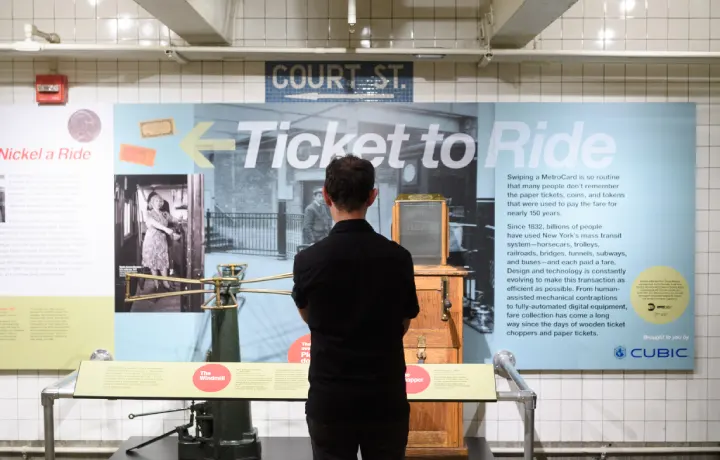
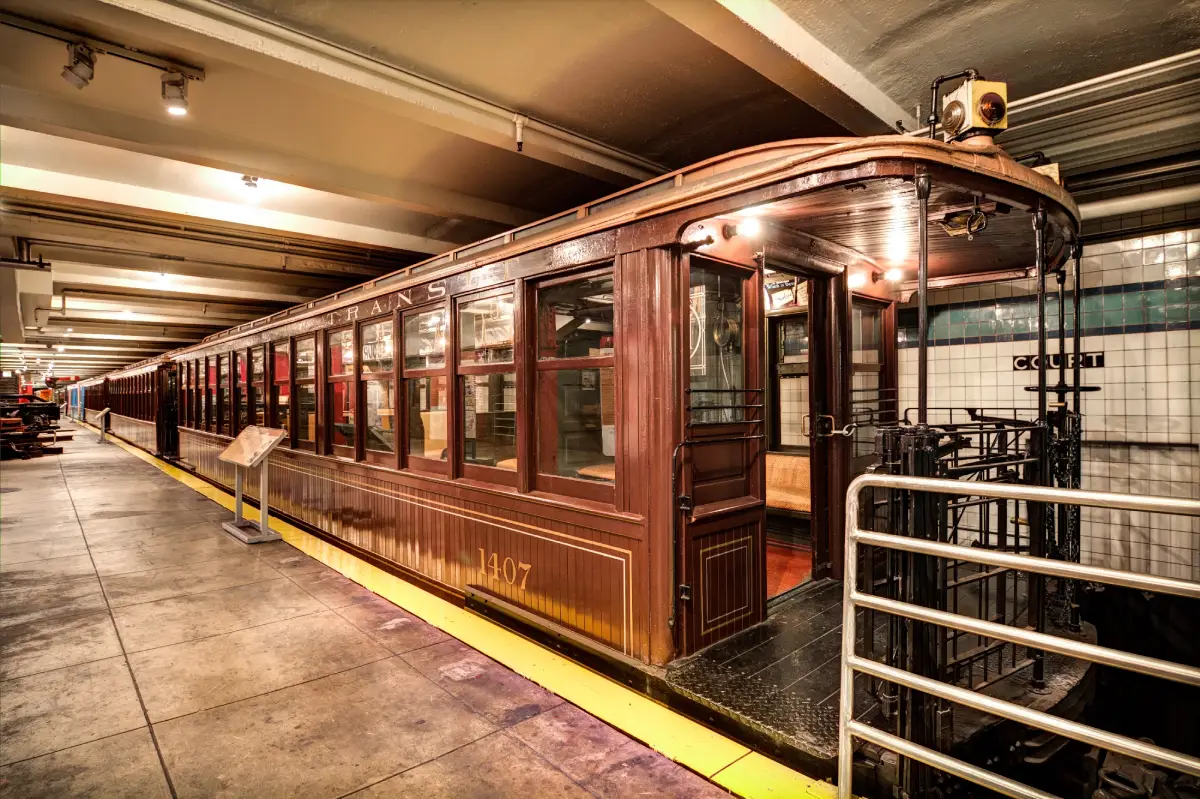
The last composite cars in use in the New York City subway were Q-Types, on the Myrtle Avenue Elevated. They were officially retired in 1969, and you can see one on the Transit Museum’s platform at Court Street.
Malbone Street Wreck, 1918
New York Transit Museum Collection