Synchronous Multiplex Railway Telegraph
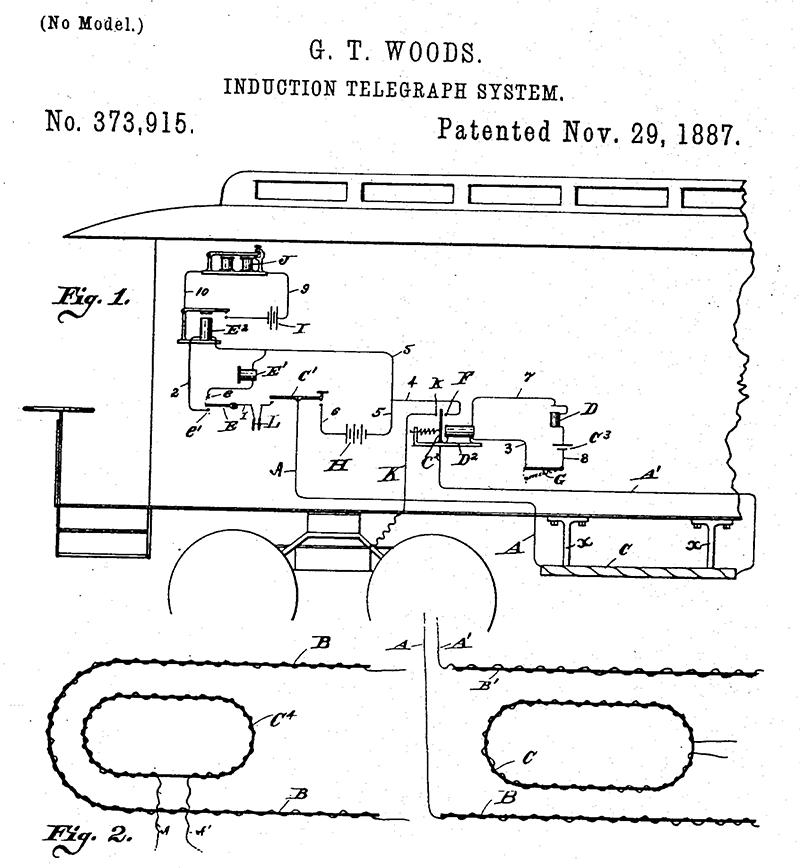
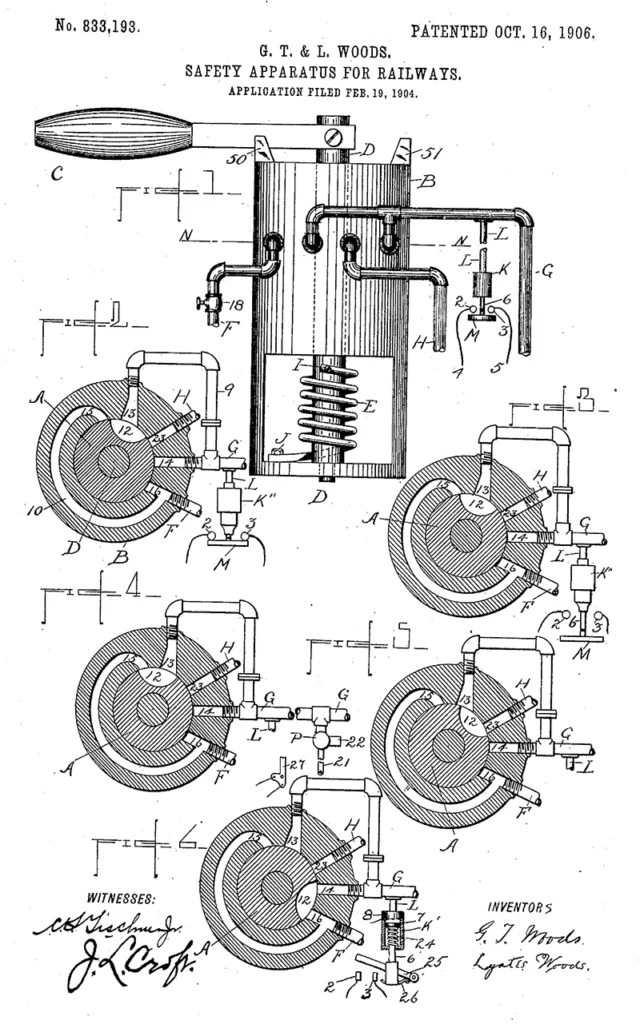
This invention used the idea of ‘induction’: a large battery-powered magnet was put underneath the train, attached to a telegraph or telephone in the train operator’s cab. When turned on, the whole apparatus would give off a magnetic force. The telegraph lines parallel to the tracks would also emit a similar but opposite magnetic force. This allowed messages to be sent to or from a moving train in any direction (hence ‘multiplex’). Train operators and dispatchers could send morse code (telegraph), or with the addition of a telephone receiver, even have real time conversations (synchronous), and could show the location of a moving train on a dispatcher’s display board.
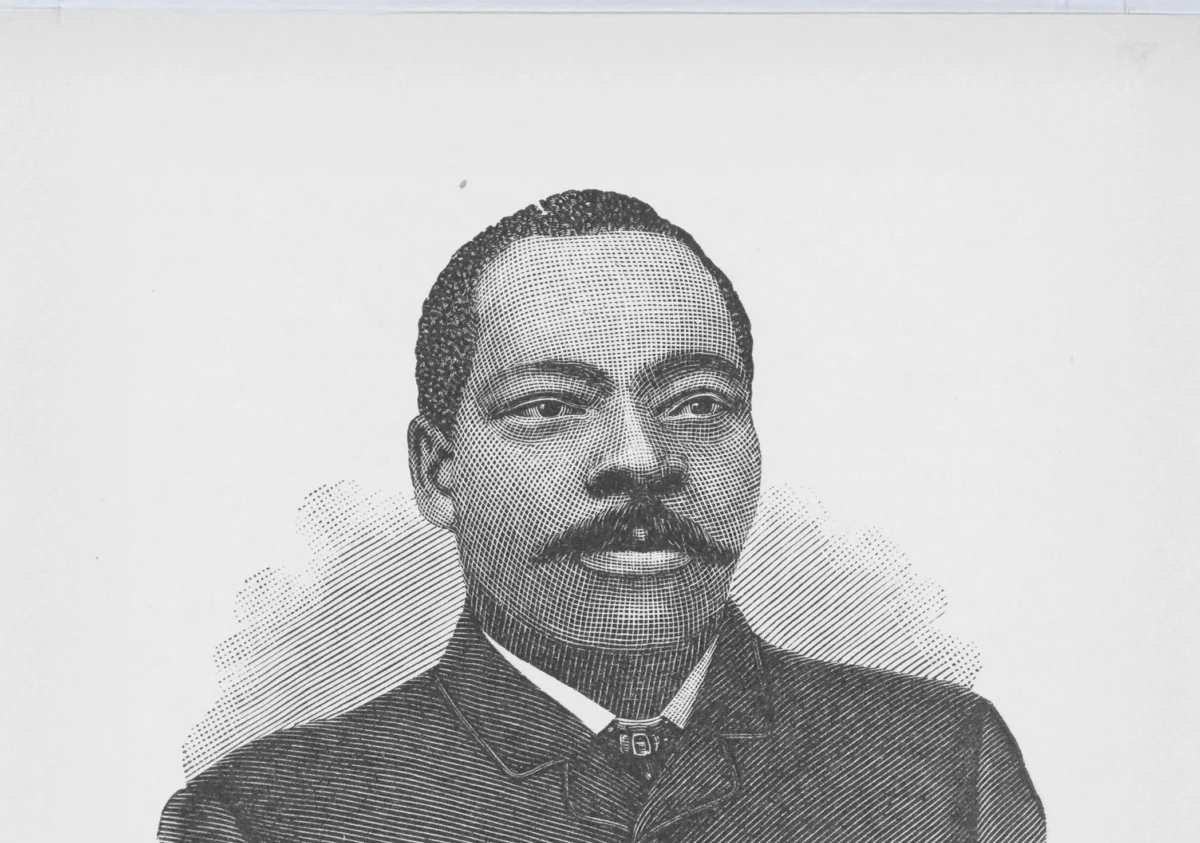
Thomas Edison attempted to take credit for the “Synchronous Multiplex Railway Telegraph”. Woods was determined to protect his invention, and though Edison twice took him to court, he won his case both times.