Illustration of three vintage buses under the brooklyn bridge

Illustration by Ellen Weinstein

Community Event

Bus Festival

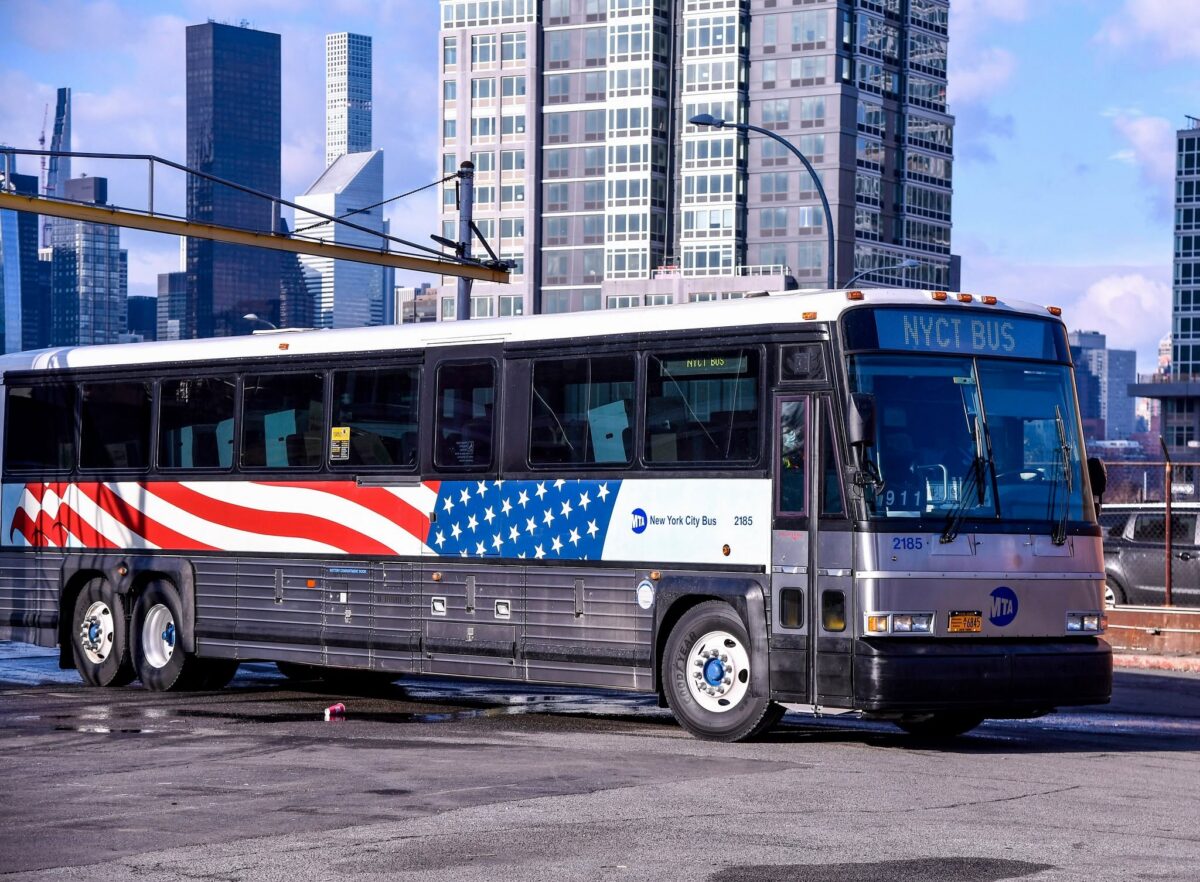
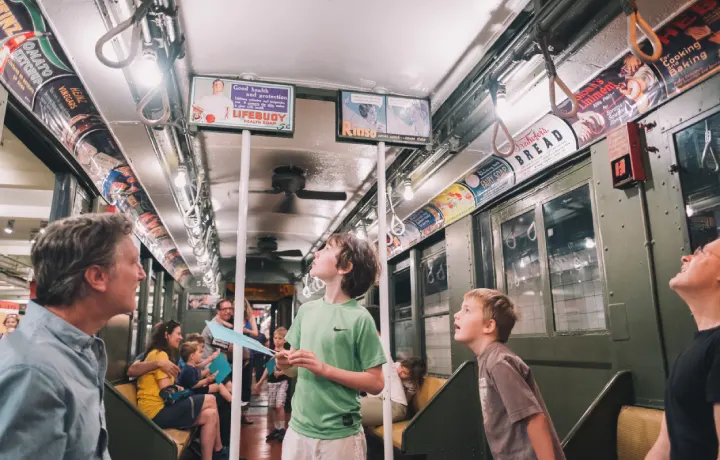
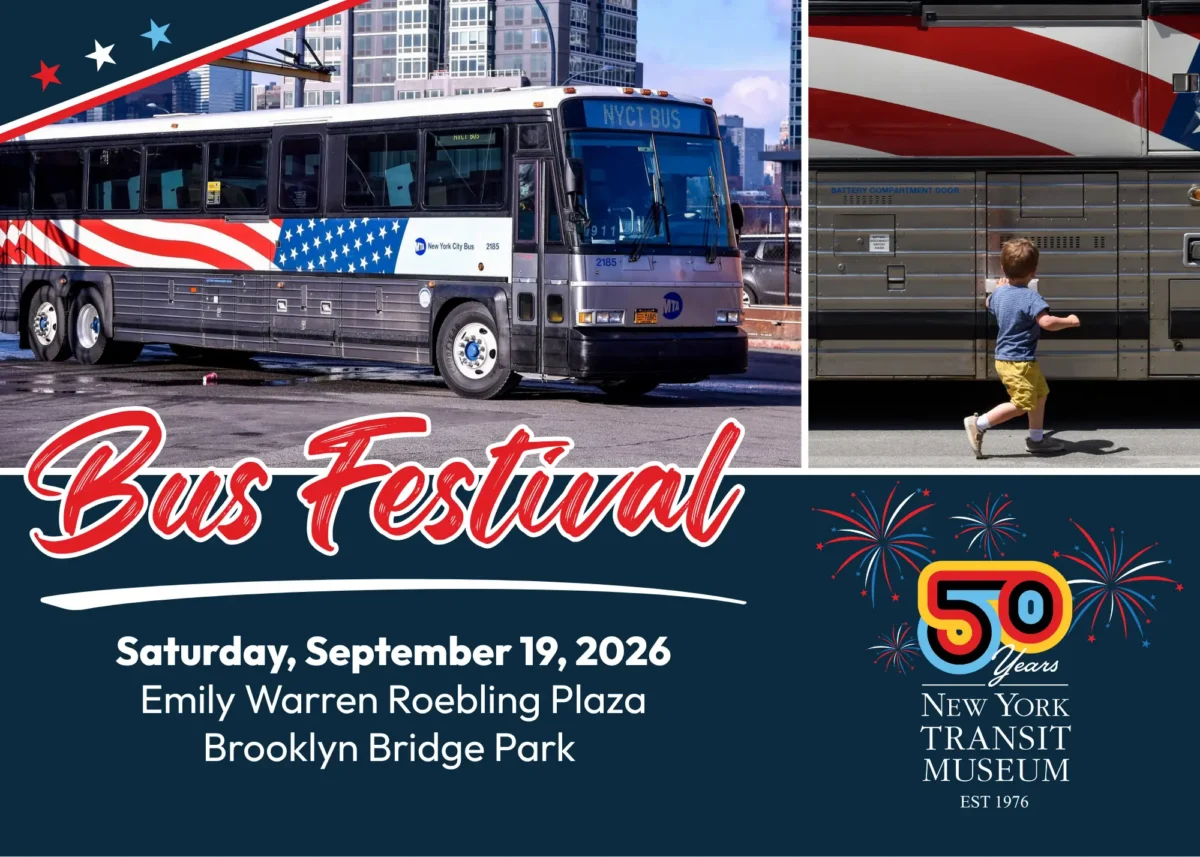
Each year, the New York Transit Museum and MTA New York City Transit team up to bring historic and modern buses to Brooklyn Bridge Park for Bus Festival, a free outdoor celebration of the city’s surface transit system.

In 2025, Bus Festival took place on September 21 at Emily Warren Roebling Plaza. Visitors explored an array of buses from across the decades, stepped inside rarely seen vehicles, met the crews who keep the fleet running, and enjoyed hands-on activities for all ages. A few surprise guest vehicles also made an appearance and quickly became fan favorites.

Want to be the first to hear about the next Bus Festival? Subscribe to our newsletter and follow us on social for updates. For now, here’s a bit about what you can expect to see.

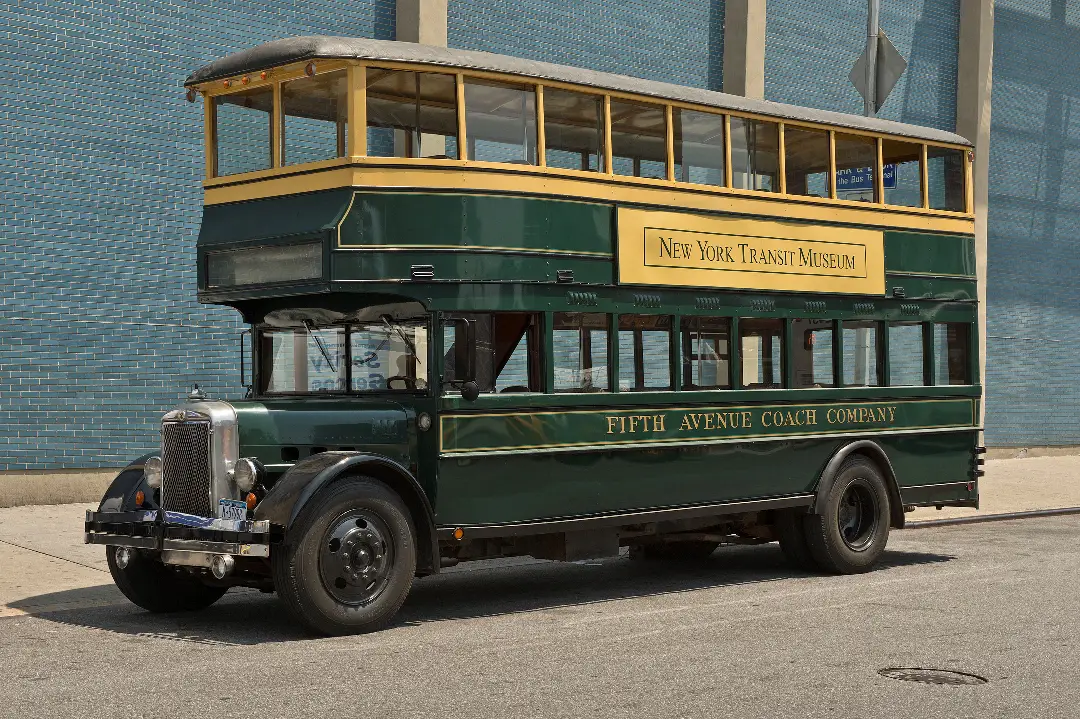
A vintage yellow and green double decker bus, one of the oldest buses in the New York Transit Museum's fleet.
“Betsy” (1931)

Bus 1263 was part of Fifth Avenue Coach’s “1200 series”—a fleet of 100 Yellow Coach “Z-type” buses manufactured in 1931. This series included two slightly different chassis models, the 602 and 632, and three body styles: open-top (40 buses), semi-enclosed (4 buses), and fully enclosed (56 buses). Bus 1263 was one of the 52 enclosed model 602 buses in the order.

The 1200-series buses were among the last front-engine double-deck buses built by Yellow Coach. In 1936, the Fifth Avenue Coach Company introduced a new rear-engine, a more streamlined design. Bus 1263 remained in Manhattan passenger service until 1947, and the company phased out all double-decker operations by 1953.

Known lovingly as “Betsy,” Bus 1263 is one of the oldest in our vintage fleet.

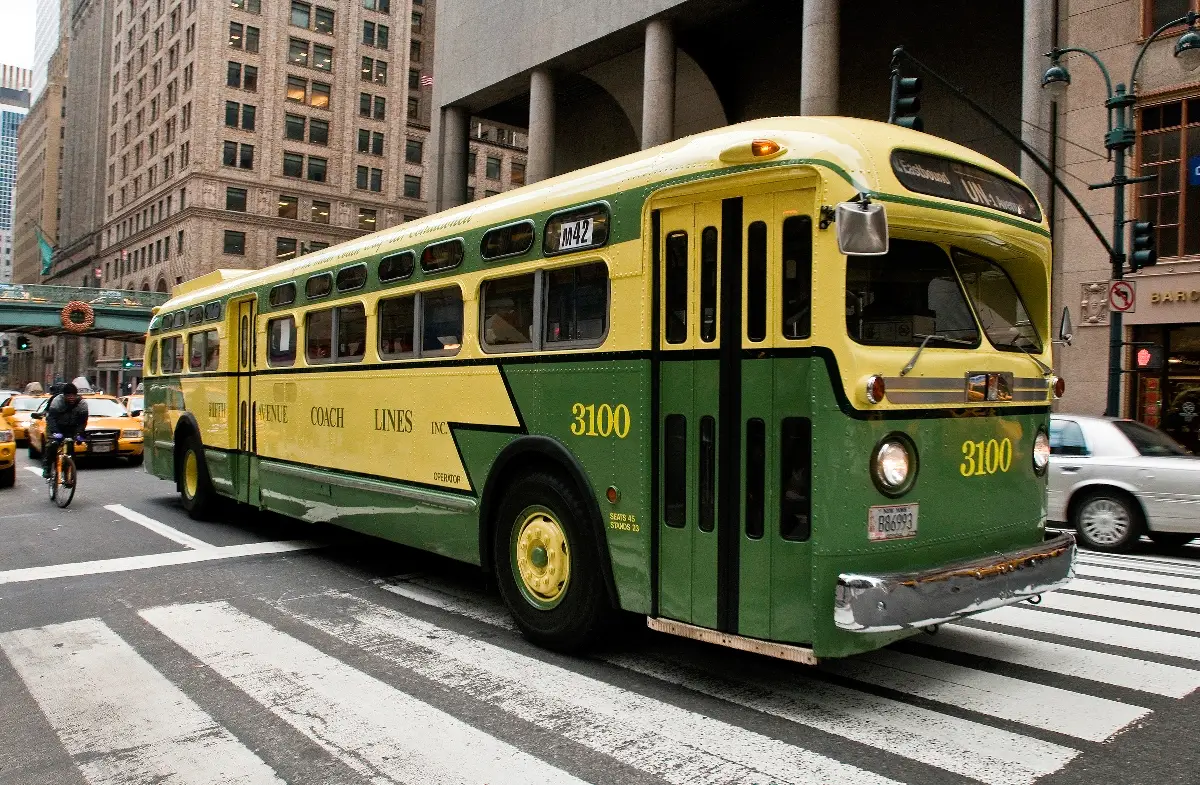
Bus 3100, a yellow and green stunner that features innovations introduced in the 1950s, including a push-type rear exit door, wrap-around seating in the rear, soft cushioned seats, and fluorescent lighting.
Bus #3100 (1956)

Manufactured by General Motors, Bus 3100 was the first air-conditioned bus in the United States. Originally built as an experimental model (TDH-5106), it was purchased by the Fifth Avenue Coach Company about a year after production. Between 1958 and 1968, it served Fifth Avenue on the M4 and M5 routes in Manhattan.

Bus 3100 features innovations introduced in the 1950s, including a push-type rear exit door, wrap-around seating in the rear, soft cushioned seats, and fluorescent lighting.

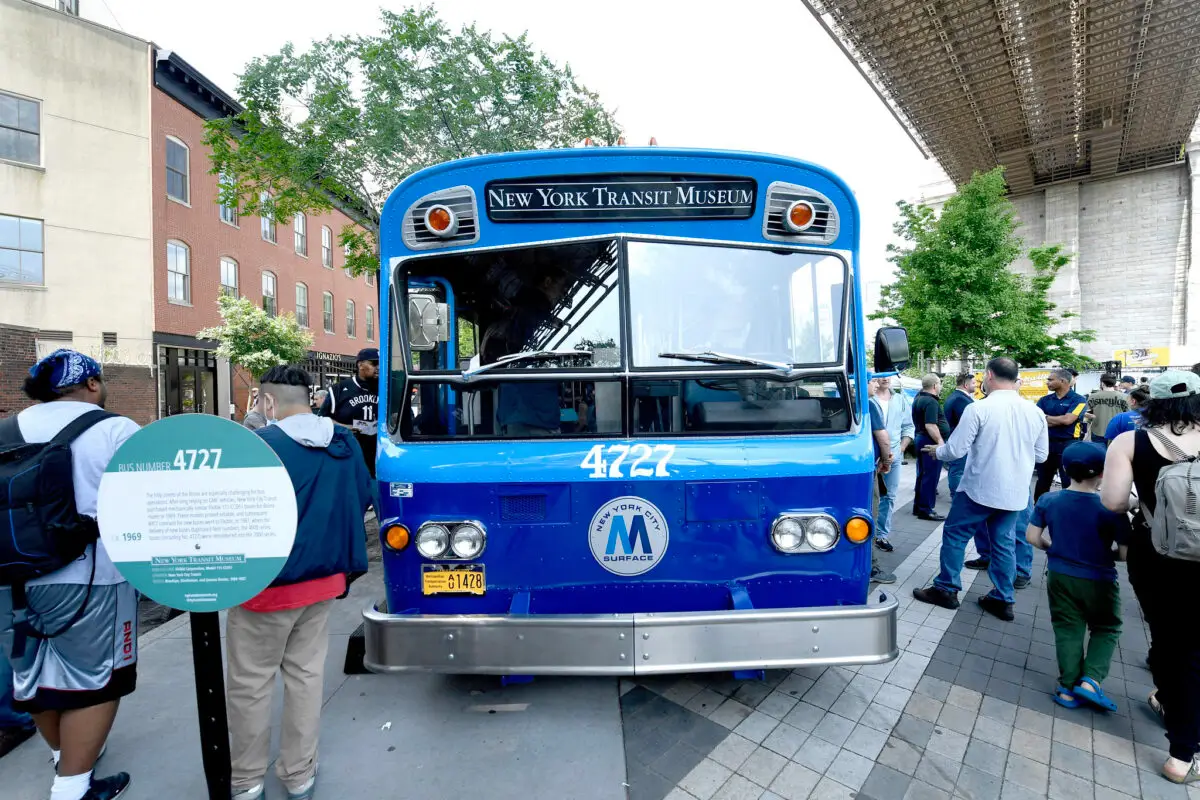
Bus 4717 has been restored to its iconic 1970s blue livery and two one M logo.
Bus #4727 (1969)

Built in 1969 by the Flxible Corporation, Bus 4727 (Model 1110D51) marked a shift from the long-standing tradition of operating only GMC buses in the Bronx. The Manhattan and Bronx Surface Transit Operating Authority (MaBSTOA) purchased these Flxible 111-CCD51 models for their ability to handle the borough’s steep hills, and they proved to be dependable workhorses. Their success led to additional contracts with Flxible in the years that followed. In 1987, when new buses arrived with duplicate fleet numbers, the original 4000-series buses (including No. 4727) were renumbered into the 7000 series.

Today, Bus 4727 has been restored to its iconic 1970s blue/blue livery.

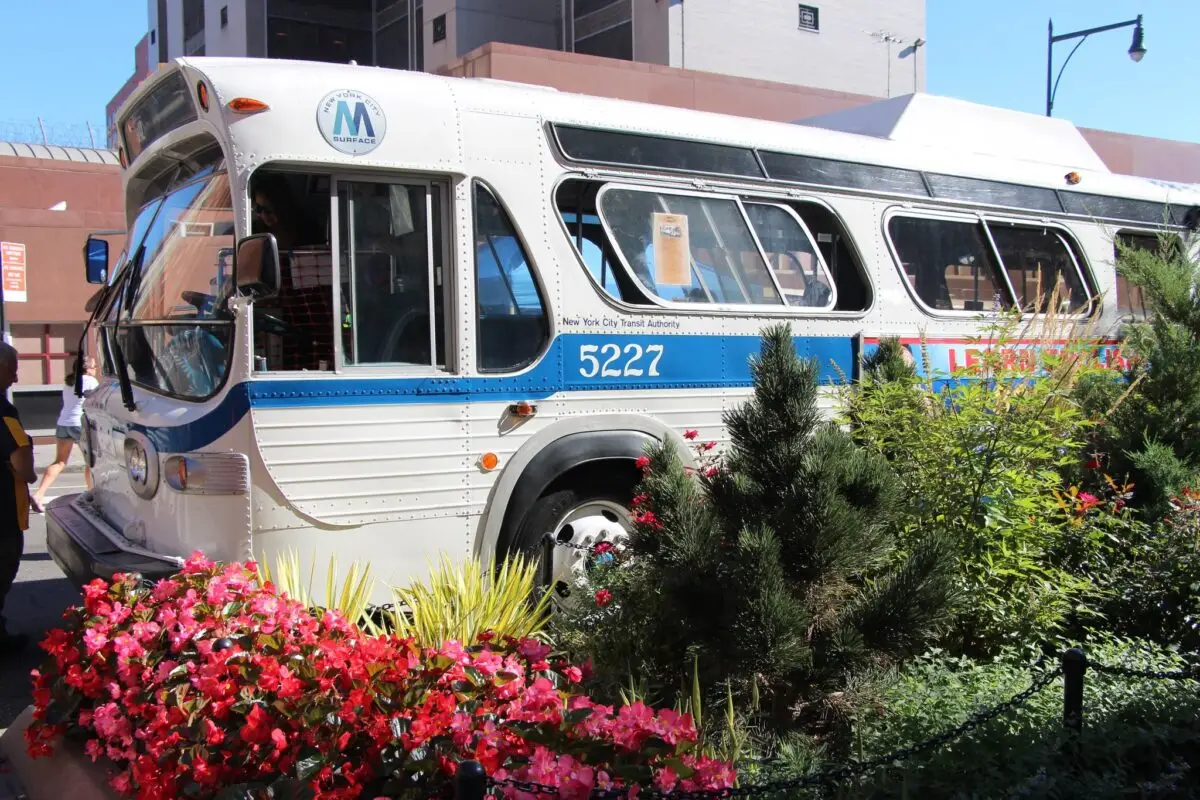
Bus 5227 nestled next to a garden in Brooklyn. These buses were quick and featured white and blue colors with hard blue lengthwise seating.
Bus #5227 (1971)

Bus 5227 entered service in 1971 as part of the General Motors “New Look” fleet. In 1984-85, 350 of these buses were sent to the Blitz Corporation in Chicago for a complete overhaul and rebuild. Upon their return to New York City—renumbered in the 5000-series—they became known as “Blitz Buses.”

These updated buses featured hard, blue lengthwise seating and were the last model in the NYCT fleet not equipped with a wheelchair lift. Bus 5227 was retired from service in 1995.

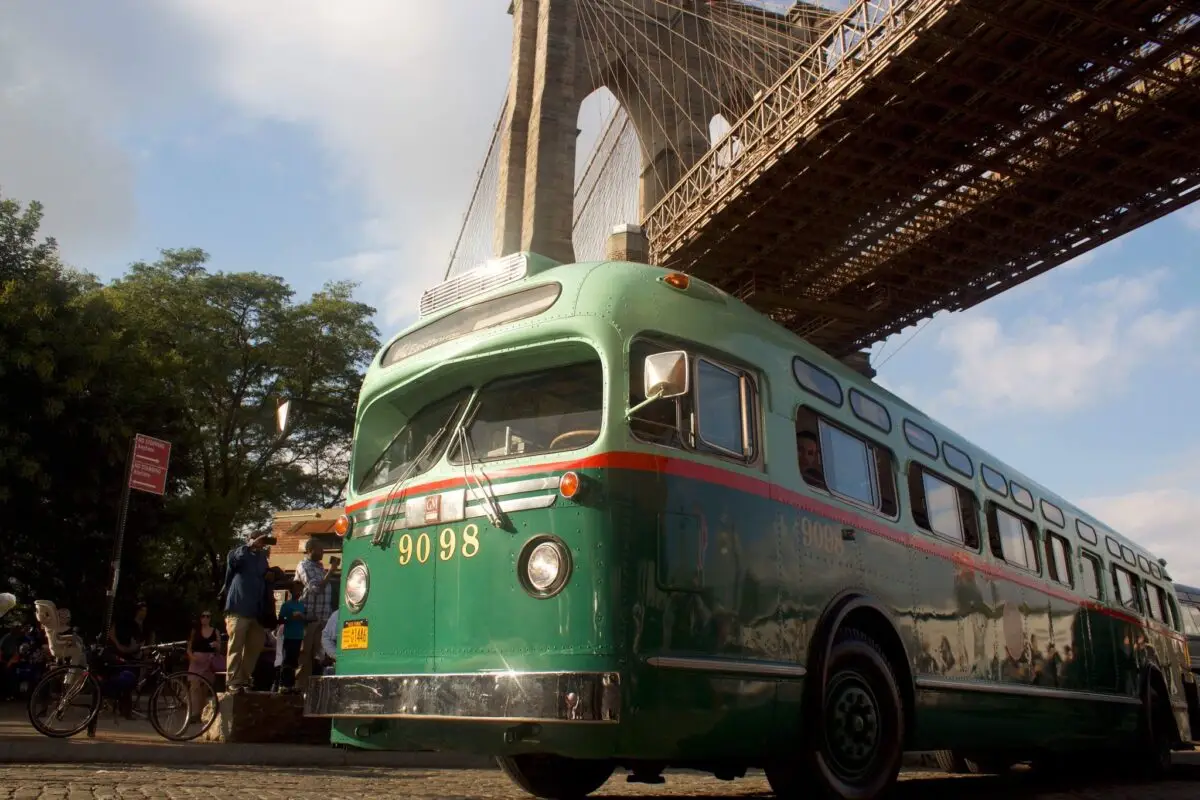
Bus 9098 sports a two-tone green exterior with a contrasting stripe, and was also the first type of bus in New York City equipped with sliding windows, fiberglass seats, and rear door safety exits.
Bus #9098 (1958)

This bus was the first model to sport a two-tone green exterior with a contrasting stripe, and was also the first type of bus in New York City equipped with sliding windows, fiberglass seats, and rear door safety exits. This innovative system substituted two panel doors for the accordion-type rear doors and interfaced with the bus braking system. Bus #9098 is an “old look” bus, which has been likened to a PCC streetcar, or a loaf of sandwich bread.

White bus tow truck with a large blue strip.
Bus Tow Truck

This 50-ton wrecker built by Miller Industries is one of the newest road operations vehicles in the fleet.  It is equipped with an under-lift, which has an operable reach of 129” reach, LED lights, a flat screen color monitor, reverse camera and a composite heavy duty tow truck body construction.  It went into service in September 17, 2025 and operates out of Casey Stengel Depot in Queens.

Additional Information & Policies

Age Requirements 

Children ages 15 and under must be accompanied by an adult at all times.

Program Experience 

Bus Festival happens rain or shine. Equipment is subject to change. Buses will open for boarding at 10am ET and close at 3:30pm and are stationary during the event.

Your safety is important to us!

  • Onboard our buses, please pay attention to all signs indicating areas that may not be accessible to the public. Sitting in the driver’s seat of buses is not allowed.
  • Bus windows are open for ventilation. Please keep hands and arms inside the bus at all times.
  • Help us preserve these vintage buses for future generations! Do not eat or drink while on board and leave all original elements where they belong.
Accessibility

Brooklyn Bridge Park is ADA accessible. Please note that vintage buses have stairs and can have waiting lines to board.

For accessibility questions, please visit our accessibility page or email [email protected].

Pets, or comfort, therapy, or emotional support animals are not permitted at Museum programs. Only service animals as defined by the ADA are permitted.

For information on accessibility matters please visit our accessibility page or email [email protected]. Please request any accommodations via email at least two weeks in advance.   

Review and download the Bus Fest social narrative to learn more about what to expect at this popular event.

Photography & Filming 

Personal photography and short video clips are permitted at Museum programs. Continuous audio or video recording of our programs is not permitted. Tripods, monopods, stands, selfie sticks, Go Pros, and external lights may not be used. All photographs taken must be for personal, non-commercial use and permission to photograph may be revoked at any time.

Professional photography and recording are not permitted, unless authorized with advanced approval by the New York Transit Museum’s Press and Marketing Department. Professional photography and recording include taking photographs or videos for publication, advertising, or commercial purposes. To contact the Press and Marketing Department, please email[email protected].

Visitor Release

Attendees assume for themselves and anyone in their party including minors under the age of 18 all risk of injury, harm, or death, and agree to release, indemnify, defend, and forever discharge New York Transit Museum and our partner organization(s) for this event from all liability, claims, demands, damages, costs, expenses, and causes of action.

Any materials (images or recordings) provided or shared by the Museum or presenters during programs are for personal use only. These images may not be used by media or for commercial purposes, including in blog posts, social media, news coverage, or promotional materials of any kind. All such images remain the intellectual property of the New York Transit Museum unless otherwise stated.

By attending this program, you consent to having your image, voice and/or likeness filmed, recorded, and/or photographed. The resulting materials may be used by the Museum without restriction, credit, financial compensation, or other consideration, for any and all purposes. If you do not wish to participate, please notify a Museum staff member before attending the program.

Contact Us

Questions? Email [email protected].